Andrew Macomber - Böcker
Visar alla böcker från författaren Andrew Macomber. Handla med fri frakt och snabb leverans.
2 produkter
2 produkter
844 kr
Skickas inom 7-10 vardagar
From its inception in northeastern India in the first millennium BCE, the Buddhist tradition has advocated a range of ideas and practices that were said to ensure health and well-being. As the religion developed and spread to other parts of Asia, healing deities were added to its pantheon, monastic institutions became centers of medical learning, and healer-monks gained renown for their mastery of ritual and medicinal therapeutics. In China, imported Buddhist knowledge contended with a sophisticated, state-supported system of medicine that was able to retain its influence among the elite. Further afield in Japan, where Chinese Buddhism and Chinese medicine were introduced simultaneously as part of the country's adoption of civilization from the "Middle Kingdom," the two were reconciled by individuals who deemed them compatible. In East Asia, Buddhist healing would remain a site of intercultural tension and negotiation. While participating in transregional networks of circulation and exchange, Buddhist clerics practiced locally specific blends of Indian and indigenous therapies and occupied locally defined social positions as religious and medical specialists.In this diverse and compelling collection, an international group of scholars analyzes the historical connections between Buddhism and healing in medieval China and Japan. They focus on the transnationally conveyed aspects of Buddhist healing traditions as they moved across geographic, cultural, and linguistic boundaries. Simultaneously, their work also investigates the local instantiations of these ideas and practices as they were reinvented, altered, and re-embedded in specific social and institutional contexts. Investigating the interplay between the macro and micro, the global and the local, this book demonstrates the richness of Buddhist healing as a way to explore the history of cross-cultural exchange.
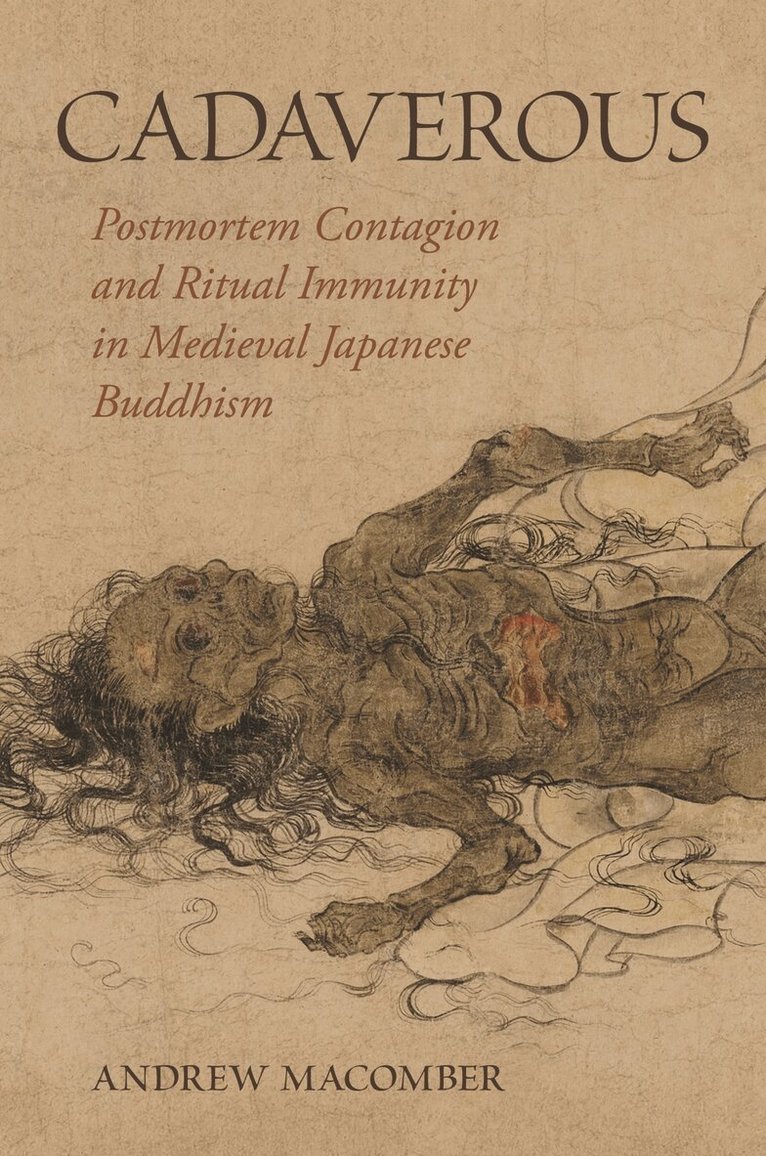
Cadaverous
Postmortem Contagion and Ritual Immunity in Medieval Japanese Buddhism
Inbunden, Engelska, 2026
861 kr
Kommande
From the tenth to the thirteenth centuries, Japanese aristocrats attributed their afflictions to vengeful spirits of the deceased. But in the late twelfth century, a new and anomalous ailment, caused not by spirits but the material dead, crept into their consciousness. "Corpse-vector disease," as it was called, emerged as a new form of "postmortem contagion"—diseases tethered to death that reanimated in pathogenic forms such as ghosts, noxious qi, corpse-worms, and disease-causing demons. In response, Tendai Buddhist monks of the Jimon branch at Onjōji temple engaged creatively with esoteric rites, medical texts, and Daoist scriptures to craft a healing ritual for their patients. Cadaverous is the first book-length work to examine this ritual and its extant manuscripts. Bridging religious studies and medical history, it analyzes Buddhist ritual healing in Japan through the lens of "ritual immunity"—the complex, experimental processes through which monks identified disease agents, demarcated boundaries between self and pathogen, and designed therapeutic interventions. By exploring the social, moral, material, and ritual dynamics that shaped new disease concepts, Cadaverous reveals how corpse-vector disease reflected growing anxieties surrounding death and pollution in a capital increasingly crowded with corpses. The book offers an unprecedented tour of the therapeutic and ritual culture of early medieval Japan, illuminating how that culture was haunted by darker preoccupations with disease, death, and defilement.