Andrew Zitcer - Böcker
Visar alla böcker från författaren Andrew Zitcer. Handla med fri frakt och snabb leverans.
4 produkter
4 produkter
584 kr
Skickas inom 10-15 vardagar
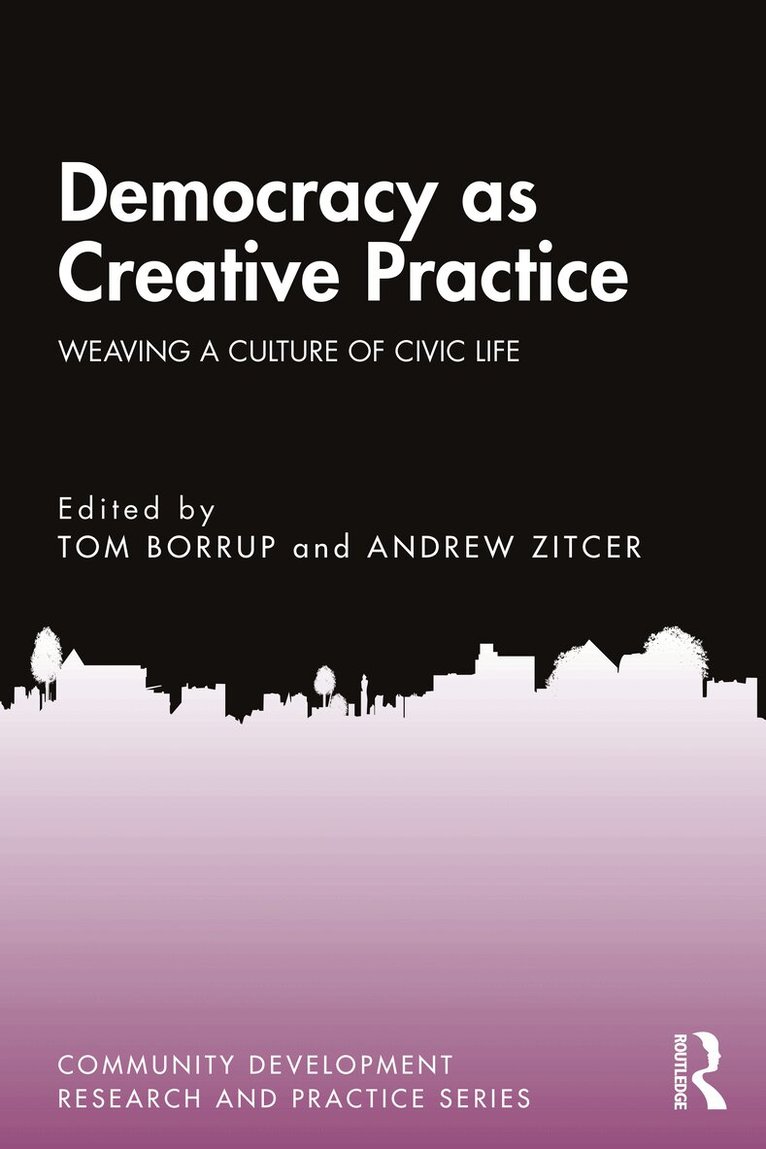
Democracy as Creative Practice: Weaving a Culture of Civic Life offers arts-based solutions to the threats to democracies around the world, practices that can foster more just and equitable societies. Chapter authors are artists, activists, curators, and teachers applying creative and cultural practices in deliberate efforts to build democratic ways of working and interacting in their communities in a range of countries including the United States, Australia, Portugal, Nepal, the United Kingdom, and Canada. The book demonstrates how creativity is integrated in place-based actions, aesthetic strategies, learning environments, and civic processes. As long-time champions and observers of community-based creative and cultural practices, editors Tom Borrup and Andrew Zitcer elucidate work that not only responds to sociopolitical conditions but advances practice. They call on artists, funders, cultural organizations, community groups, educational institutions, government, and others to engage in and support this work that fosters a culture of democracy.This book is intended for undergraduate and graduate students in the humanities and social sciences, activists, funders, and artists who seek to understand and effect change on local and global scales to preserve, extend, and improve practices of democracy.
2 166 kr
Skickas inom 10-15 vardagar
Democracy as Creative Practice: Weaving a Culture of Civic Life offers arts-based solutions to the threats to democracies around the world, practices that can foster more just and equitable societies. Chapter authors are artists, activists, curators, and teachers applying creative and cultural practices in deliberate efforts to build democratic ways of working and interacting in their communities in a range of countries including the United States, Australia, Portugal, Nepal, the United Kingdom, and Canada. The book demonstrates how creativity is integrated in place-based actions, aesthetic strategies, learning environments, and civic processes. As long-time champions and observers of community-based creative and cultural practices, editors Tom Borrup and Andrew Zitcer elucidate work that not only responds to sociopolitical conditions but advances practice. They call on artists, funders, cultural organizations, community groups, educational institutions, government, and others to engage in and support this work that fosters a culture of democracy.This book is intended for undergraduate and graduate students in the humanities and social sciences, activists, funders, and artists who seek to understand and effect change on local and global scales to preserve, extend, and improve practices of democracy.
1 141 kr
Skickas inom 10-15 vardagar
A powerful new understanding of cooperation as an antidote to alienation and inequalityFrom the crises of racial inequity and capitalism that inspired the Black Lives Matter movement and the Green New Deal to the coronavirus pandemic, stories of mutual aid have shown that, though cooperation is variegated and ever changing, it is also a form of economic solidarity that can help weather contemporary social and economic crises. Addressing this theme, Practicing Cooperation delivers a trenchant and timely argument that the way to a more just and equitable society lies in the widespread adoption of cooperative practices. But what renders cooperation ethical, effective, and sustainable?Providing a new conceptual framework for cooperation as a form of social practice, Practicing Cooperation describes and critiques three U.S.-based cooperatives: a pair of co-op grocers in Philadelphia, each adjusting to recent growth and renewal; a federation of two hundred low-cost community acupuncture clinics throughout the United States, banded together as a cooperative of practitioners and patients; and a collectively managed Philadelphia experimental dance company, founded in the early 1990s and still going strong. Through these case studies, Andrew Zitcer illuminates the range of activities that make contemporary cooperatives successful: dedicated practitioners, a commitment to inclusion, and ongoing critical reflection. In so doing he asserts that economic and social cooperation must be examined, critiqued, and implemented on multiple scales if it is to combat the pervasiveness of competitive individualism.Practicing Cooperation is grounded in the voices of practitioners and the result is a clear-eyed look at the lived experience of cooperators from different parts of the economy and a guidebook for people on the potential of this way of life for the pursuit of justice and fairness.
283 kr
Skickas inom 7-10 vardagar
A powerful new understanding of cooperation as an antidote to alienation and inequalityFrom the crises of racial inequity and capitalism that inspired the Black Lives Matter movement and the Green New Deal to the coronavirus pandemic, stories of mutual aid have shown that, though cooperation is variegated and ever changing, it is also a form of economic solidarity that can help weather contemporary social and economic crises. Addressing this theme, Practicing Cooperation delivers a trenchant and timely argument that the way to a more just and equitable society lies in the widespread adoption of cooperative practices. But what renders cooperation ethical, effective, and sustainable?Providing a new conceptual framework for cooperation as a form of social practice, Practicing Cooperation describes and critiques three U.S.-based cooperatives: a pair of co-op grocers in Philadelphia, each adjusting to recent growth and renewal; a federation of two hundred low-cost community acupuncture clinics throughout the United States, banded together as a cooperative of practitioners and patients; and a collectively managed Philadelphia experimental dance company, founded in the early 1990s and still going strong. Through these case studies, Andrew Zitcer illuminates the range of activities that make contemporary cooperatives successful: dedicated practitioners, a commitment to inclusion, and ongoing critical reflection. In so doing he asserts that economic and social cooperation must be examined, critiqued, and implemented on multiple scales if it is to combat the pervasiveness of competitive individualism.Practicing Cooperation is grounded in the voices of practitioners and the result is a clear-eyed look at the lived experience of cooperators from different parts of the economy and a guidebook for people on the potential of this way of life for the pursuit of justice and fairness.