Andrews Reath - Böcker
Visar alla böcker från författaren Andrews Reath. Handla med fri frakt och snabb leverans.
5 produkter
5 produkter
1 122 kr
Skickas inom 3-6 vardagar
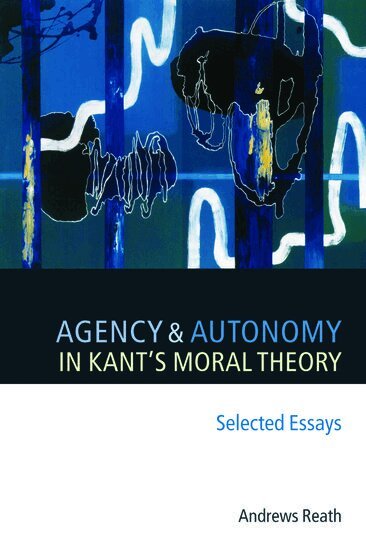
Andrews Reath presents a selection of his best essays on _ various features of Kant's moral psychology and moral _ theory, with particular emphasis on his conception of _ rational agency and his conception of autonomy. _ The opening essays explore different elements of Kant's _ views about motivation, including his account of respect for morality as the distinctive moral motive and his view of the principle of happiness as a representation of the shared structure of non-moral choice. These essays stress the unity of Kant's moral psychology by arguing that moral and non-moral considerations motivate in essentially the same way. Several of the essays develop an original approach to Kant's conception of autonomy that emphasizes the political metaphors found throughout Kant's writings on ethics. They argue that autonomy is best interpreted not as a _ psychological capacity, but as a kind of sovereignty: in _ claiming that moral agents have autonomy, Kant regards them as a kind of sovereign legislator with the power to give _ moral law through their willing. The final essays explore _ some of the implications of this conception of autonomy _ elsewhere in Kant's moral thought, arguing that his Formula of Universal Law uses this conception of autonomy to _ generate substantive moral principles and exploring the _ connection between Kantian self-legislation and duties to _ oneself. The collection offers revised versions of several previously published essays, as well as two new papers, 'Autonomy of _ the Will as the Foundation of Morality' and 'Agency and _ Universal Law'. It will be of interest to all students and_ scholars of Kant, and to many moral philosophers. _ _
703 kr
Skickas inom 5-8 vardagar
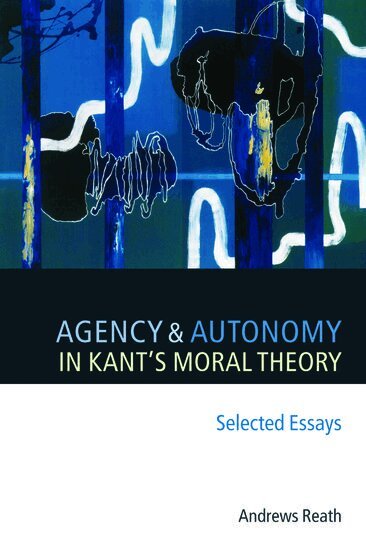
Andrews Reath presents a selection of his best essays on various features of Kant's moral psychology and moral theory, with particular emphasis on his conception of rational agency and his conception of autonomy. The opening essays explore different elements of Kant's views about motivation, including his account of respect for morality as the distinctive moral motive and his view of the principle of happiness as a representation of the shared structure of non-moral choice. These essays stress the unity of Kant's moral psychology by arguing that moral and non-moral considerations motivate in essentially the same way. Several of the essays develop an original approach to Kant's conception of autonomy that emphasizes the political metaphors found throughout Kant's writings on ethics. They argue that autonomy is best interpreted not as a psychological capacity, but as a kind of sovereignty: in claiming that moral agents have autonomy, Kant regards them as a kind of sovereign legislator with the power to give moral law through their willing. The final essays explore some of the implications of this conception of autonomy elsewhere in Kant's moral thought, arguing that his Formula of Universal Law uses this conception of autonomy to generate substantive moral principles and exploring the connection between Kantian self-legislation and duties to oneself. The collection offers revised versions of several previously published essays, as well as two new papers, 'Autonomy of the Will as the Foundation of Morality' and 'Agency and Universal Law'. It will be of interest to all students and scholars of Kant, and to many moral philosophers.
626 kr
Skickas inom 7-10 vardagar
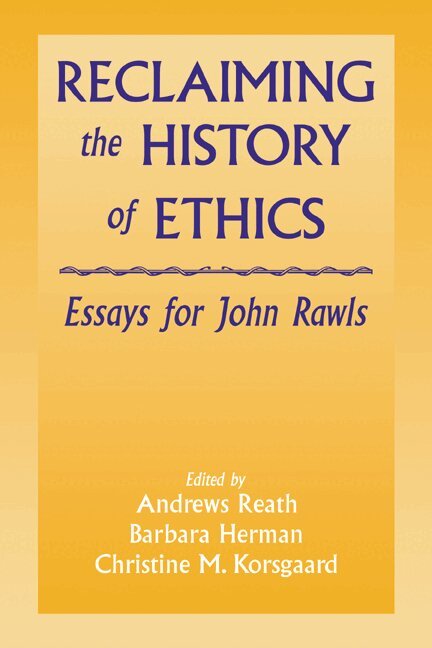
The essays in this volume offer an approach to the history of moral and political philosophy that takes its inspiration from John Rawls. All the contributors are philosophers who have studied with Rawls and they offer this collection in his honour. The distinctive feature of this approach is to address substantive normative questions in moral and political philosophy through an analysis of the texts and theories of major figures in the history of the subject: Aristotle, Hobbes, Hume, Rousseau, Kant and Marx. By reconstructing the core of these theories in a way that is informed by contemporary theoretical concerns, the contributors show how the history of the subject is a resource for understanding present and perennial problems in moral and political philosophy. This outstanding collection will be of particular interest to historians of moral and political philosophy, historians of ideas, and political scientists.
1 442 kr
Skickas inom 7-10 vardagar
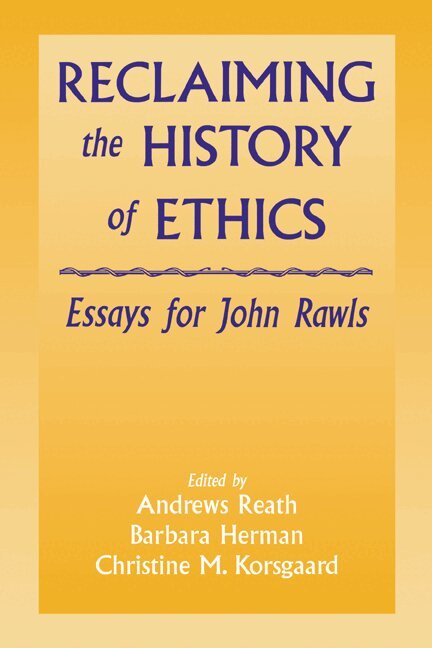
The essays in this volume offer an approach to the history of moral and political philosophy that takes its inspiration from John Rawls. All the contributors are philosophers who have studied with Rawls and they offer this collection in his honour. The distinctive feature of this approach is to address substantive normative questions in moral and political philosophy through an analysis of the texts and theories of major figures in the history of the subject: Aristotle, Hobbes, Hume, Rousseau, Kant and Marx. By reconstructing the core of these theories in a way that is informed by contemporary theoretical concerns, the contributors show how the history of the subject is a resource for understanding present and perennial problems in moral and political philosophy. This outstanding collection will be of particular interest to historians of moral and political philosophy, historians of ideas, and political scientists.
428 kr
Skickas inom 7-10 vardagar
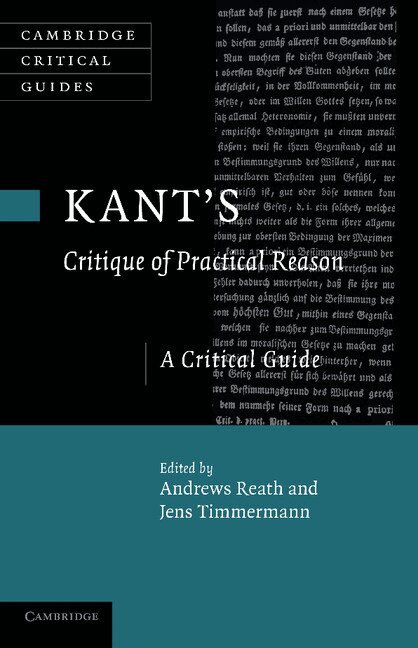
The Critique of Practical Reason is the second of Kant's three Critiques, and his second work in moral theory after the Groundwork of the Metaphysics of Morals. Its systematic account of the authority of moral principles grounded in human autonomy unfolds Kant's considered views on morality and provides the keystone to his philosophical system. The essays in this volume shed light on the principal arguments of the second Critique and explore their relation to Kant's critical philosophy as a whole. They examine the genesis of the Critique, Kant's approach to the authority of the moral law given as a 'fact of reason', the metaphysics of free agency, the account of respect for morality as the moral motive, and questions raised by the 'primacy of practical reason' and the idea of the 'postulates'. Engaging and critical, this volume will be invaluable to advanced students and scholars of Kant and to moral theorists alike.