Andrzej Szczerski - Böcker
Visar alla böcker från författaren Andrzej Szczerski. Handla med fri frakt och snabb leverans.
3 produkter
3 produkter
554 kr
Tillfälligt slut
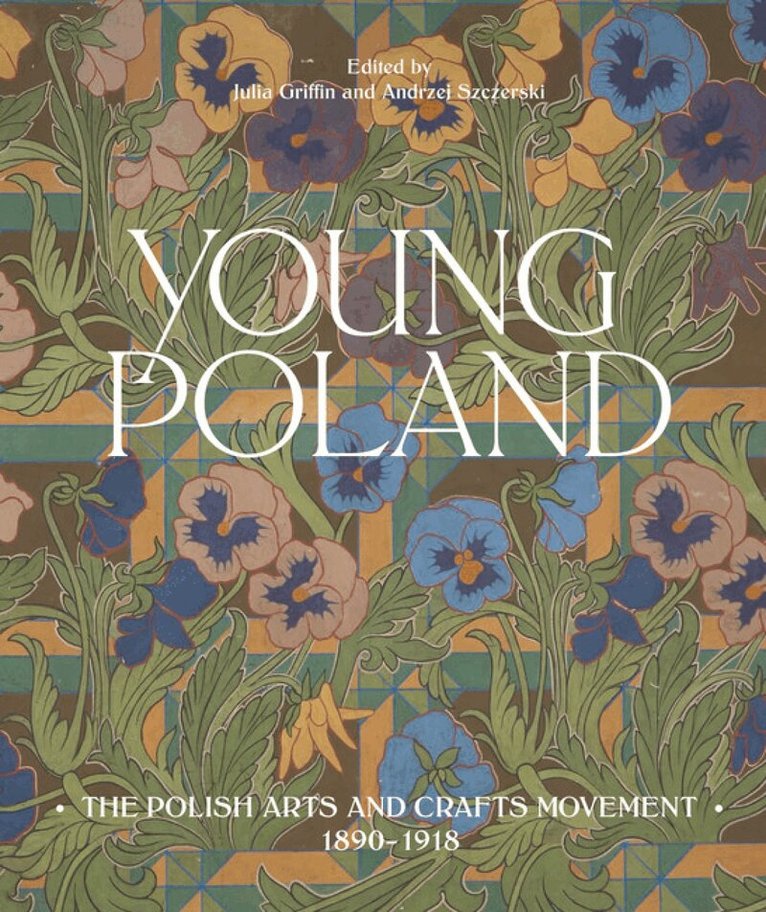
Young Poland: The Polish Arts and Crafts Movement, 1890–1918 is the first book in any language to explore the Young Poland (Młoda Polska) period in the context of the international Arts and Crafts movements.The Young Poland movement emerged in the 1890s in response to the country’s non-existence for almost a century. It embraced an unprecedented flourishing of applied arts and the revival of crafts, drawing inspiration from nature, history, peasant traditions and craftsmanship to convey patriotic values.The book argues that Young Poland shared fundamental parallels with the British Arts and Crafts Movement, and that it was specifically this Arts and Crafts ethos that fuelled the movement’s patriotic ideology and the nation’s quest to regain Polish independence.The lavishly illustrated publication charts the rich history of the artists, designers and craftspeople whose schemes came to define Young Poland, including over 250 illustrations of ceramics, furniture, textiles, paper cuttings, wood carvings, tableware, stained glass, book arts, children’s toys and Christmas decorations, as well as domestic, church and civic interior decoration schemes.The book is the culmination of an international research project co-financed by the Polish Ministry of Culture and National Heritage as part of the ‘Inspiring Culture' Programme. It is a collaboration between Lund Humphries, the William Morris Gallery, the National Museum in Kraków and the Polish Cultural Institute, London.
Del 1 - Internationalism and the Arts
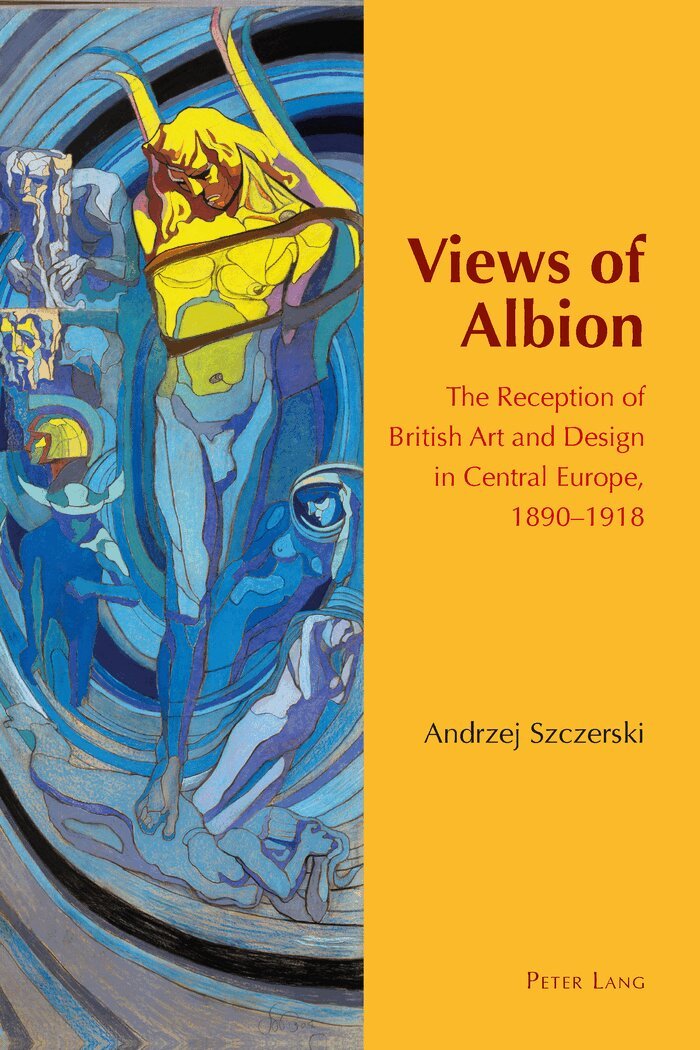
Views of Albion
The Reception of British Art and Design in Central Europe, 1890–1918
Inbunden, Engelska, 2015
2 400 kr
Skickas inom 3-6 vardagar
Views of Albion is the first comprehensive study of the reception of British art and design in Central Europe at the turn of the twentieth century. The author proposes a new map of European Art Nouveau, where direct contacts between peripheral cultures were more significant than the influence of Paris. These new patterns of artistic exchange, often without historic precedence, gave art during this period its unique character and dynamism.Beginning with an analysis of the concept of Central Europe, the book examines knowledge about British art and design in the region. In subsequent chapters the author looks at the reception of the Pre-Raphaelites in painting and graphic arts as well as analysing diverse responses to the Arts and Crafts Movement in Germany, Austria, Poland, Bohemia, Slovakia, Hungary and Southern Slavic countries. The epilogue reveals the British interest in Central Europe, echoed in the designs Walter Crane, Charles Robert Ashbee and publications of The Studio.The book questions the insularity of British culture and offers new insights into art and design of Central Europe at the fin de siècle. It presents the region as a vital part of the international Art Nouveau, but also shows its specific features, visible in the works of artists such as Alfons Mucha, Gustav Klimt and Stanisław Wyspiański.
454 kr
Skickas inom 7-10 vardagar
The year 1989 marked the end of one era and the beginning of another—the period of postcommunist transformation. Similar processes were taking place in other former Eastern Bloc countries that were declaring free elections, reclaiming full sovereignty, building democracy, and completely changing their economies in favor of free market capitalism. The several historic months in the latter half of 1989 came to be known as the “Autumn of Nations” and ushered in the total liberation of East-Central Europe from Soviet domination. Less than two years later, the Soviet Union itself collapsed, signaling the end of the Cold War in Europe. The new era brought not only political and economic changes, but also cultural ones which would lead to reclaiming individual liberties and other civil rights, as well as to the rebuilding of national identities within the European community which could now, finally, encompass the entire continent. Culture became a moving force for change, as censorship was abolished, monuments to communist heroes were removed, and streets renamed.The radical cultural changes reverberated in the art of the period, its ideology, and the system of institutional sponsorship that promoted the three approaches most popular with artists. Many of them engaged in the changes directly, creating works that either commented on current events or proposed what they believed to be the right direction for the transformation to take. Others, although preferring to observe from a distance, highlighted the diverse contexts and historical antecedents generated by the cultural identities of countries, regions, or even artistic centers, in which the changes were rooted. The third contribution of contemporary art was its role in shaping how we remember the communist period, by on the one hand questioning the past, and on the other accenting the persistence of the traces it left behind, thereby inviting reflection on its negative as well as its positive ramifications. The art created in these circumstances and that related directly to the post-1989 transition, democracy, and a free market economy can be united under the name “art of the transformation” and it is the subject of this publication.