Andy Byford – författare
Visar alla böcker från författaren Andy Byford. Handla med fri frakt och snabb leverans.
9 produkter
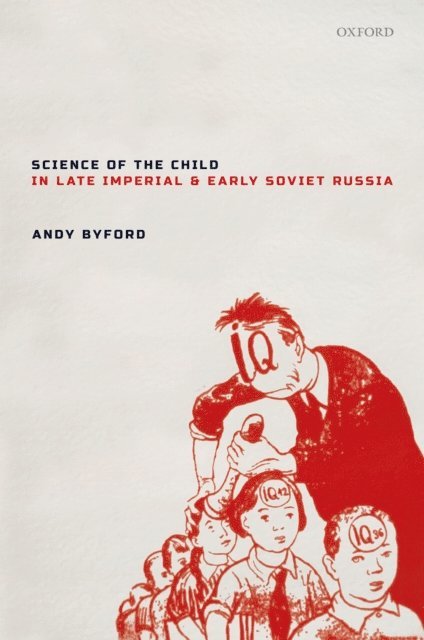
Science of the Child in Late Imperial and Early Soviet Russia
Av Andy Byford
E-bok, 2020
1397 kr
Lägg i varukorg
Between the 1880s and the 1930s, children became the focus of unprecedented scientific and professional interest in modernizing societies worldwide, including in the Russian Empire and then the Soviet Union. Those who claimed children as special objects of investigation were initially spread across …
Science of the Child in Late Imperial and Early Soviet Russia
Av Andy Byford
E-bok, 2020
1397 kr
Lägg i varukorg
Between the 1880s and the 1930s, children became the focus of unprecedented scientific and professional interest in modernizing societies worldwide, including in the Russian Empire and then the Soviet Union. Those who claimed children as special objects of investigation were initially spread across …
Science of the Child in Late Imperial and Early Soviet Russia
Av Andy Byford
Inbunden, 2020
1549 kr
Lägg i varukorg
Between the 1880s and the 1930s, children became the focus of unprecedented scientific and professional interest in modernizing societies worldwide, including in the Russian Empire and then the Soviet Union. Those who claimed children as special objects of investigation were initially spread across …
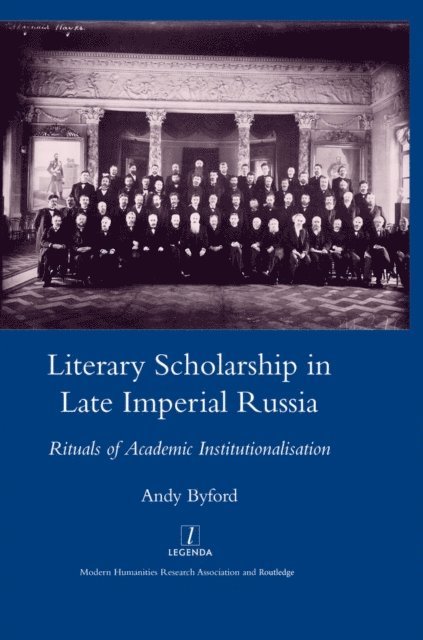
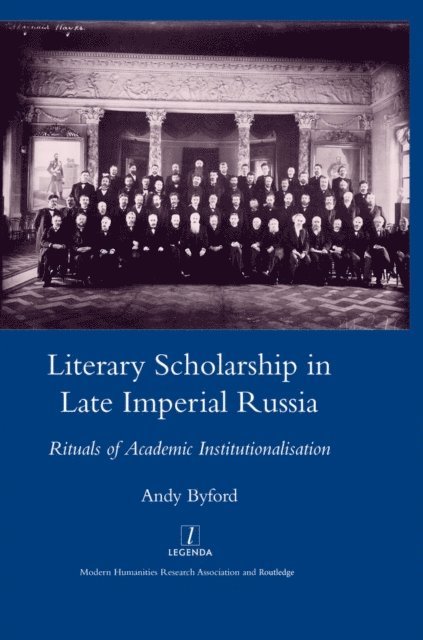
Literary Scholarship in Late Imperial Russia (1870s-1917)
Rituals of Academic Institutionalism
Av Andy Byford
E-bok, 2017
926 kr
Lägg i varukorg
"The turn of the twentieth century was a decisive moment in the institutionalisation of Russia''s literary scholarship. This is the first book in the English language to provide an in-depth analysis of the emergence of Russia''s literary academia in the pre-Revolutionary era. In particular, Byford …
Literary Scholarship in Late Imperial Russia (1870s-1917)
Rituals of Academic Institutionalism
Av Andy Byford
E-bok, 2017
956 kr
Lägg i varukorg
"The turn of the twentieth century was a decisive moment in the institutionalisation of Russia''s literary scholarship. This is the first book in the English language to provide an in-depth analysis of the emergence of Russia''s literary academia in the pre-Revolutionary era. In particular, Byford …
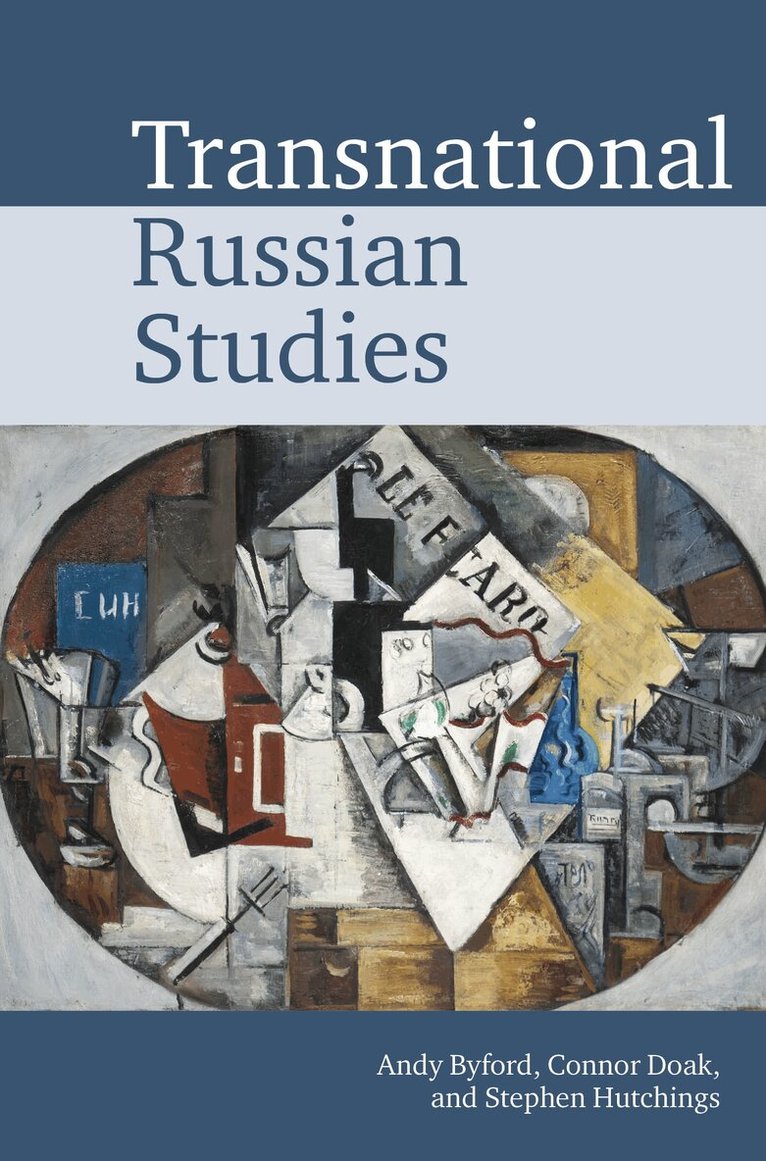
Transnational Russian Studies
Av Andy Byford, Connor Doak m. fl.
Inbunden, 2020
2167 kr
Lägg i varukorg
Transnational Russian Studies offers an approach to understanding Russia based on the idea that language, society and culture do not neatly coincide, but should be seen as flows of meaning across ever-shifting boundaries. Our book moves beyond static conceptions of Russia as a discrete nation with …
Transnational Russian Studies
Av Andy Byford, Connor Doak m. fl.
Häftad, 2020
626 kr
Lägg i varukorg
Transnational Russian Studies offers an approach to understanding Russia based on the idea that language, society and culture do not neatly coincide, but should be seen as flows of meaning across ever-shifting boundaries. Our book moves beyond static conceptions of Russia as a discrete nation with …
Literary Scholarship in Late Imperial Russia (1870s-1917)
Rituals of Academic Institutionalism
Av Andy Byford
Inbunden, 2007
1150 kr
Lägg i varukorg
This book analyses a representative selection of discursive and ceremonial practices in which one finds the most evident articulation of common 'principles of vision and division' symbolically constructing the professional space of academic literary studies in late Imperial Russia.
Modern Languages and Cultures
A Handbook
Av Andy Byford, Claudia Nitschke
Inbunden, 2027
2442 kr
Kommande
The Handbook offers the first systematic overview of key transformations of Modern Languages Studies (MLS) in the present century and explores how new framing concepts – ‘the transnational’, ‘the global’, ‘the world’, ‘the planetary’, ‘the local’ – modify entrenched notions of nationhood. It not …