Angela Vergara - Böcker
Visar alla böcker från författaren Angela Vergara. Handla med fri frakt och snabb leverans.
3 produkter
3 produkter
Copper Workers, International Business, and Domestic Politics in Cold War Chile
Häftad, Engelska, 2012
385 kr
Skickas inom 7-10 vardagar
In this book, Angela Vergara tells the story of the labor movement in Chile through the experiences of workers in copper mines owned by Anaconda, a major multinational corporation. Relying on archival sources, newspapers, and oral histories, she recounts the workers’ economic, political, and social struggles over the forty-five-year period when the Cold War dominated politics.The labor movement, Vergara argues, was a progressive force instrumental in the introduction of national reforms and the radicalization of politics. In Chile its role is critical to understanding the expansion of the welfare state in the 1950s, the introduction of social reforms in the 1960s, and the Chilean road to socialism in the early 1970s. The book reveals the historical origin of the implementation of neoliberal policies, the erosion of labor rights, and the emergence of the so-called Chilean economic model championed by the “Chicago boys.” Many of the changes undertaken in the 1970s and 1980s, the book shows, had their impetus in the crisis of the import-substitution effort of the late 1950s.
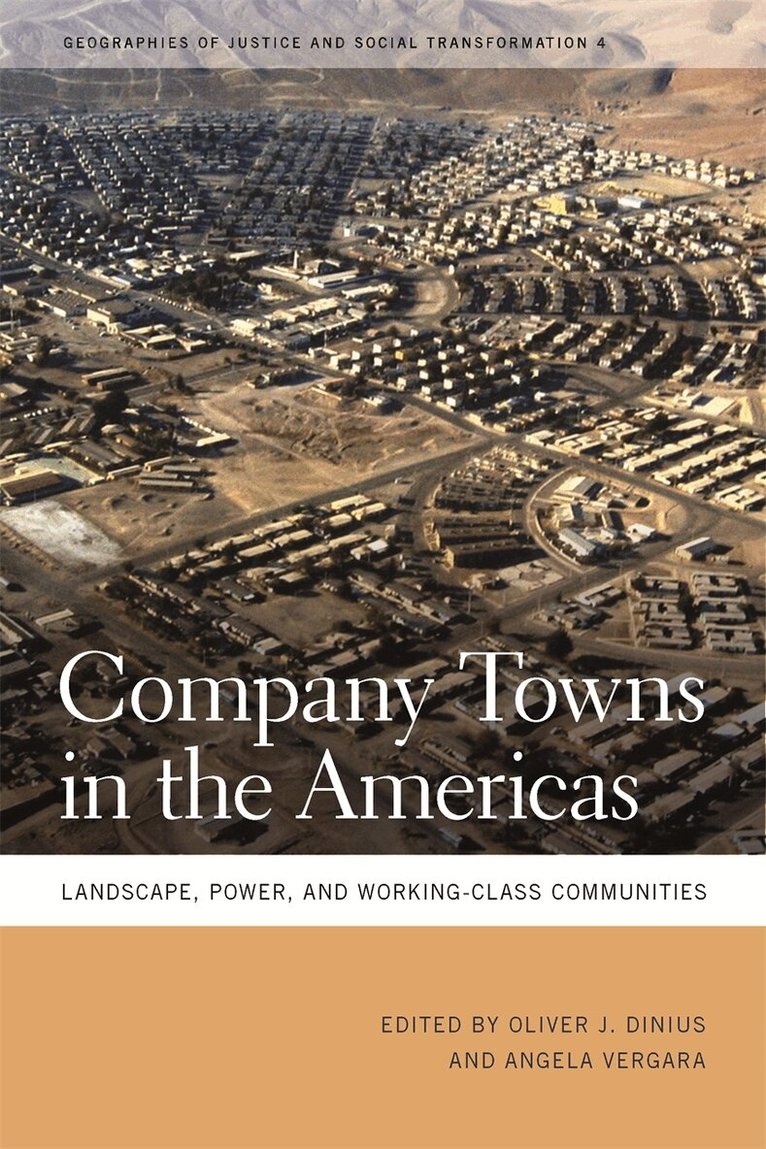
Company Towns in the Americas
Landscape, Power, and Working-Class Communities
Inbunden, Engelska, 2011
1 122 kr
Skickas inom 5-8 vardagar
Company towns were the spatial manifestation of a social ideology and an economic rationale. The contributors to this volume show how national politics, social protest, and local culture transformed those founding ideologies by examining the histories of company towns in six countries: Argentina (Firmat), Brazil (Volta Redonda, Santos, Fordlândia), Canada (Sudbury), Chile (El Salvador), Mexico (Santa Rosa, Río Blanco), and the United States (Anaconda, Kellogg, and Sunflower City).Company towns across the Americas played similar economic and social roles. They advanced the frontiers of industrial capitalism and became powerful symbols of modernity. They expanded national economies by supporting extractive industries on thinly settled frontiers and, as a result, brought more land, natural resources, and people under the control of corporations. U.S. multinational companies exported ideas about work discipline, race, and gender to Latin America as they established company towns there to extend their economic reach. Employers indeed shaped social relations in these company towns through education, welfare, and leisure programs, but these essays also show how working-class communities reshaped these programs to serve their needs.The editors’ introduction and a theoretical essay by labor geographer Andrew Herod provide the context for the case studies and illuminate how the company town serves as a window into both the comparative and transnational histories of labor under industrial capitalism.
441 kr
Skickas inom 5-8 vardagar
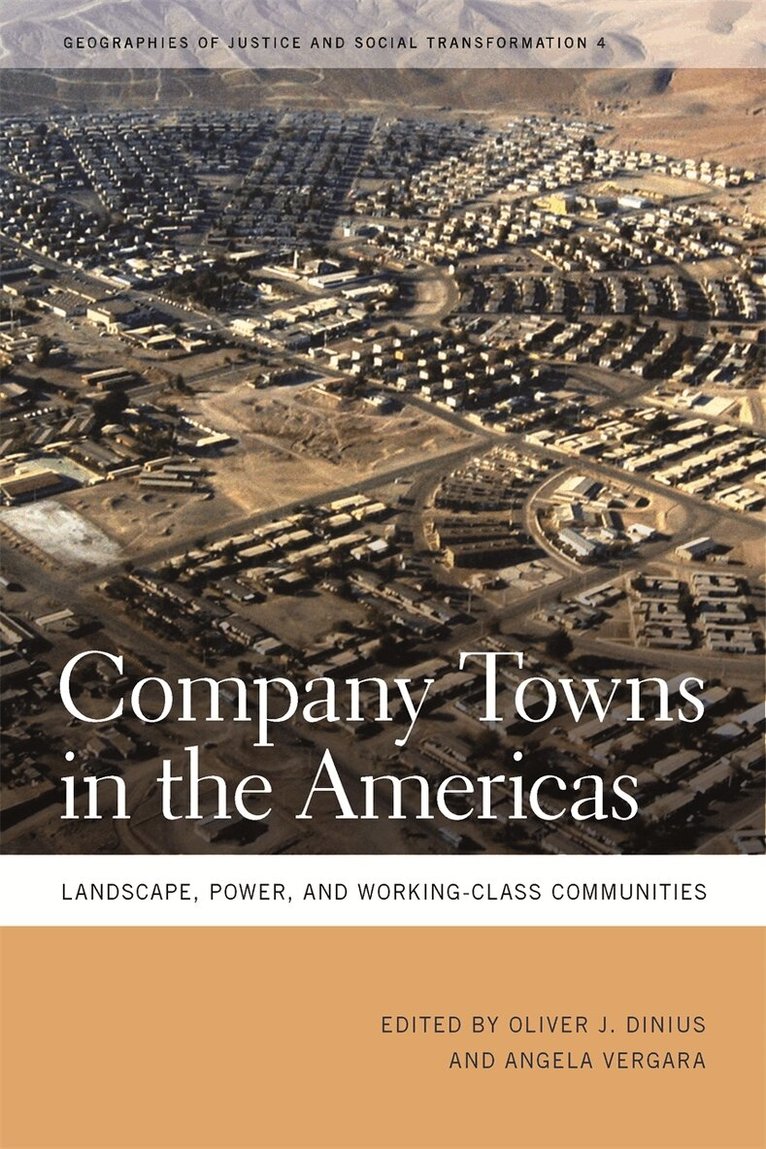
Company towns were the spatial manifestation of a social ideology and an economic rationale. The contributors to this volume show how national politics, social protest, and local culture transformed those founding ideologies by examining the histories of company towns in six countries: Argentina (Firmat), Brazil (Volta Redonda, Santos, Fordlândia), Canada (Sudbury), Chile (El Salvador), Mexico (Santa Rosa, Río Blanco), and the United States (Anaconda, Kellogg, and Sunflower City).Company towns across the Americas played similar economic and social roles. They advanced the frontiers of industrial capitalism and became powerful symbols of modernity. They expanded national economies by supporting extractive industries on thinly settled frontiers and, as a result, brought more land, natural resources, and people under the control of corporations. U.S. multinational companies exported ideas about work discipline, race, and gender to Latin America as they established company towns there to extend their economic reach. Employers indeed shaped social relations in these company towns through education, welfare, and leisure programs, but these essays also show how working-class communities reshaped these programs to serve their needs.The editors’ introduction and a theoretical essay by labor geographer Andrew Herod provide the context for the case studies and illuminate how the company town serves as a window into both the comparative and transnational histories of labor under industrial capitalism.