Angelique Richardson - Böcker
Visar alla böcker från författaren Angelique Richardson. Handla med fri frakt och snabb leverans.
3 produkter
3 produkter
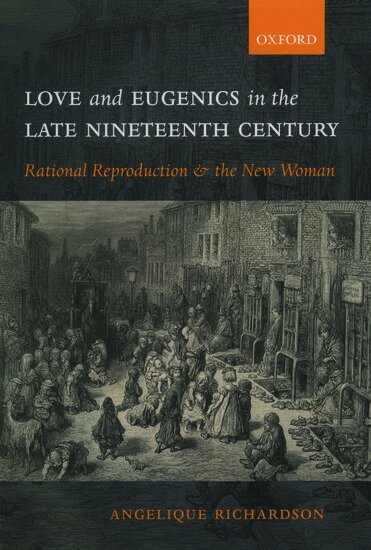
Love and Eugenics in the Late Nineteenth Century
Rational Reproduction and the New Woman
Inbunden, Engelska, 2003
2 992 kr
Skickas inom 7-10 vardagar
The idea of eugenics - human selective breeding - originated in Victorian Britain in response to the urban poor. Darwin's evolutionary theory had laid the foundations for eugenics, replacing paradise with primordial slime. Man had not fallen from Grace, but risen from the swamps. And, as architect of his own destiny, he might rise still further. Eugenics was developed by Darwin's cousin Francis Galton in the 1860s. Embracing the idea of evolution, eugenists argued that through the judicious control of human reproduction, and the numerical increase of the middle class, Britain's supremacy in the world could be maintained. Born and bred among the competitive Victorian middle class, eugenics was a biologistic discourse on class. Aiming at 'racial improvement' by altering the balance of class in society, it was, Galton argued, 'practical Darwinism'. Eugenics found its most sustained expression in fiction and the periodical press, and was central to late nineteenth-century ideas on social progress, forming part of the debate between hereditarians and environmentalists that peaked in the closing years of the century. Even Gladstone had his vital statistics measured in Galton's eugenic laboratory. Among the champions of eugenics were social purity feminists and New Women, writers such as George Egerton, Ellice Hopkins, and Sarah Grand, who argued that women were naturally - biologically - moral, and that through rational reproduction middle-class women could regenerate the British imperial race. The New Woman has been the subject of numerous recent critical works. However, the oppressive ideas that coexisted with the mancipatory theories of some New Women - ideas that were supremely class conscious - remain largely unexamined, as the focus remains on her more progressive aspects. Love and Eugenics in the Late Nineteenth Century recontextualizes New Woman writers, demonstrating that they were as concerned with the questions of poverty, sickness and health as they were with the changing role of women, the issue for which they are currently generally known and celebrated. Focusing on fiction and the press, and drawing on the papers and published work of Galton and other eugenists, Angelique Richardson reveals the cultural pervasiveness of eugenics and explores, for the first time, the intimate relations between early feminism and eugenics, and making a radical contribution to nineteenth-century studies.
Love and Eugenics in the Late Nineteenth Century
Rational Reproduction and the New Woman
Häftad, Engelska, 2008
790 kr
Skickas inom 7-10 vardagar
The idea of eugenics - human selective breeding - originated in Victorian Britain in response to the urban poor. Darwin's evolutionary theory had laid the foundations for eugenics, replacing paradise with primordial slime. Man had not fallen from Grace, but risen from the swamps. And, as architect of his own destiny, he might rise still further. Eugenics was developed by Darwin's cousin Francis Galton in the 1860s. Embracing the idea of evolution, eugenists argued that through the judicious control of human reproduction, and the numerical increase of the middle class, Britain's supremacy in the world maintained. Born and bred among the competitive Victorian middle class, eugenics was a biologistic discourse on class. Aiming at 'racial improvement' by altering the balance of class in society, it was, Galton argued, 'practical Darwinism'. Eugenics found its most sustained expression in fiction and the periodical press, and was central to late nineteenth-century ideas on social progress forming part of the debate between hereditarians and environmentalists that peaked in the closing years of the century. Even Gladstone had his vital statistics measured in Galton's eugenic laboratory. Among the champions of eugenics were social purity feminists and New Women, writers such as George Egerton, Ellice Hopkins, and Sarah Grand, who argued that women were naturally- biologically - moral, and that through rational reproduction middle-class women could regenerate the British imperial race. The New Woman has been the subject of numerous critical works in the last ten years or so. However, the oppressive ideas that coexisted with the emancipatory theories of some New Women - ideas that were supremely class conscious - remain largely unexamined, as the focus remains on her more progressive aspects. Love and Eugenics in the Late Nineteenth Century recontextualizes New Woman writers, demonstrating that they were as concerned with the questions of poverty, sickness and health as they were with the changing role of women, the issue for which they are currently generally known and celebrated. Focusing on fiction and the press, and drawing on the papers and published work of Galton and other eugenists, Love and Eugenics in the Late Nineteenth Century reveals the cultural pervasiveness of eugenics and explores, for the first time, the intimate relations between early feminism and eugenics, and making a radical contribution to nineteenth-century studies.
2 391 kr
Skickas inom 5-8 vardagar
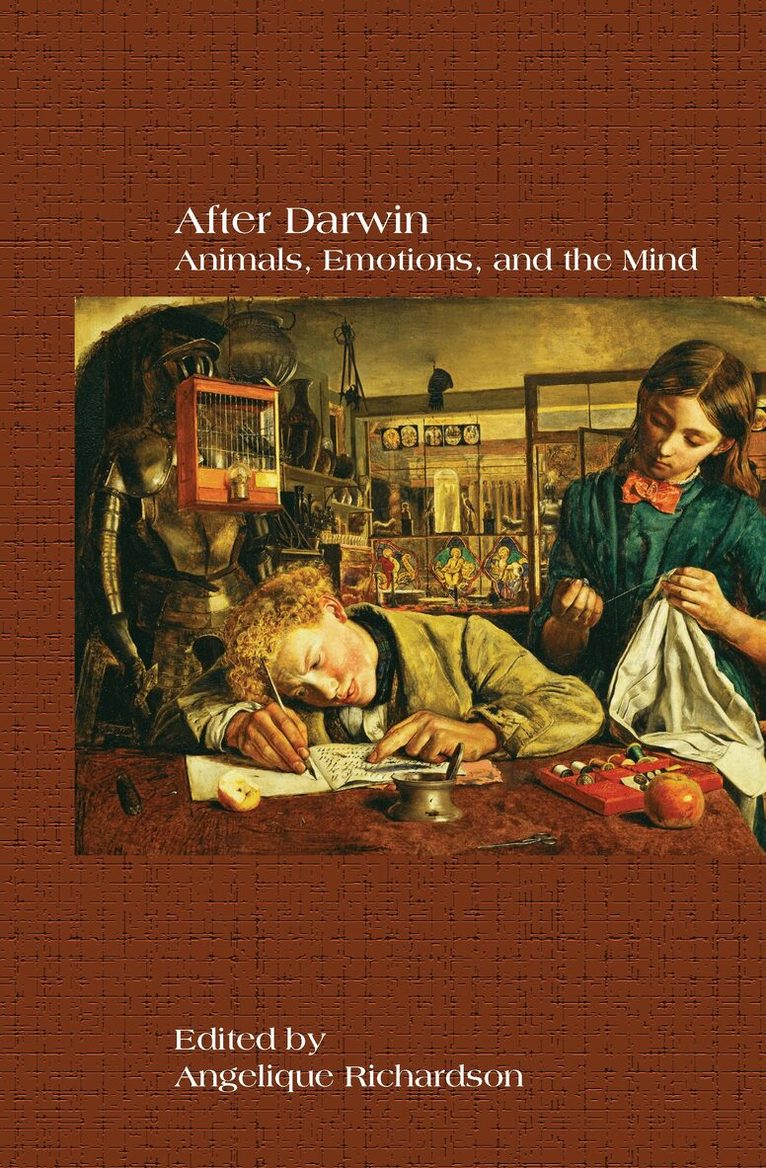
‘What is emotion?’ pondered the young Charles Darwin in his notebooks. How were the emotions to be placed in an evolutionary framework? And what light might they shed on human-animal continuities? These were among the questions Darwin explored in his research, assisted both by an acute sense of observation and an extraordinary capacity for fellow feeling, not only with humans but with all animal life. After Darwin: Animals, Emotions, and the Mind explores questions of mind, emotion and the moral sense which Darwin opened up through his research on the physical expression of emotions and the human–animal relation. It also examines the extent to which Darwin’s ideas were taken up by Victorian writers and popular culture, from George Eliot to the Daily News. Bringing together scholars from biology, literature, history, psychology, psychiatry and paediatrics, the volume provides an invaluable reassessment of Darwin’s contribution to a new understanding of the moral sense and emotional life, and considers the urgent scientific and ethical implications of his ideas today.