Angharad Closs Stephens - Böcker
Visar alla böcker från författaren Angharad Closs Stephens. Handla med fri frakt och snabb leverans.
8 produkter
8 produkter
2 290 kr
Skickas inom 10-15 vardagar
This inter-disciplinary edited volume critically examines the dynamics of the War on Terror, focusing on the theme of the politics of response.The book explores both how responses to terrorism - by politicians, authorities and the media - legitimise particular forms of sovereign politics, and how terrorism can be understood as a response to global inequalities, colonial and imperial legacies, and the dominant idioms of modern politics. The investigation is made against the backdrop of the 7 July 2005 bombings in London and their aftermath, which have gone largely unexamined in the academic literature to date. The case offers a provocative site for analysing the diverse logics implicated in the broader context of the War on Terror, for examining how terrorist events are framed, and how such framings serve to legitimise particular policies and political practices.
807 kr
Skickas inom 10-15 vardagar
This inter-disciplinary edited volume critically examines the dynamics of the War on Terror, focusing on the theme of the politics of response.The book explores both how responses to terrorism - by politicians, authorities and the media - legitimise particular forms of sovereign politics, and how terrorism can be understood as a response to global inequalities, colonial and imperial legacies, and the dominant idioms of modern politics. The investigation is made against the backdrop of the 7 July 2005 bombings in London and their aftermath, which have gone largely unexamined in the academic literature to date. The case offers a provocative site for analysing the diverse logics implicated in the broader context of the War on Terror, for examining how terrorist events are framed, and how such framings serve to legitimise particular policies and political practices.
2 155 kr
Skickas inom 10-15 vardagar
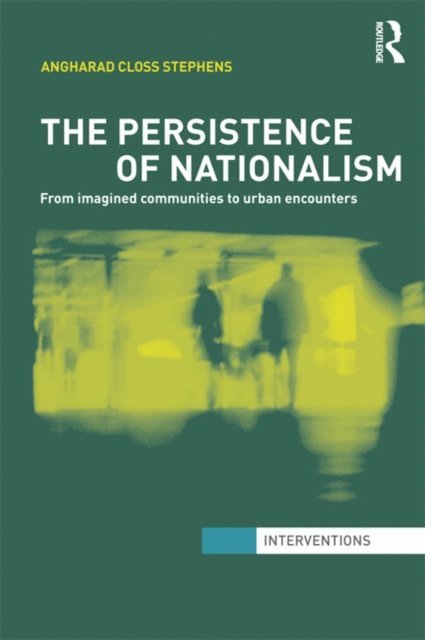
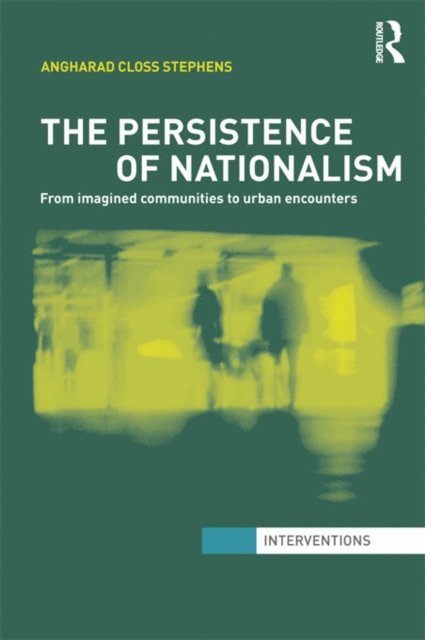
This is a book about the difficulties of thinking and acting politically in ways that refuse the politics of nationalism. The book offers a detailed study of how contemporary attempts by theorists of cosmopolitanism, citizenship, globalism and multiculturalism to go beyond nationalism often reproduce key aspects of a nationalist imaginary. It argues that the challenge of resisting nationalism will require more than a shift in the scale of politics – from the national up to the global or down to the local, and more than a shift in the count of politics – to an emphasis on diversity and multiculturalism. In order to avoid the grip of ‘nationalist thinking’, we need to re-open the question of what it means to imagine community. Set against the backdrop of the imaginative geographies of the War in Terror and the new beginning promised by the Presidency of Barack Obama, the book shows how critical interventions often work in collaboration with nationalist politics, even when the aim is to resist nationalism. It claims that a nationalist imaginary includes powerful understandings of freedom, subjectivity, sovereignty and political space/time which must also be placed under question if we want to avoid reproducing ideas about ‘us’ and ‘them’. Drawing on insights from feminist, cultural and postcolonial studies as well as critical approaches to International Relations and Geography, this book presents a unique and refreshing approach to the politics of nationalism.
1 276 kr
Skickas inom 10-15 vardagar
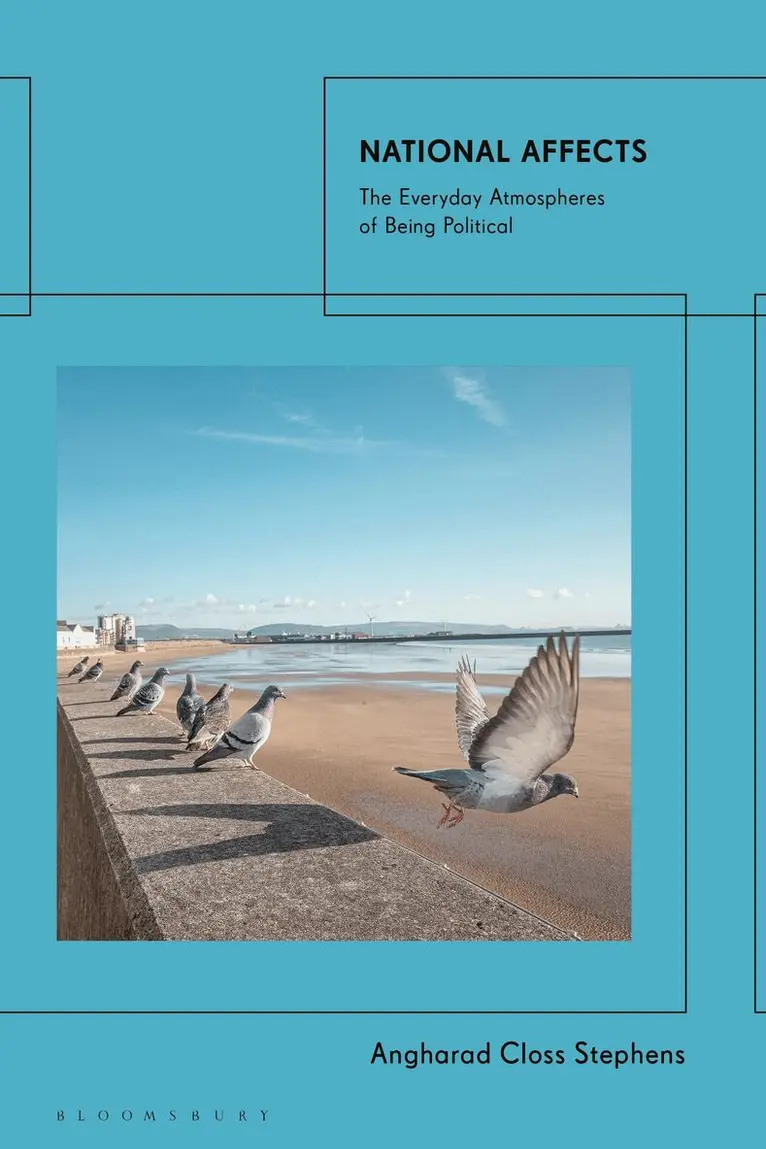
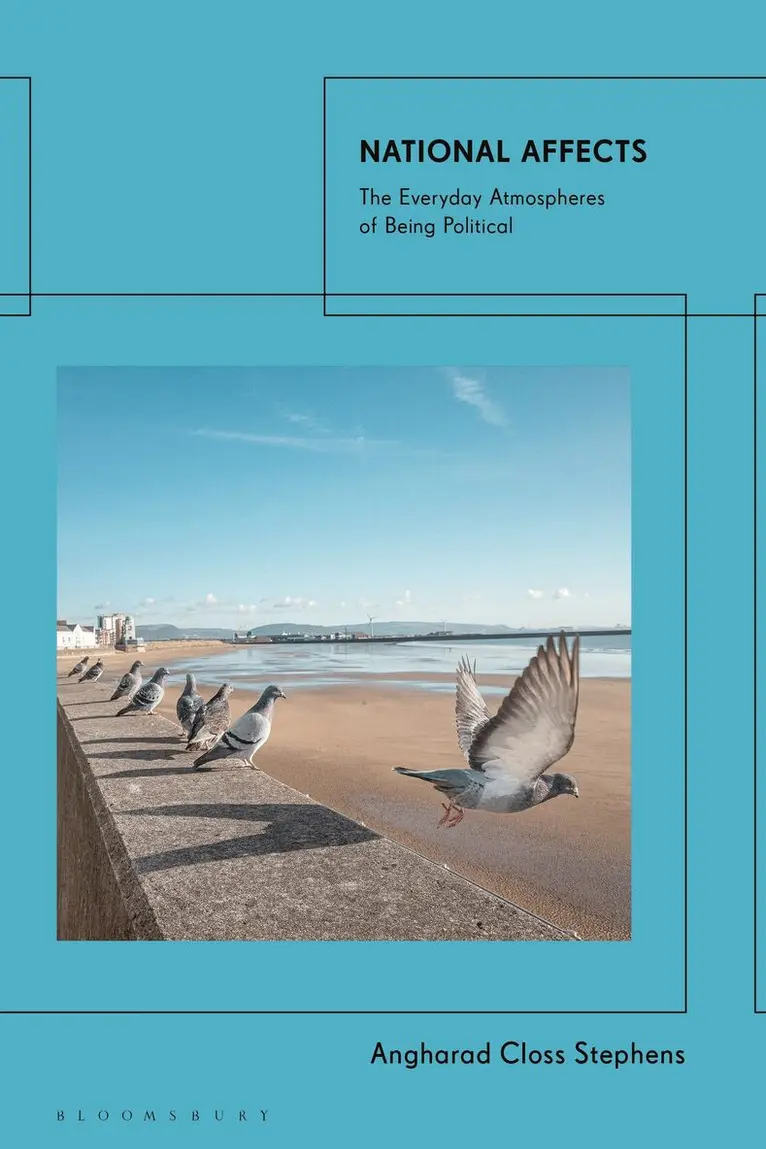
Identity is widely acknowledged to be a felt experience, yet questions of atmosphere, mood and public sentiments are rarely made central to understanding the global politics of nationalism. This book asks what difference it makes when we address national identity as principally an affective force? National Affects traces how ideas about ‘us and them’ take form in ordinary spaces, in ways that are both deeply felt and hardly noticeable, in studies of global events that range from the London 2012 Olympic Games to responses to acts of terror, the European refugee crisis and ‘Brexit’. In this timely intervention, Angharad Closs Stephens addresses the affective dimensions of being together to open new angles in the study of nationalism and global politics. She asks how the nation is felt in everyday life, as well as differently experienced, and investigates different forms of enacting being together to generate new insights in the study of national identity. National Affects draws on academic theories in the study of Politics, International Relations and Human Geography, as well as stories, performance works and novels, to establish a new tone of critical enquiry. Informed by longstanding critical interrogations of the politics of ‘us and them’, this book argues that these ideas are not as stable as they are often made to seem. Drawing on a combination of artistic and academic interventions, this book offers a refreshing approach to conceptualising the politics of nationalism, identity and citizenship. In its focus on everyday atmospheres, it identifies new registers for intervening politically. Overall, National Affects outlines other ways of imagining and practising being political together, beyond the exclusionary politics of nationalism. This book is available as open access through the Bloomsbury Open Access programme and is available on www.bloomsburycollections.com.
408 kr
Skickas inom 10-15 vardagar
Identity is widely acknowledged to be a felt experience, yet questions of atmosphere, mood and public sentiments are rarely made central to understanding the global politics of nationalism. This book asks what difference it makes when we address national identity as principally an affective force? National Affects traces how ideas about ‘us and them’ take form in ordinary spaces, in ways that are both deeply felt and hardly noticeable, in studies of global events that range from the London 2012 Olympic Games to responses to acts of terror, the European refugee crisis and ‘Brexit’. In this timely intervention, Angharad Closs Stephens addresses the affective dimensions of being together to open new angles in the study of nationalism and global politics. She asks how the nation is felt in everyday life, as well as differently experienced, and investigates different forms of enacting being together to generate new insights in the study of national identity. National Affects draws on academic theories in the study of Politics, International Relations and Human Geography, as well as stories, performance works and novels, to establish a new tone of critical enquiry. Informed by longstanding critical interrogations of the politics of ‘us and them’, this book argues that these ideas are not as stable as they are often made to seem. Drawing on a combination of artistic and academic interventions, this book offers a refreshing approach to conceptualising the politics of nationalism, identity and citizenship. In its focus on everyday atmospheres, it identifies new registers for intervening politically. Overall, National Affects outlines other ways of imagining and practising being political together, beyond the exclusionary politics of nationalism. This book is available as open access through the Bloomsbury Open Access programme and is available on www.bloomsburycollections.com.
2 088 kr
Skickas inom 10-15 vardagar
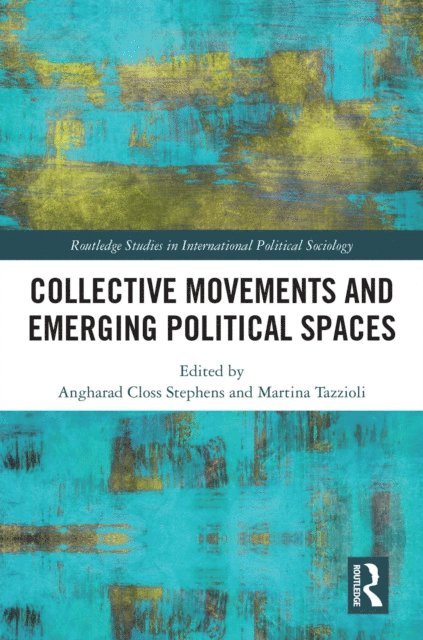
Collective Movements and Emerging Political Spaces addresses the politics of new forms of collective movements, ranging from anti‑austerity protests to migrant struggles and anticolonial demonstrations.Drawing on examples from various countries, as well as struggles taking place across borders, this book traces the emergence of new practices of being political, described as ‘collective movements’. These represent something looser than a common identity – long held as necessary for a political struggle to cohere. They also suggest a different understanding of emancipation to the promise of transformation in time. By addressing various examples of ‘collective movements’, the chapters in this book examine other ways of being political together, formed through relations carved in cramped spaces or small movements that rearrange our ideas about what is possible. Drawing on the temporary and fleeting nature of many migrants’ struggles, the chapters develop concepts and approaches that acknowledge how such mobilisations trouble many standard political sociological categories – including nation, identity and citizenship. In combining an attentiveness to theories of affect, emotion and atmosphere, they also go beyond a focus on either individuals or collectives, to address the ways bodies are moved by the world and by others. Overall, the chapters propose new questions, methods and starting points for addressing collective movements in emerging political spaces, and for understanding how what counts as politics is being redrawn on the ground.This book will interest students, researchers and scholars of international political sociology, human geography, international relations, critical security studies and migration studies.
631 kr
Skickas inom 10-15 vardagar
Collective Movements and Emerging Political Spaces addresses the politics of new forms of collective movements, ranging from anti‑austerity protests to migrant struggles and anticolonial demonstrations.Drawing on examples from various countries, as well as struggles taking place across borders, this book traces the emergence of new practices of being political, described as ‘collective movements’. These represent something looser than a common identity – long held as necessary for a political struggle to cohere. They also suggest a different understanding of emancipation to the promise of transformation in time. By addressing various examples of ‘collective movements’, the chapters in this book examine other ways of being political together, formed through relations carved in cramped spaces or small movements that rearrange our ideas about what is possible. Drawing on the temporary and fleeting nature of many migrants’ struggles, the chapters develop concepts and approaches that acknowledge how such mobilisations trouble many standard political sociological categories – including nation, identity and citizenship. In combining an attentiveness to theories of affect, emotion and atmosphere, they also go beyond a focus on either individuals or collectives, to address the ways bodies are moved by the world and by others. Overall, the chapters propose new questions, methods and starting points for addressing collective movements in emerging political spaces, and for understanding how what counts as politics is being redrawn on the ground.This book will interest students, researchers and scholars of international political sociology, human geography, international relations, critical security studies and migration studies.
549 kr
Skickas inom 10-15 vardagar
This is a book about the difficulties of thinking and acting politically in ways that refuse the politics of nationalism. The book offers a detailed study of how contemporary attempts by theorists of cosmopolitanism, citizenship, globalism and multiculturalism to go beyond nationalism often reproduce key aspects of a nationalist imaginary. It argues that the challenge of resisting nationalism will require more than a shift in the scale of politics – from the national up to the global or down to the local, and more than a shift in the count of politics – to an emphasis on diversity and multiculturalism. In order to avoid the grip of ‘nationalist thinking’, we need to re-open the question of what it means to imagine community. Set against the backdrop of the imaginative geographies of the War in Terror and the new beginning promised by the Presidency of Barack Obama, the book shows how critical interventions often work in collaboration with nationalist politics, even when the aim is to resist nationalism. It claims that a nationalist imaginary includes powerful understandings of freedom, subjectivity, sovereignty and political space/time which must also be placed under question if we want to avoid reproducing ideas about ‘us’ and ‘them’. Drawing on insights from feminist, cultural and postcolonial studies as well as critical approaches to International Relations and Geography, this book presents a unique and refreshing approach to the politics of nationalism.