Angus J. L. Winchester - Böcker
Visar alla böcker från författaren Angus J. L. Winchester. Handla med fri frakt och snabb leverans.
5 produkter
5 produkter
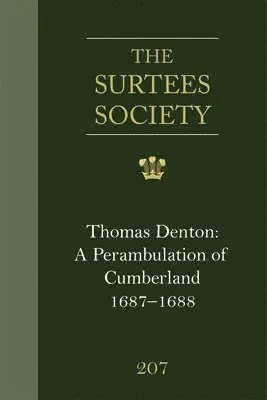
Thomas Denton: A Perambulation of Cumberland, 1687-8, Including Descriptions of Westmorland, the Isle of Man and Ireland: (Cumbria Record Office MS D/
Inbunden, Engelska, 2003
632 kr
Skickas inom 7-10 vardagar
Del 213 - Publications of the Surtees Society
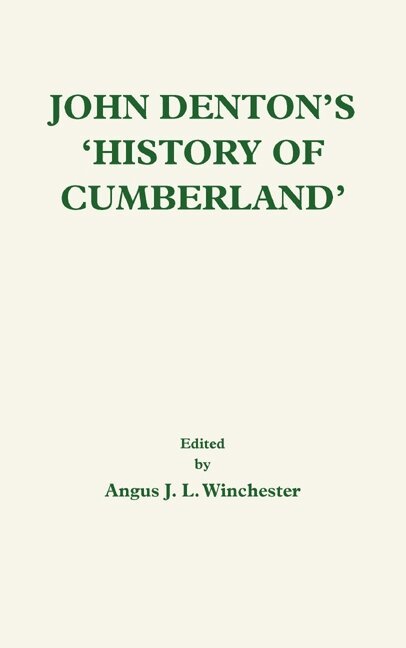
John Denton's History of Cumberland
Inbunden, Engelska, 2010
632 kr
Skickas inom 7-10 vardagar
New and definitive edition of the earliest history of Cumberland.John Denton's history of Cumberland, compiled in the first decade of the seventeenth century, formed the basis of almost all antiquarian writing on Cumberland for some two hundred years, and continues to be cited. It is the earliest known attempt to write a history of Cumberland and one of the first generation of antiquarian accounts of an English shire. This volume presents a completely new, critical edition of the manuscript history of Cumberland, replacing that published in 1887 by Richard S. Ferguson under the title An Accompt of the most considerable Estates and Families in the County of Cumberland [ hitherto the only published version]. The new edition attempts both toreconstruct as much as possible of the original text from surviving copies and to identify the sources from which it was drawn, enabling the factual accuracy of Denton's work to be assessed.Angus Winchester is SeniorLecturer in History at Lancaster University and a Past President of Cumberland and Westmorland Antiquarian and Archaeological Society.
1 842 kr
Skickas inom 11-20 vardagar
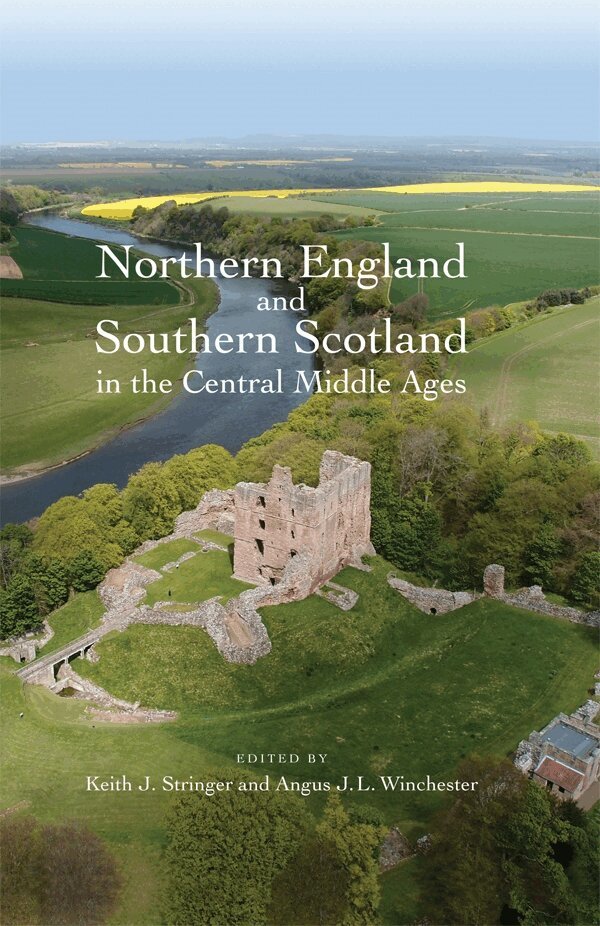
First full-length survey of the fluid relationship between these two areas at a time of rapid change.This book provides the first comprehensive analysis of the development of northern England and southern Scotland in the formative era of the twelfth and thirteenth centuries. How did "middle Britain" come to be divided between twoseparate unitary kingdoms called "England" and "Scotland"? How, and how differently, was government exercised and experienced? How did people identify themselves by their languages and naming practices? What major themes can be detected in the development of ecclesiastical structures and religious culture? What can be learned about the rural and the emerging urban environments in terms of lordly exploitation and control, settlement patterns and how the landscape itself evolved? These are among the key questions addressed by the contributors, who bring to bear multi-faceted approaches to medieval "middle Britain". Above all, by pursuing similarities and differences from a comparative "transnational" perspective it becomes clearer how the "old" interacted with the "new", what was exceptional and what was not, and how far the histories of northern England and southern Scotland point to common or not so commonfoundations and trajectories. KEITH STRINGER is Professor Emeritus of Medieval British History at Lancaster University; ANGUS WINCHESTER is Professor Emeritus of Local and Landscape History at Lancaster University.Contributors: Richard Britnell, Dauvit Broun, Janet Burton, David Ditchburn, Philip Dixon, Piers Dixon, Fiona Edmonds, Richard Oram, Keith Stringer, Chris Tabraham, Simon Taylor, Angus J.L. Winchester.
Del 14 - Garden and Landscape History
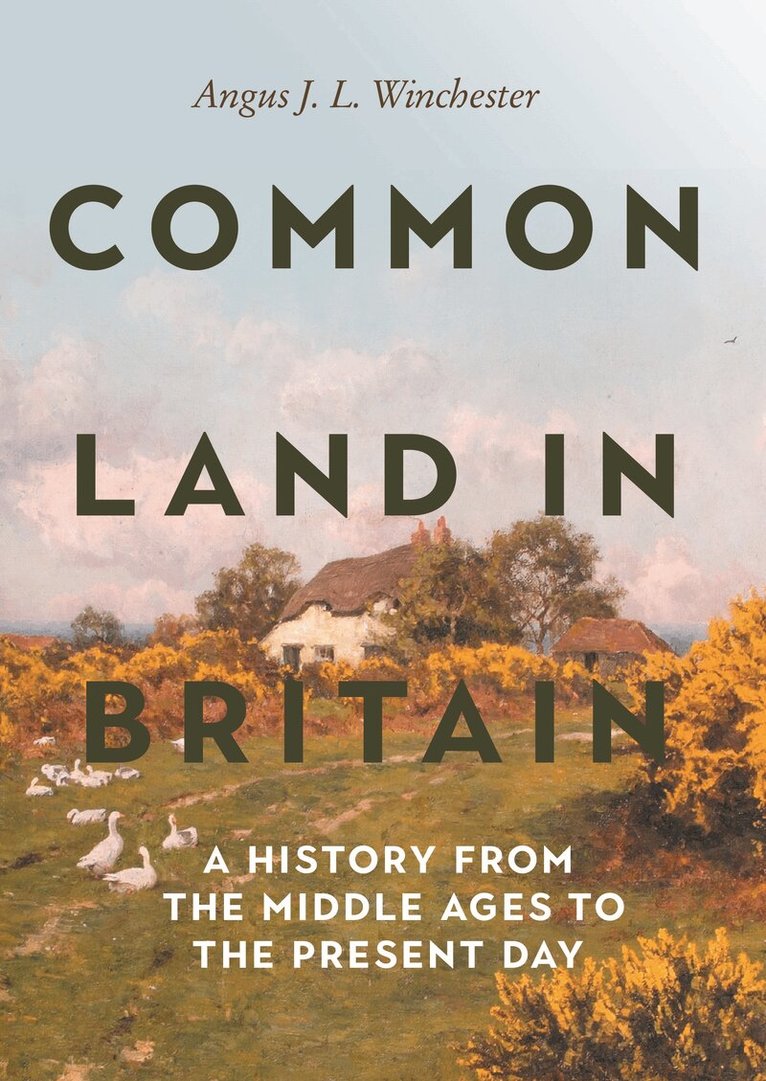
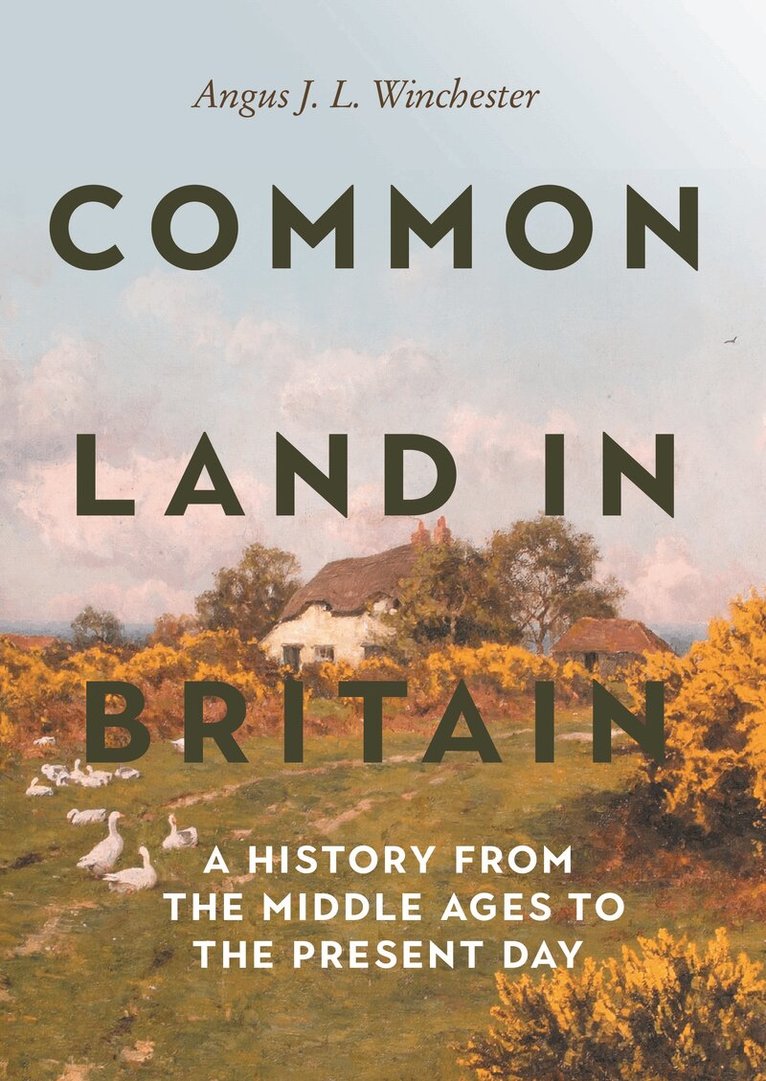
Common Land in Britain
A History from the Middle Ages to the Present Day
Inbunden, Engelska, 2022
1 212 kr
Skickas inom 10-15 vardagar
The first authoritative survey of the history of common land in Great Britain from the medieval period to present day.More than a million hectares of Britain has the status of common land, most of it consisting of semi-natural environments of mountain, moorland, wetland or heath. Formerly much more extensive, common land was, and in many places remains, an integral part of the pastoral economy. Even where it is no longer used by farmers, it plays an increasingly important role in modern life, as recreational space and for its value for nature conservation. This book provides for the first time an authoritative survey of the history of common land across all three nations of Great Britain from medieval times to the present day. It charts how commons have been viewed and valued across the centuries, how they have been used, and how their vegetation has changed, highlighting parallels and differences between the histories of common land in England, Scotland and Wales. It traces the distinctive legal status of common land and the management regimes which regulated the exercise of common rights; considers the role of commons as spaces for communal gatherings and as a resource for the poor; charts the loss of common land (but also its persistence) during the era of enclosure in the century 1760-1860; and explores the changing conceptions of the value and right use of commons since the nineteenth century, and the impact this has had on their ecological character. Eight case studies of individual commons illustrate the richness of common landscapes and their history at local level. They include crofters' common grazings in Sutherland, mountain commons in the Lake District and Snowdonia, lowland commons in Co. Durham, Herefordshire and the New Forest, turbary allotments in Lincolnshire, and the urban commons of Wimbledon and Putney Heath.
Del 14 - Garden and Landscape History
Common Land in Britain
A History from the Middle Ages to the Present Day
Häftad, Engelska, 2024
330 kr
Skickas
An authoritative survey of the history of common land in Great Britain from the medieval period to present day.More than a million hectares of Britain has the status of common land, most of it consisting of semi-natural environments of mountain, moorland, wetland or heath. Formerly much more extensive, common land was, and in many places remains, an integral part of the pastoral economy. Even where it is no longer used by farmers, it plays an increasingly important role in modern life, as recreational space and for its value for nature conservation. This book provides for the first time an authoritative survey of the history of common land across all three nations of Great Britain from medieval times to the present day. It charts how commons have been viewed and valued across the centuries, how they have been used, and how their vegetation has changed, highlighting parallels and differences between the histories of common land in England, Scotland and Wales. It traces the distinctive legal status of common land and the management regimes which regulated the exercise of common rights; considers the role of commons as spaces for communal gatherings and as a resource for the poor; charts the loss of common land (but also its persistence) during the era of enclosure in the century 1760-1860; and explores the changing conceptions of the value and right use of commons since the nineteenth century, and the impact this has had on their ecological character. Eight case studies of individual commons illustrate the richness of common landscapes and their history at local level. They include crofters' common grazings in Sutherland, mountain commons in the Lake District and Snowdonia, lowland commons in Co. Durham, Herefordshire and the New Forest, turbary allotments in Lincolnshire, and the urban commons of Wimbledon and Putney Heath.