Anita Wohlmann - Böcker
Visar alla böcker från författaren Anita Wohlmann. Handla med fri frakt och snabb leverans.
3 produkter
3 produkter
2 169 kr
Skickas inom 3-6 vardagar
Metaphor in Illness Writing argues that even when a metaphor appears problematic and limiting, it need not be dropped or dismissed. Metaphors are not inherently harmful or beneficial; instead, they can be used in unexpected and creative ways. This book analyses the illness writing of contemporary North American writers who reimagine and reappropriate the supposedly harmful metaphor 'illness is a fight' and shows how Susan Sontag, Audre Lorde, Anatole Broyard, David Foster Wallace and other writers turn the fight metaphor into a space of agency, resistance, self-knowledge and aesthetic pleasure. It joins a conversation in Medical Humanities about alternatives to the predominance of narrative and responds to the call for more metaphor literacy and metaphor competence.
289 kr
Skickas
Metaphor in Illness Writing argues that even when a metaphor appears problematic and limiting, it need not be dropped or dismissed. Metaphors are not inherently harmful or beneficial; instead, they can be used in unexpected and creative ways. This book analyses the illness writing of contemporary North American writers who reimagine and reappropriate the supposedly harmful metaphor 'illness is a fight' and shows how Susan Sontag, Audre Lorde, Anatole Broyard, David Foster Wallace and other writers turn the fight metaphor into a space of agency, resistance, self-knowledge and aesthetic pleasure. It joins a conversation in Medical Humanities about alternatives to the predominance of narrative and responds to the call for more metaphor literacy and metaphor competence.
573 kr
Skickas inom 11-20 vardagar
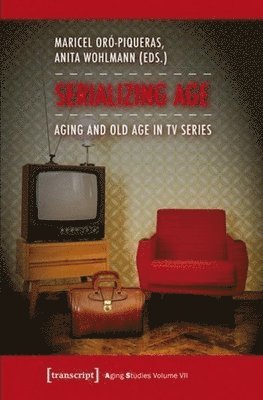
Serialized storytelling provides intriguing opportunities for critical representations of age and aging. In contrast to the finite character of films, television narratives can unfold across hundreds of episodes and multiple seasons. Contemporary viewing practices and new media technologies have resulted in complex television narratives, in which experimental temporalities and revisions of narrative linearity and chronological time have become key features. As the first of its kind, this volume investigates how TV series as a powerful cultural medium shape representations of age and aging, such as in »Orange Is The New Black«, »The Wire« or »Desperate Housewives«, to understand what it means to live in time.