Anjali Enjeti - Böcker
Visar alla böcker från författaren Anjali Enjeti. Handla med fri frakt och snabb leverans.
5 produkter
5 produkter
443 kr
Skickas inom 7-10 vardagar
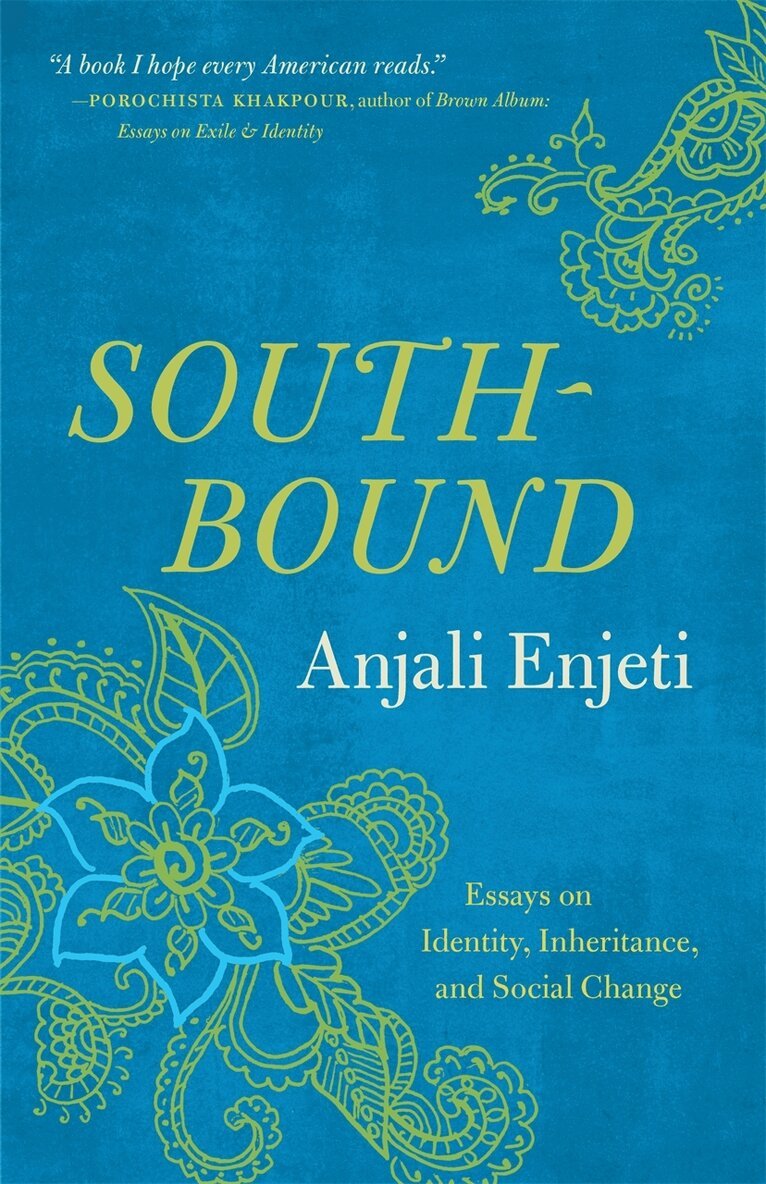
A move at age ten from a Detroit suburb to Chattanooga in 1984 thrusts Anjali Enjeti into what feels like a new world replete with Confederate flags, Bible verses, and whiteness. It is here that she learns how to get her bearings as a mixed-race brown girl in the Deep South and begins to understand how identity can inspire, inform, and shape a commitment to activism. Her own evolution is a bumpy one, and along the way Enjeti, racially targeted as a child, must wrestle with her own complicity in white supremacy and bigotry as an adult. The twenty essays of her debut collection, Southbound, tackle white feminism at a national feminist organization, the early years of the AIDS epidemic in the South, voter suppression, gun violence and the gun sense movement, the whitewashing of southern literature, the 1982 racialized killing of Vincent Chin, social media’s role in political accountability, evangelical Christianity’s marriage to extremism, and the rise of nationalism worldwide. In our current era of great political strife, this timely collection by Enjeti, a journalist and organizer, paves the way for a path forward, one where identity drives coalition-building and social change.
328 kr
Skickas inom 7-10 vardagar
This anthology of eight short stories and eight narrative essays depicts diverse facets of the South Asian experience in the American South. Some of them relate to the proverbial longing for what the immigrants have left behind, while the others spotlight the immigrants’ struggles to reconcile with realities they did not sign up for. In Chaitali Sen’s “The Immigrant,” Dhruv is unable to talk about a lost boy because he feels “as if he were trapping the boy with his story,” as if the lost boy’s story were his own story of getting lost in a foreign country. In Hasanthika Sirisena’s “Pine,” a Christmas tree becomes more than “only a pine tree with decorations thrown on it” when Lakshmi’s ex-husband lets her know he is converting to Christianity “to get ahead in this country.” Aruni Kashyap’s “Nafisa Ali’s Life, Love, and Friendships, Before and after the Travel Ban” tell a post-2016 immigrant story in which love is baffling. In “Gettysburg,” Kirtan Nautiyal asks, how does an immigrant become part of the new country’s history? Soniah Kamal’s essay “Writing the Immigrant Southern in the New New South” reflects on what it means to be an immigrant writer and if one can write from two places at once. Together, the stories and essays in the anthology compose a mosaic of South Asian lived experiences in the American South.
250 kr
Tillfälligt slut
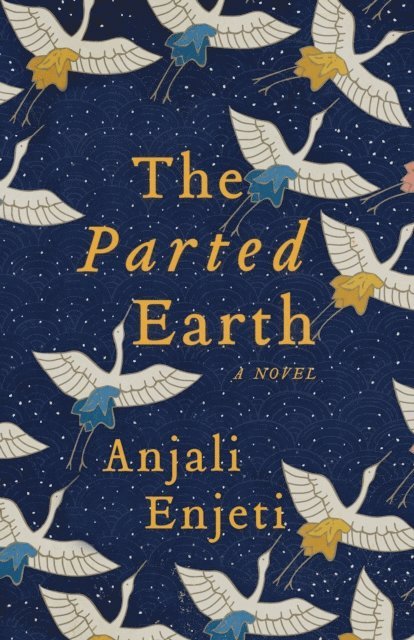
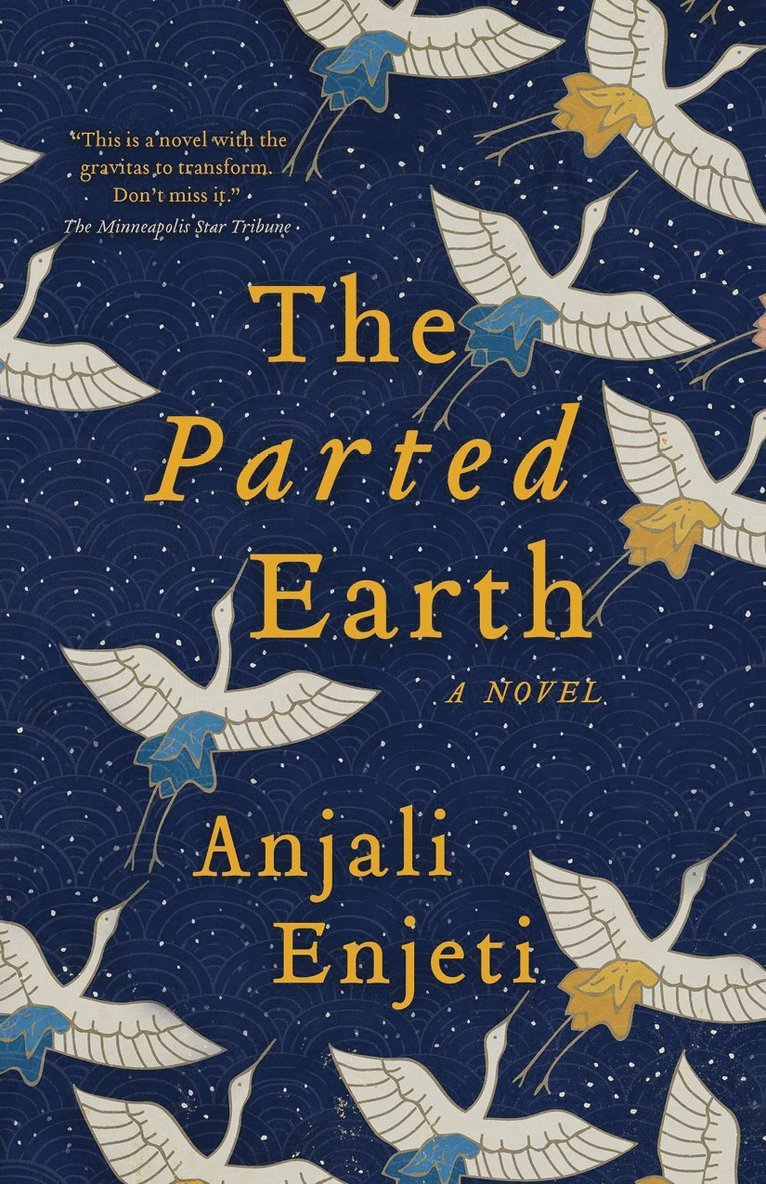
Spanning more than half a century and cities from New Delhi to Atlanta, Anjali Enjeti’s debut is a heartfelt and human portrait of the long shadow of the Partition of India on the lives of three generations of women.The story begins in August 1947. Unrest plagues the streets of New Delhi leading up to the birth of the Muslim majority nation of Pakistan, and the Hindu majority nation of India. Sixteen-year-old Deepa navigates the changing politics of her home, finding solace in messages of intricate origami from her secret boyfriend Amir. Soon Amir flees with his family to Pakistan and a tragedy forces Deepa to leave the subcontinent forever.The story also begins sixty years later and half a world away, in Atlanta. While grieving both a pregnancy loss and the implosion of her marriage, Deepa’s granddaughter Shan begins the search for her estranged grandmother, a prickly woman who had little interest in knowing her. As she pieces together her family history shattered by the Partition, Shan discovers how little she actually knows about the women in her family and what they endured.For readers of Jess Walter’s Beautiful Ruins, The Parted Earth follows Shan on her search for identity after loss uproots her life. Above all, it is a novel about families weathering the lasting violence of separation, and how it can often takes a lifetime to find unity and peace.
164 kr
Tillfälligt slut
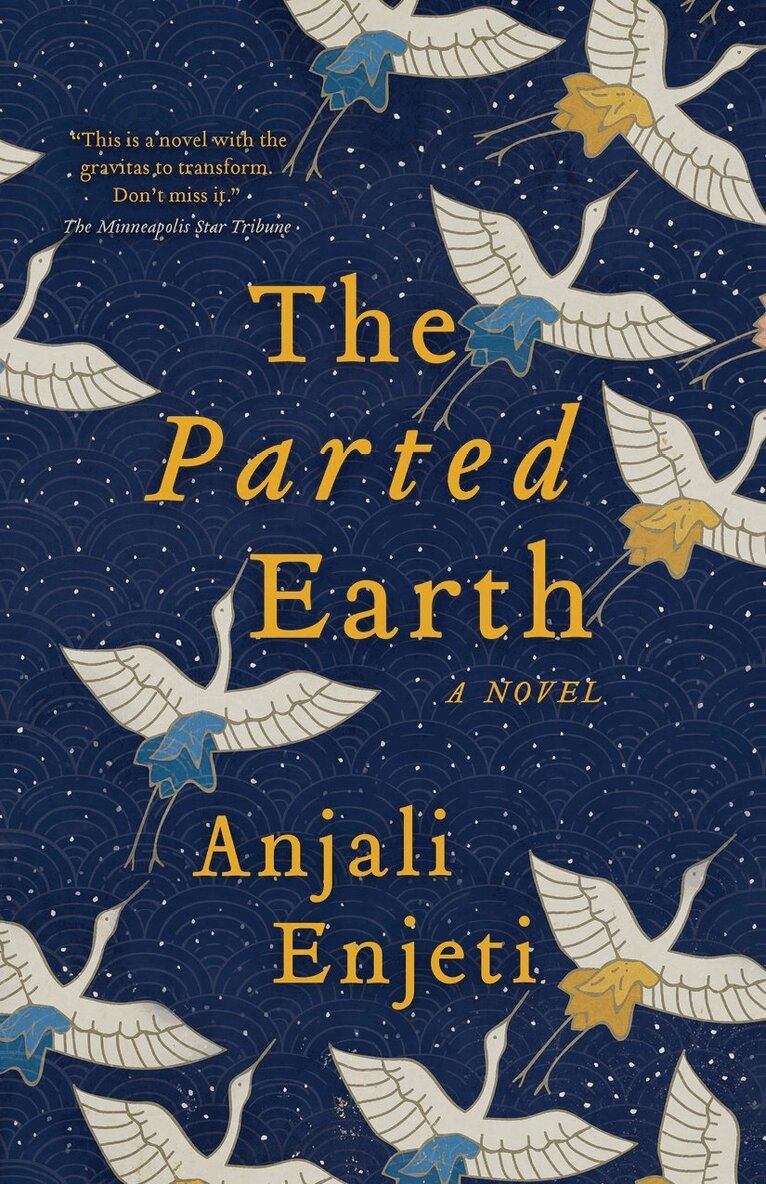
Spanning more than half a century and cities from New Delhi to Atlanta, Anjali Enjeti’s debut is a heartfelt and human portrait of the long shadow of the Partition of India on the lives of three generations of women.The story begins in August 1947. Unrest plagues the streets of New Delhi leading up to the birth of the Muslim majority nation of Pakistan, and the Hindu majority nation of India. Sixteen-year-old Deepa navigates the changing politics of her home, finding solace in messages of intricate origami from her secret boyfriend Amir. Soon Amir flees with his family to Pakistan and a tragedy forces Deepa to leave the subcontinent forever.The story also begins sixty years later and half a world away, in Atlanta. While grieving both a pregnancy loss and the implosion of her marriage, Deepa’s granddaughter Shan begins the search for her estranged grandmother, a prickly woman who had little interest in knowing her. As she pieces together her family history shattered by the Partition, Shan discovers how little she actually knows about the women in her family and what they endured.For readers of Jess Walter’s Beautiful Ruins, The Parted Earth follows Shan on her search for identity after loss uproots her life. Above all, it is a novel about families weathering the lasting violence of separation, and how it can often takes a lifetime to find unity and peace.
133 kr
Skickas
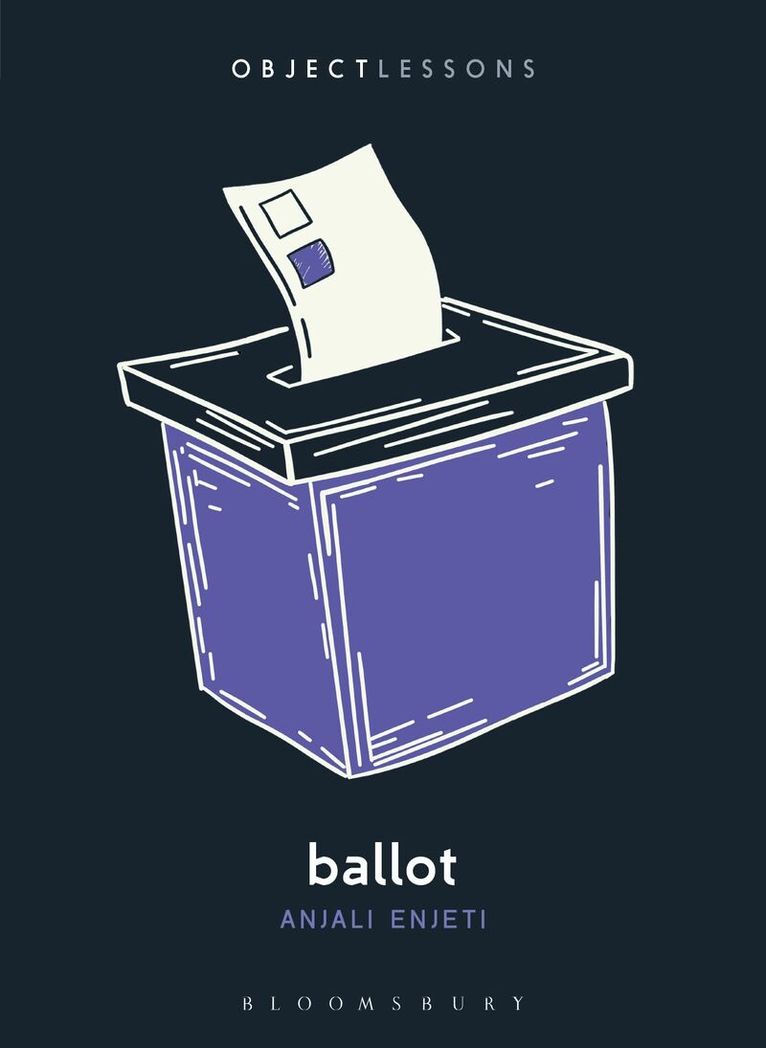
Object Lessons is a series of short, beautifully designed books about the hidden lives of ordinary things.Ballot examines the psychological, cultural, and political significance of voting in an increasingly anti-voting climate. Armed with her personal experiences as a poll worker, electoral organizer, and activist, Anjali Enjeti unspools a timely narrative about the precarious state of the ballot during one of the most tumultuous political eras in US history, and recounts the astonishing events leading up to the 2024 presidential election.Enjeti lays out the growing challenges for voters in battleground states, where rightwing legislatures have introduced staggering numbers of voter suppression bills and redrawn district lines, all to disenfranchise as many Black and other marginalized voters as possible. As her account of the history and stakes of election integrity shows, the aftershocks of the Capitol insurrection on January 6, 2021 have manifested most egregiously on the four corners of the ballot.