Anjan Chakravartty - Böcker
Visar alla böcker från författaren Anjan Chakravartty. Handla med fri frakt och snabb leverans.
5 produkter
5 produkter
Scientific Ontology
Integrating Naturalized Metaphysics and Voluntarist Epistemology
Inbunden, Engelska, 2017
1 147 kr
Skickas inom 5-8 vardagar
Both science and philosophy are interested in questions of ontology - questions about what exists and what these things are like. Science and philosophy, however, seem like very different ways of investigating the world, so how should one proceed? Some defer to the sciences, conceived as something apart from philosophy, and others to metaphysics, conceived as something apart from science, for certain kinds of answers. This book contends that these sorts of deference are misconceived. A compelling account of ontology must appreciate the ways in which the sciences incorporate metaphysical assumptions and arguments. At the same time, it must pay careful attention to how observation, experience, and the empirical dimensions of science are related to what may be viewed as defensible philosophical theorizing about ontology. The promise of an effectively naturalized metaphysics is to encourage beliefs that are formed in ways that do justice to scientific theorizing, modeling, and experimentation. But even armed with such a view, there is no one, uniquely rational way to draw lines between domains of ontology that are suitable for belief, and ones in which it would be better to suspend belief instead. In crucial respects, ontology is in the eye of the beholder: it is informed by underlying commitments with implications for the limits of inquiry, which inevitably vary across rational inquirers. As result, the proper scope of ontology is subject to a striking form of voluntary choice, yielding a new and transformative conception of scientific ontology.
Scientific Ontology
Integrating Naturalized Metaphysics and Voluntarist Epistemology
Häftad, Engelska, 2020
398 kr
Skickas inom 5-8 vardagar
Both science and philosophy are interested in questions of ontology - questions about what exists and what these things are like. Science and philosophy, however, seem like very different ways of investigating the world, so how should one proceed? Some defer to the sciences, conceived as something apart from philosophy, and others to metaphysics, conceived as something apart from science, for certain kinds of answers. This book contends that these sorts of deference are misconceived. A compelling account of ontology must appreciate the ways in which the sciences incorporate metaphysical assumptions and arguments. At the same time, it must pay careful attention to how observation, experience, and the empirical dimensions of science are related to what may be viewed as defensible philosophical theorizing about ontology. The promise of an effectively naturalized metaphysics is to encourage beliefs that are formed in ways that do justice to scientific theorizing, modeling, and experimentation. But even armed with such a view, there is no one, uniquely rational way to draw lines between domains of ontology that are suitable for belief, and ones in which it would be better to suspend belief instead. In crucial respects, ontology is in the eye of the beholder: it is informed by underlying commitments with implications for the limits of inquiry, which inevitably vary across rational inquirers. As result, the proper scope of ontology is subject to a striking form of voluntary choice, yielding a new and transformative conception of scientific ontology.
560 kr
Skickas inom 7-10 vardagar
Scientific realism is the view that our best scientific theories give approximately true descriptions of both observable and unobservable aspects of a mind-independent world. Debates between realists and their critics are at the very heart of the philosophy of science. Anjan Chakravartty traces the contemporary evolution of realism by examining the most promising strategies adopted by its proponents in response to the forceful challenges of antirealist sceptics, resulting in a positive proposal for scientific realism today. He examines the core principles of the realist position, and sheds light on topics including the varieties of metaphysical commitment required, and the nature of the conflict between realism and its empiricist rivals. By illuminating the connections between realist interpretations of scientific knowledge and the metaphysical foundations supporting them, his book offers a compelling vision of how realism can provide an internally consistent and coherent account of scientific knowledge.
1 245 kr
Skickas inom 7-10 vardagar
Scientific realism is the view that our best scientific theories give approximately true descriptions of both observable and unobservable aspects of a mind-independent world. Debates between realists and their critics are at the very heart of the philosophy of science. Anjan Chakravartty traces the contemporary evolution of realism by examining the most promising strategies adopted by its proponents in response to the forceful challenges of antirealist sceptics, resulting in a positive proposal for scientific realism today. He examines the core principles of the realist position, and sheds light on topics including the varieties of metaphysical commitment required, and the nature of the conflict between realism and its empiricist rivals. By illuminating the connections between realist interpretations of scientific knowledge and the metaphysical foundations supporting them, his book offers a compelling vision of how realism can provide an internally consistent and coherent account of scientific knowledge.
1 258 kr
Skickas inom 7-10 vardagar
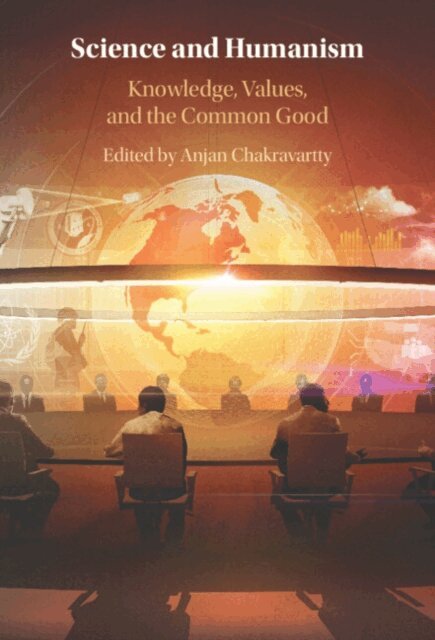
Historically and conceptually, influential traditions of thought and practice associated with humanism and science have been deeply connected. This book explores some of the most pivotal relations of humanistic and scientific engagement with the world to inspire a reconsideration of them in the present. Collectively, its essays illuminate a fundamental but contested feature of a broadly humanist worldview: the hope that science may help to improve the human condition, as well as the myriad relationships of humanity to the natural and social worlds in which we live. Arguably, these relationships are now more profoundly interwoven with our sciences and technologies than ever before. Addressing scientific and other forms of inquiry, approaches to integrating humanism with science, and cases in which science has failed, succeeded, and could do more to promote our collective welfare, this book enjoins us to articulate a compelling, humanist conception of the sciences for our times. This title is also available as Open Access on Cambridge Core.