Ankur Barua - Böcker
Visar alla böcker från författaren Ankur Barua. Handla med fri frakt och snabb leverans.
9 produkter
9 produkter
671 kr
Skickas inom 10-15 vardagar
Hindu and Christian debates over the meanings, motivations, and modalities of ‘conversion’ provide the central connecting theme running through this book. It focuses on the reasons offered by both sides to defend or oppose the possibility of these cross-border movements, and shows how these reasons form part of a wider constellation of ideas, concepts, and practices of the Christian and the Hindu worlds.The book draws upon several historical case-studies of Christian missionaries and of Hindus who encountered these missionaries. By analysing some of the complex negotiations, intersections, and conflicts between Hindus and Christians over the question of ‘conversion’, it demonstrates that these encounters revolve around three main contested themes. Firstly, who can properly ‘speak for the convert’? Secondly, how is ‘tolerating’ the religious other connected to an appraisal of the other’s viewpoints which may be held to be incorrect, inadequate, or incomplete? Finally, what is, in fact, the ‘true Religion’? The book demonstrates that it is necessary to wrestle with these questions for an adequate understanding of the Hindu and Christian debates over ‘conversion.’Questioning what ‘conversion’ precisely is, and why it has been such a volatile issue on India’s political-legal landscape, the book will be a useful contribution to studies of Hinduism, Christianity and Asian Religion and Philosophy.
2 155 kr
Skickas inom 10-15 vardagar
Hindu and Christian debates over the meanings, motivations, and modalities of ‘conversion’ provide the central connecting theme running through this book. It focuses on the reasons offered by both sides to defend or oppose the possibility of these cross-border movements, and shows how these reasons form part of a wider constellation of ideas, concepts, and practices of the Christian and the Hindu worlds.The book draws upon several historical case-studies of Christian missionaries and of Hindus who encountered these missionaries. By analysing some of the complex negotiations, intersections, and conflicts between Hindus and Christians over the question of ‘conversion’, it demonstrates that these encounters revolve around three main contested themes. Firstly, who can properly ‘speak for the convert’? Secondly, how is ‘tolerating’ the religious other connected to an appraisal of the other’s viewpoints which may be held to be incorrect, inadequate, or incomplete? Finally, what is, in fact, the ‘true Religion’? The book demonstrates that it is necessary to wrestle with these questions for an adequate understanding of the Hindu and Christian debates over 'conversion'.Questioning what ‘conversion’ precisely is, and why it has been such a volatile issue on India’s political-legal landscape, the book will be a useful contribution to studies of Hinduism, Christianity and Asian Religion and Philosophy.
1 122 kr
Kommande
The first introduction to use the key Hindu concept of bhakti to explore ideas lying at the centre of Indic ways of philosophical thought and practice.For two millennia, many Hindu religious worldviews have been characterised by the concepts, experiences, and institutions of bhakti, a Sanskrit word that means loving adoration, unwavering devotion, and meditative attention. Working with primary texts (in Sanskrit, Assamese, Bengali, Braj-Bhasha, and Modern Standard Hindi) and translations (from Tamil, Marathi, and Gujarati), Ankur Barua situates forms of bhakti in their sociohistorical contexts. His approach interrogates Eurocentric notions of philosophy and pluralizes our conceptions of how to philosophize in different intellectual contexts.Each chapter features translations from the original texts – including scripts of Bollywood movies – to highlight the diversity of styles of bhakti. Combining philosophical theology, intellectual history, and social theory, chapters delineate the multiple ways in which “Hindu” identity has been projected, critiqued, and configured in precolonial and contemporary South Asia. They provide the necessary tools to effectively navigate the vast body of contemporary literature on bhakti.This book is for anyone looking to understand how the languages of bhakti are intertwined with Hindu ways of thinking.
427 kr
Kommande
The first introduction to use the key Hindu concept of bhakti to explore ideas lying at the centre of Indic ways of philosophical thought and practice.For two millennia, many Hindu religious worldviews have been characterised by the concepts, experiences, and institutions of bhakti, a Sanskrit word that means loving adoration, unwavering devotion, and meditative attention. Working with primary texts (in Sanskrit, Assamese, Bengali, Braj-Bhasha, and Modern Standard Hindi) and translations (from Tamil, Marathi, and Gujarati), Ankur Barua situates forms of bhakti in their sociohistorical contexts. His approach interrogates Eurocentric notions of philosophy and pluralizes our conceptions of how to philosophize in different intellectual contexts.Each chapter features translations from the original texts – including scripts of Bollywood movies – to highlight the diversity of styles of bhakti. Combining philosophical theology, intellectual history, and social theory, chapters delineate the multiple ways in which “Hindu” identity has been projected, critiqued, and configured in precolonial and contemporary South Asia. They provide the necessary tools to effectively navigate the vast body of contemporary literature on bhakti.This book is for anyone looking to understand how the languages of bhakti are intertwined with Hindu ways of thinking.
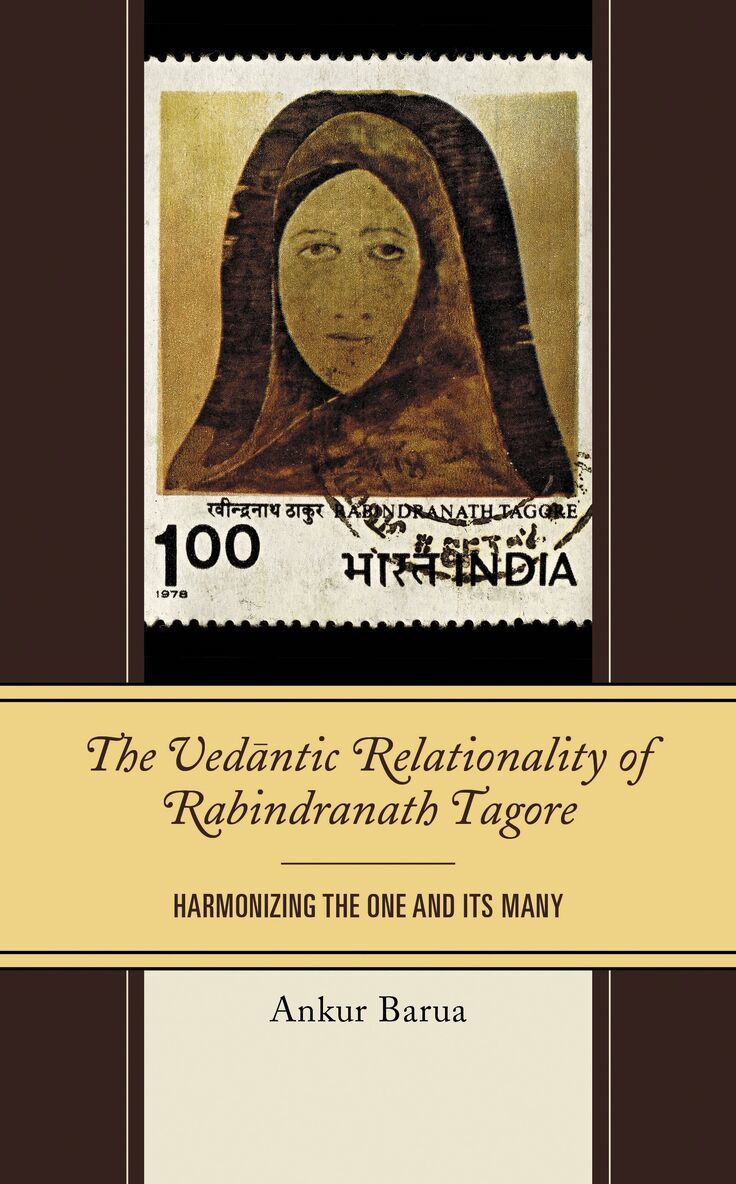
Vedantic Relationality of Rabindranath Tagore
Harmonizing the One and Its Many
Inbunden, Engelska, 2018
1 209 kr
Skickas inom 10-15 vardagar
This book is a thematic study of the poet-thinker Rabindranath Tagore’s conceptual project of harmonizing the one and its many. Tagore’s writings, in Bengali and in English, on religious and social themes are held together by the leitmotif of a “harmony” which operates across several existential, religious, and social polarities – the finite and the infinite, the temporal and the eternal, and the individual and the universal. Tagore creatively appropriated materials from diverse sources such as the classical Hindu Vedantic systems, the folk piety of Bengal, and others, to configure a dialectic which shapes his writings on both religious and social themes. On the one hand, each individual is irreducibly distinct from everyone else, and, on the other hand, each individual gains their spiritual depth precisely by being placed within the dynamic matrices of an interrelated whole. Thus, we find Tagore rejecting certain monastic forms of Hindu world-renunciation and also certain ecstatic dimensions of devotional worship – the former because they efface individuality and the latter because they can generate self-absorbed styles of living. Again, Tagore is as sharply opposed to Bengali imitativeness of English modes of being in the world as he is to Bengali forms of insularity – the former because it dilutes the concrete richness of indigenous lifeforms and the latter because it confines individuals to parochial enclosures. Tagore’s life-long endeavor was to configure a “third way” by rejecting both the blank homogeneity of an undifferentiated one and the particularistic insularities of a multitude without a deeper center of coherence.
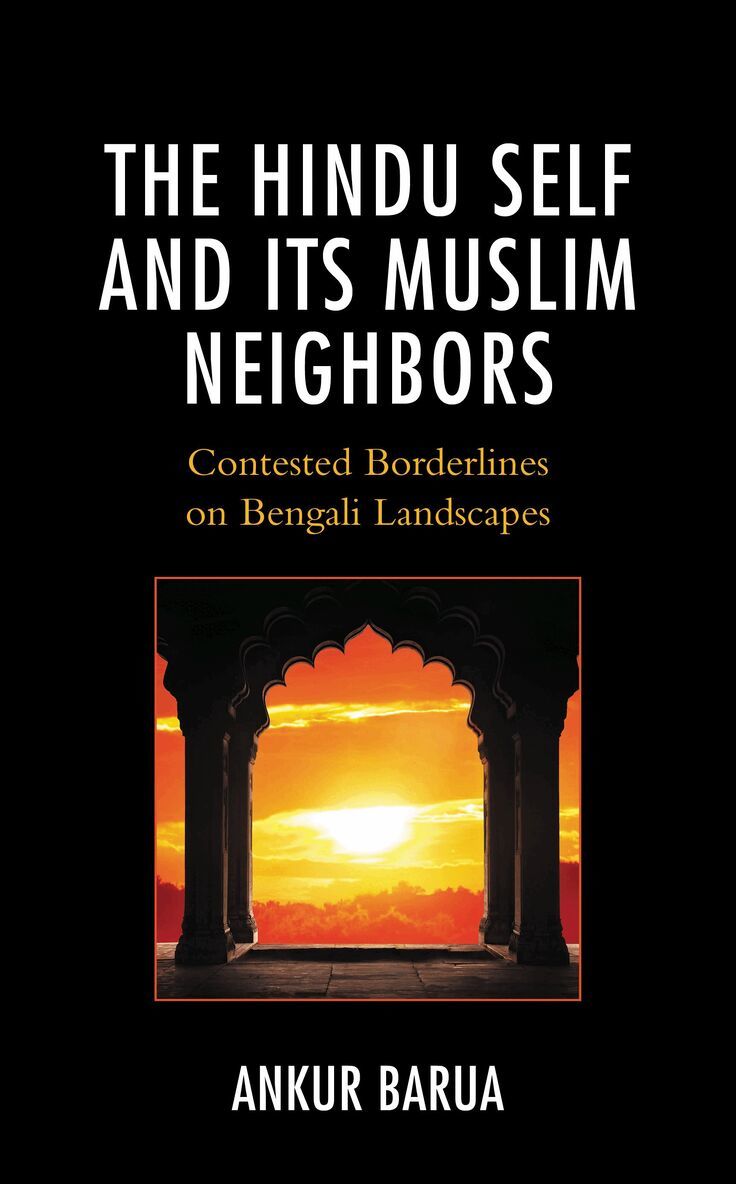
Hindu Self and Its Muslim Neighbors
Contested Borderlines on Bengali Landscapes
Inbunden, Engelska, 2022
1 142 kr
Skickas inom 10-15 vardagar
In The Hindu Self and its Muslim Neighbors, the author sketches the contours of relations between Hindus and Muslims in Bengal. The central argument is that various patterns of amicability and antipathy have been generated towards Muslims over the last six hundred years and these patterns emerge at dynamic intersections between Hindu self-understandings and social shifts on contested landscapes. The core of the book is a set of translations of the Bengali writings of Rabindranath Tagore (1861–1941), Kazi Nazrul Islam (1899–1976), and Annada Shankar Ray (1904–2002). Their lives were deeply interwoven with some Hindu–Muslim synthetic ideas and subjectivities, and these involvements are articulated throughout their writings which provide multiple vignettes of contemporary modes of amity and antagonism. Barua argues that the characterization of relations between Hindus and Muslims either in terms of an implacable hostility or of an unfragmented peace is historically inaccurate, for these relations were modulated by a shifting array of socio-economic and socio-political parameters. It is within these contexts that Rabindranath, Nazrul, and Annada Shankar are developing their thoughts on Hindus and Muslims through the prisms of religious humanism and universalism.
1 400 kr
Skickas inom 3-6 vardagar
This introductory text points to some of the diverse tapestries of Hindu worldviews where scriptural revelation, logical argumentation, embodied affectivity, moral reasoning, and aesthetic cultivation constitute densely interwoven conceptual threads. It begins with an exploration of some classical iterations of the quest for a fundamental ontology amidst the diversities of the everyday world. This quest is often embedded in both a diagnosis of the human condition as structured by suffering and a therapy for recovery from worldly fragmentation. A crucial aspect of this therapeutic structure is the analysis of the means of knowledge and the categories of reality, since in order to know the nature of the world one must proceed along truth-tracking routes. Such dynamic mind-world encounters are mediated through language, and Hindu philosophical texts extensively discuss the motif of whether or not deep reality can be comprehended through linguistic structures. These philosophical exercises also shape reflections on themes such as aesthetics, social organization, the meaning of life, and so on. As Hinduism increasingly migrates to western locations through practices of yoga, meditation, and mindfulness, and along with sensibilities relating to vegetarianism, ecology, and pacifism, we encounter multiple translations of these classical motifs relating to the self, language, and consciousness.
345 kr
Skickas
This introductory text points to some of the diverse tapestries of Hindu worldviews where scriptural revelation, logical argumentation, embodied affectivity, moral reasoning, and aesthetic cultivation constitute densely interwoven conceptual threads. It begins with an exploration of some classical iterations of the quest for a fundamental ontology amidst the diversities of the everyday world. This quest is often embedded in both a diagnosis of the human condition as structured by suffering and a therapy for recovery from worldly fragmentation. A crucial aspect of this therapeutic structure is the analysis of the means of knowledge and the categories of reality, since in order to know the nature of the world one must proceed along truth-tracking routes. Such dynamic mind-world encounters are mediated through language, and Hindu philosophical texts extensively discuss the motif of whether or not deep reality can be comprehended through linguistic structures. These philosophical exercises also shape reflections on themes such as aesthetics, social organization, the meaning of life, and so on. As Hinduism increasingly migrates to western locations through practices of yoga, meditation, and mindfulness, and along with sensibilities relating to vegetarianism, ecology, and pacifism, we encounter multiple translations of these classical motifs relating to the self, language, and consciousness.
Del 45 - Religions and Discourse
Divine Body in History
A comparative study of the symbolism of time and embodiment in St Augustine and Rāmānuja
Häftad, Engelska, 2009
600 kr
Tillfälligt slut
This is a study in the field of comparative philosophy of religion. It initiates a dialogue between St Augustine and Rāmānuja by focusing on two central themes – time and embodiment – that play a crucial role in their thought. The elaborations of these two themes by St Augustine and Rāmānuja have continued to exert a tremendous influence on the histories of European thought and of Hindu movements centred around the notion of bhakti. The examination of the symbolism through which these thinkers articulate their understanding of time and embodiment also challenges certain stereotypes related to classical Indian thought and Latin Christendom, such as the former’s lack of historical consciousness and the latter’s denigration of the human body. This study shows how the ‘west’ and ‘east’ have traditionally engaged with concepts such as temporality, progress and the metaphysical status of finite and bio-physical reality.