• Fri frakt över 249 kr
  • •
  • Snabba leveranser
  • •
  • Billiga böcker
Kundservice

Du är på sajten för privatpersoner.

Företag, bibliotek eller offentlig verksamhet?

Du handlar på classic.bokus.com, där alla dina funktioner finns intakta.
Till classic.bokus.com
Bokus logotyp. Gå till startsidan.
  • Erbjudanden
  • Nyheter
  • Student
  • Topplistor
  • Barn & ungdom
  • Bokus Play
  • E-böcker
  • Pocketböcker
  • Spel & pussel

10% rabatt på allt med kod: NYSTART10 →

Sidfot

Mina sidor

    Hjälp

    • Kundservice
    • Vanliga frågor och svar
    • Frakt och leverans
    • Retur vid ångerrätt
    • Reklamera vara
    • Betalning
    • Köpvillkor
    • Allmänna villkor
    • Information om webbplatsens tillgänglighet

    Om Bokus

    • Om oss
    • Pressrum
    • För studenter
    • För företag
    • För bibliotek och offentlig verksamhet
    • För leverantörer
    • Hållbarhet

    Populärt

    • Aktuella erbjudanden
    • Presentkort
    • Studentlitteratur
    • Nya böcker
    • Topplistor
    • Signerade böcker
    • Engelska böcker

    Inspiration

    • Boktips
    • BookTok
    • Populära bokserier
    • Barnbokskaraktärer
    • Populära författare
    Logotyp för Bokus
    Följ oss på Facebook (extern länk)Följ oss på Instagram (extern länk)Följ oss på YouTube (extern länk)Följ oss på TikTok (extern länk)
    bokus @ CookiesAnpassa cookiesIntegritetspolicyKöpvillkor
    Till Citymail hemsida (extern länk)Till Budbee hemsida (extern länk)Till Postnord hemsida (extern länk)Till Schenker hemsida (extern länk)Till Early Bird hemsida (extern länk)Till Walleys hemsida (extern länk)
    1. Filosofi och religion
    2. Religion och tro
    3. Religion: allmänt

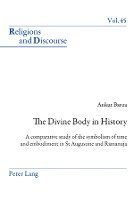
    Divine Body in History

    A comparative study of the symbolism of time and embodiment in St Augustine and Rāmānuja

    AvAnkur Barua,James M. M. Francis

    Häftad, Engelska, 2009

    Del 45 i serien Religions and Discourse

    611 kr

    Tillfälligt slut

    Beskrivning

    This is a study in the field of comparative philosophy of religion. It initiates a dialogue between St Augustine and Rāmānuja by focusing on two central themes – time and embodiment – that play a crucial role in their thought. The elaborations of these two themes by St Augustine and Rāmānuja have continued to exert a tremendous influence on the histories of European thought and of Hindu movements centred around the notion of bhakti. The examination of the symbolism through which these thinkers articulate their understanding of time and embodiment also challenges certain stereotypes related to classical Indian thought and Latin Christendom, such as the former’s lack of historical consciousness and the latter’s denigration of the human body. This study shows how the ‘west’ and ‘east’ have traditionally engaged with concepts such as temporality, progress and the metaphysical status of finite and bio-physical reality.

    Produktinformation

    • Utgivningsdatum:2009-06-15
    • Mått:150 x 220 x 15 mm
    • Vikt:410 g
    • Format:Häftad
    • Språk:Engelska
    • Serie:Religions and Discourse
    • Antal sidor:253
    • Förlag:Verlag Peter Lang
    • ISBN:9783039119172

    Utforska kategorier

    • Religion: allmänt inom Filosofi och religion
    • Filosofiska discipliner inom Filosofi och religion
    • Litteraturvetenskap inom Skönlitteratur

    Mer om författaren

    The Author: Ankur Barua completed his undergraduate studies at the University of Delhi before going on to pursue a second B.A. at the University of Cambridge, where he completed his Ph.D. in the Faculty of Divinity in 2005.

    Innehållsförteckning

    • Contents: Inter-religious dialogue between Hinduism and Christianity – St Augustine and Rāmānuja as dialogue partners – Human embodiment in a temporal world – Symbolising human embodiment – The ambiguous body and the notion of hierarchy – Symbolising time – The doctrine of creation and the origins of the temporal world – The question of pantheism – The ordering of embodied desires – The idea of progress and the notion of world-negation – Human bodies in the divine body.