Ann J. Cahill - Böcker
Visar alla böcker från författaren Ann J. Cahill. Handla med fri frakt och snabb leverans.
7 produkter
7 produkter
389 kr
Tillfälligt slut
1 591 kr
Tillfälligt slut
665 kr
Skickas inom 5-8 vardagar
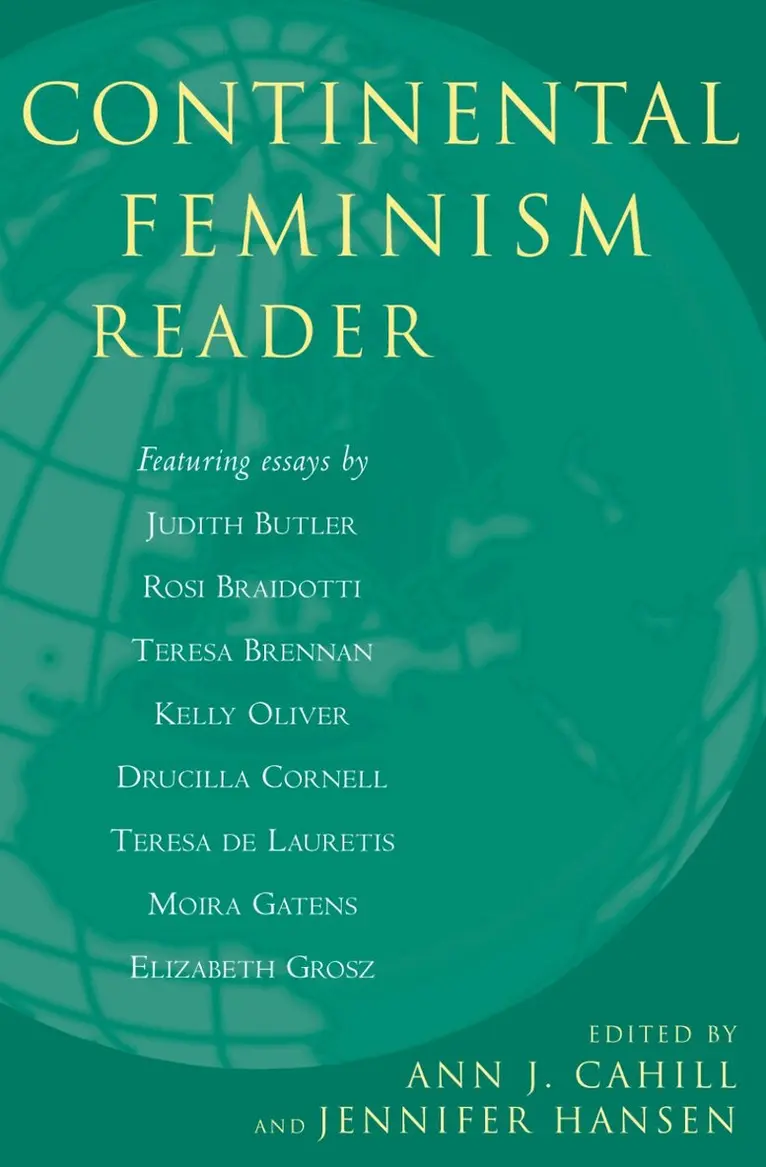
In an era of backlash and supposed stagnation, feminist philosophers are still providing fresh and challenging perspectives—you just have to know where to look. Continental feminist theory continues to address pressing questions of equality and difference, identity and subjectivity. Modern thinkers like Judith Butler, Kelly Oliver, and Drucilla Cornell give strikingly new perspectives on sex, gender, sexual politics, and the various social reasons for gender inequality. Yet their theories are not always well received. Continental Feminism Reader responds to the marginalization of these thinkers and others like them. In this volume, Ann J. Cahill and Jennifer Hansen collect the most groundbreaking recent work in Continental Feminist Theory, introducing and explaining pieces that are often mystifying to those outside the field and outside academia. With these essays, Continental Feminism Reader begins the process of reanimating feminist politics through the critical tools of its contributors.
1 518 kr
Skickas inom 10-15 vardagar
Rape, claims Ann J. Cahill, affects not only those women who are raped, but all women who experience their bodies as rapable and adjust their actions and self-images accordingly. Rethinking Rape counters legal and feminist definitions of rape as mere assault and decisively emphasizes the centrality of the body and sexuality in a crime which plays a crucial role in the continuing oppression of women.Rethinking Rape applies current feminist theory to an urgent political and ethical issue. Cahill takes an original approach by reading the subject of rape through the work of such recent continental feminist thinkers as Luce Irigaray, Elizabeth Grosz, Rosi Braidotti, and Judith Butler, who understand the body as fluid and indeterminate, a site for the negotiation of power and resistance. Cahill interprets rape as an embodied, sexually marked experience, a violation of feminine bodily integrity, and a pervasive threat to the integrity and identity of a woman's person.The wrongness of rape, which has always eluded legal interpretation, cannot be defined as theft, battery, or the logical extension of heterosexual sex. It is not limited to a specific event, but encompasses the myriad ways in which rape threatens the prospect of feminine agency. As an explication that fully countenances women's experiences of their own bodies, Rethinking Rape helps point the way toward reparation, resistance, and the evolution of feminine subjectivity.
434 kr
Skickas inom 10-15 vardagar
Rape, claims Ann J. Cahill, affects not only those women who are raped, but all women who experience their bodies as rapable and adjust their actions and self-images accordingly. Rethinking Rape counters legal and feminist definitions of rape as mere assault and decisively emphasizes the centrality of the body and sexuality in a crime which plays a crucial role in the continuing oppression of women.Rethinking Rape applies current feminist theory to an urgent political and ethical issue. Cahill takes an original approach by reading the subject of rape through the work of such recent continental feminist thinkers as Luce Irigaray, Elizabeth Grosz, Rosi Braidotti, and Judith Butler, who understand the body as fluid and indeterminate, a site for the negotiation of power and resistance. Cahill interprets rape as an embodied, sexually marked experience, a violation of feminine bodily integrity, and a pervasive threat to the integrity and identity of a woman's person.The wrongness of rape, which has always eluded legal interpretation, cannot be defined as theft, battery, or the logical extension of heterosexual sex. It is not limited to a specific event, but encompasses the myriad ways in which rape threatens the prospect of feminine agency. As an explication that fully countenances women's experiences of their own bodies, Rethinking Rape helps point the way toward reparation, resistance, and the evolution of feminine subjectivity.
1 953 kr
Skickas inom 10-15 vardagar
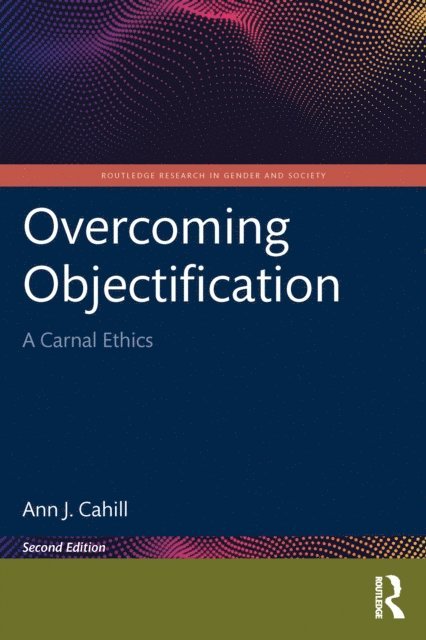
The second edition of Overcoming Objectification: A Carnal Ethics provides a critical analysis of the widely used (particularly in feminist philosophy) concept of objectification, and offers a new concept (derivatization) in its stead.Cahill suggests an abandonment of objectification due to the concept’s dependence on a Kantian ideal of personhood, an ideal that fails to recognize sufficiently the role the body plays in personhood and results in an implicit vilification of the body and sexuality. Phenomena associated with objectification are ethically problematic not because they render women objects, and therefore not-persons, but rather because they construct feminine subjectivity and sexuality as wholly derivative of masculine subjectivity and sexuality. Women are not objectified as much as they are derivatized: turned into a mere reflection or projection of the other. Cahill argues for a sexual ethics grounded in difference, carnality, and intersubjectivity. The preface to the second edition traces new scholarly contributions to conversations regarding sexual ethics, feminist engagements with Kant, intersectionality, and trans philosophy.With original and far-reaching insights regarding the structure of gender inequality, this work will be of interest to students and scholars in the humanities and social sciences alike and will be of particular use to those interested in sexual ethics, sexual assault, and dominant media representations of gendered bodies.
535 kr
Skickas inom 10-15 vardagar
The second edition of Overcoming Objectification: A Carnal Ethics provides a critical analysis of the widely used (particularly in feminist philosophy) concept of objectification, and offers a new concept (derivatization) in its stead.Cahill suggests an abandonment of objectification due to the concept’s dependence on a Kantian ideal of personhood, an ideal that fails to recognize sufficiently the role the body plays in personhood and results in an implicit vilification of the body and sexuality. Phenomena associated with objectification are ethically problematic not because they render women objects, and therefore not-persons, but rather because they construct feminine subjectivity and sexuality as wholly derivative of masculine subjectivity and sexuality. Women are not objectified as much as they are derivatized: turned into a mere reflection or projection of the other. Cahill argues for a sexual ethics grounded in difference, carnality, and intersubjectivity. The preface to the second edition traces new scholarly contributions to conversations regarding sexual ethics, feminist engagements with Kant, intersectionality, and trans philosophy.With original and far-reaching insights regarding the structure of gender inequality, this work will be of interest to students and scholars in the humanities and social sciences alike and will be of particular use to those interested in sexual ethics, sexual assault, and dominant media representations of gendered bodies.