Anna Heenan - Böcker
Visar alla böcker från författaren Anna Heenan. Handla med fri frakt och snabb leverans.
3 produkter
3 produkter
175 kr
Skickas inom 5-8 vardagar
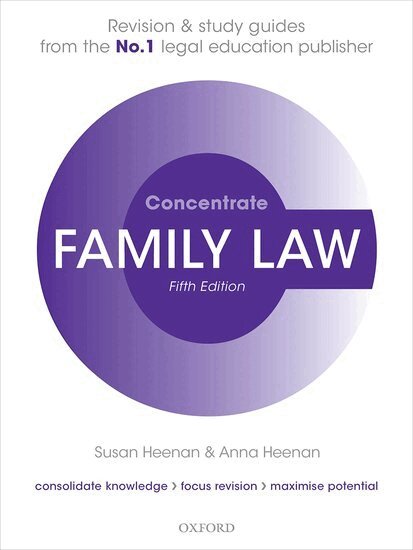
Family Law Concentrate is written and designed to help you succeed. Written by experts and covering all key topics, Concentrate guides help focus your revision and maximise your exam performance. Each guide includes revision tips, advice on how to achieve extra marks, and a thorough and focused breakdown of the key topics and cases. Revision guides you can rely on: trusted by lecturers, loved by students... "I have always used OUP revision and Q&A books and genuinely believe they have helped me get better grades" - Anthony Poole, law student, Swansea University"The detail in this revision textbook is phenomenal and is just what is needed to push your exam preparation to the next level" - Stephanie Lomas, law student, University of Central Lancashire"It is a little more in-depth than other revision guides, and also has clear diagrams and teaches ways to obtain extra marks. These features make it unique" - Godwin Tan, law student, University College London"The concentrate revision guides stand out against other revision guides" - Renae Haynes Williams, law student, Bangor University"The exam style questions are brilliant and the series is very detailed, prepares you well" - Frances Easton, law student, University of Birmingham"The accompanying website for Concentrate is the most impressive I've come across" - Alice Munnelly, law student, Kings College LondonOnline ResourcesPacked with essential information, key cases, revision tips, exam Q&As, and more, Family Law Concentrate is also supported by extensive online resources to take your learning further (www.oup.com/lawrevision/): - Pinpoint which areas you need to concentrate on with the diagnostic test- Test your knowledge with the multiple-choice questions and receive feedback on your answers- Improve your essay skills using the outline answers for guidance on what to include and how to structure your answer- Revise the facts and principles of key cases using the interactive flashcards- Learn the important terms and definitions using the interactive glossary- Check that you have covered the main points of a topic using the key facts checklists- Achieve better marks following the advice on revision and exam technique by experienced examiner Nigel Foster
1 113 kr
Skickas inom 10-15 vardagar
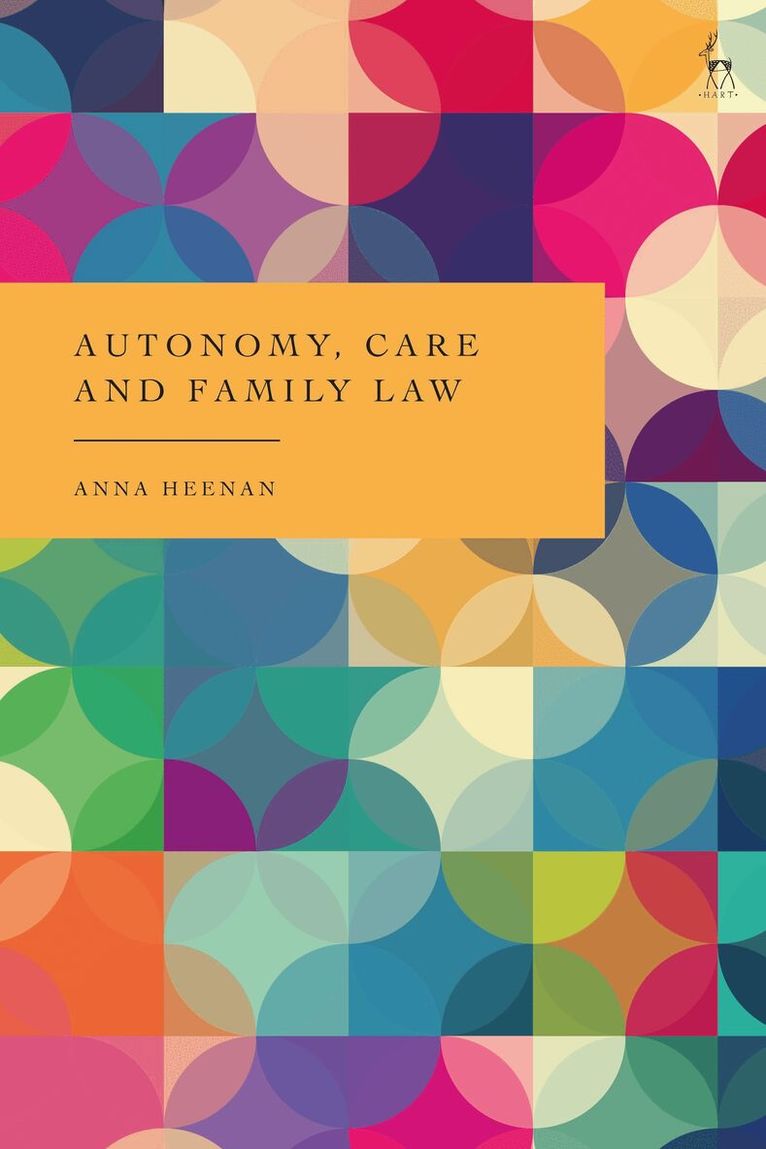
There is a tension at the heart of family law and policy between the increasing influence of individual autonomy and the demands of caring for children. Individual autonomy envisages decisions made in one’s own best interests, whereas decisions around care are often made for the good of the family, and may conflict with the caregiver’s individual interests. Whereas individual autonomy valorises economic self-sufficiency, caregiving responsibilities constrain choice and conflict with paid work. This book explores this tension to consider how, given changing social trends, family law and policy should take account of caregiving responsibilities on parental separation. Crucially, it suggests that we need to rethink family law by placing care at its centre. This book draws on original empirical data to explore the experiences of parents in England and Wales, where the division of paid work and care is considered a choice, and Sweden, where parents are encouraged to work full-time, supported by wellfunded state childcare. This comparative perspective sheds light on whether the clash between the ideas of autonomy and care could be reconciled in a more gender equal society. The book argues that caregiving is hidden from, and undervalued by, law and policy in both jurisdictions, underscoring the need for the proposed new approach. The law needs to think more deeply about what it means to care, and how the care provided by parents differs. Anna Heenan outlines how family law might look different if the proposed framework, based on placing care at the heart of family law, is adopted.
535 kr
Skickas inom 10-15 vardagar
There is a tension at the heart of family law and policy between the increasing influence of individual autonomy and the demands of caring for children. Individual autonomy envisages decisions made in one’s own best interests, whereas decisions around care are often made for the good of the family, and may conflict with the caregiver’s individual interests. Whereas individual autonomy valorises economic self-sufficiency, caregiving responsibilities constrain choice and conflict with paid work. This book explores this tension to consider how, given changing social trends, family law and policy should take account of caregiving responsibilities on parental separation. Crucially, it suggests that we need to rethink family law by placing care at its centre. This book draws on original empirical data to explore the experiences of parents in England and Wales, where the division of paid work and care is considered a choice, and Sweden, where parents are encouraged to work full-time, supported by wellfunded state childcare. This comparative perspective sheds light on whether the clash between the ideas of autonomy and care could be reconciled in a more gender equal society. The book argues that caregiving is hidden from, and undervalued by, law and policy in both jurisdictions, underscoring the need for the proposed new approach. The law needs to think more deeply about what it means to care, and how the care provided by parents differs. Anna Heenan outlines how family law might look different if the proposed framework, based on placing care at the heart of family law, is adopted.