Anna Maria Busse Berger - Böcker
Visar alla böcker från författaren Anna Maria Busse Berger. Handla med fri frakt och snabb leverans.
10 produkter
10 produkter
614 kr
Skickas inom 5-8 vardagar
In the fourteenth century composers and theorists invented mensuration and proportion signs that allowed them increased flexibility and precision in notating a wide range of rhythmic and metric relationships. The origin and interpretation of these signs is one of the least understood and most complex issues in music history. This study represents the first attempt to see the origin of musical mensuration and proportion signs in the context of other measuring systems of the fourteenth century. Berger analyzes the exact meaning of every mensuration and proportion sign in music and theory from the fourteenth to the sixteenth century, and offers revisions of many currently-held views concerning the significance and development of early time signatures.
2 393 kr
Skickas inom 5-8 vardagar
In the fourteenth century composers and theorists invented mensuration and proportion signs that allowed them increased flexibility and precision in notating a very wide range of rhythmic and metric relationships. The origin and interpretation of these signs is one of the least understood and most complex issues in music history. This study represents the first attempt to see the origin of musical mensuration and proportion signs in the context of other measuring systems of the fourteenth century. The author also traces the evolution of the mensural notational system to the threshold of the modern system of notation. In the process, the exact meaning of everyday mensuration and proportion sign encountered in music and theory from the fourteenth to the sixteenth century is analysed and elucidated. The investigation results in a revision of many currently held views concerning the significance and development of early time signatures and will be indispensable to scholars and performers of late medieval and Renaissance music.
Search for Medieval Music in Africa and Germany, 1891-1961
Scholars, Singers, Missionaries
Inbunden, Engelska, 2020
725 kr
Skickas inom 11-20 vardagar
This innovative book reassesses the history of musicology, unearthing the field’s twentieth-century German and global roots. In the process, Anna Maria Busse Berger exposes previously unseen historical relationships such as those between the modern rediscovery of medieval music, the rise of communal singing, and the ways in which African music intersected with missionary work in the German colonial period. Ultimately, Busse Berger offers a monumental new account of the early twentieth-century music culture in Germany and East Africa.The book unfolds in three parts. Busse Berger starts with the origins of comparative musicology circa 1900, when early proponents used ideas from comparative linguistics to test whether parallels could be drawn between nonwestern and medieval European music. She then turns to youth movements of the era—the Wandervogel, Jugendmusikbewegung, and Singbewegung—whose focus on joint music making influenced many musicologists. Finally, she considers case studies of Protestant and Catholic mission societies in what is now Tanzania, where missionaries—many of them musicologists and former youth-group members—extended the discipline via ethnographic research and a focus on local music and communities. In highlighting these long-overlooked transnational connections and the role of global music in early musicology, Busse Berger shapes a fresh conception of music scholarship during a pivotal part of the twentieth century.
695 kr
Skickas inom 7-10 vardagar
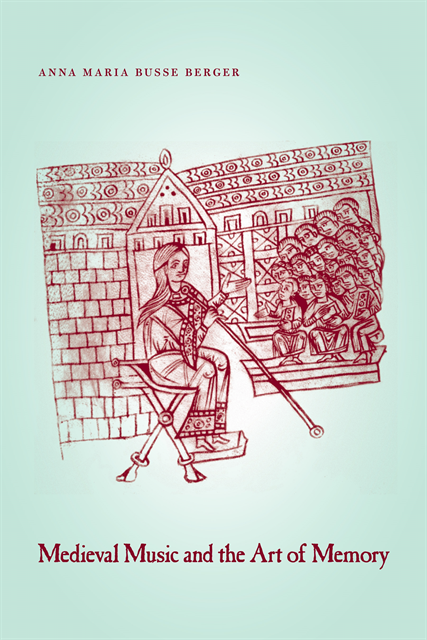
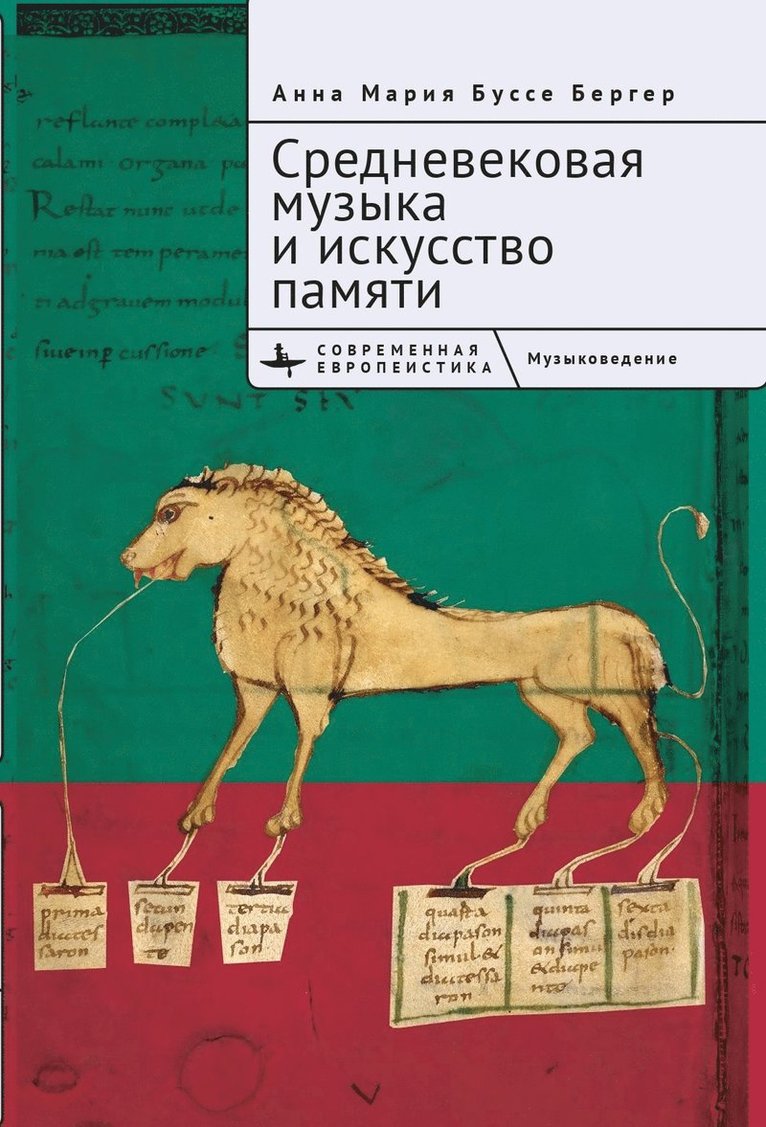
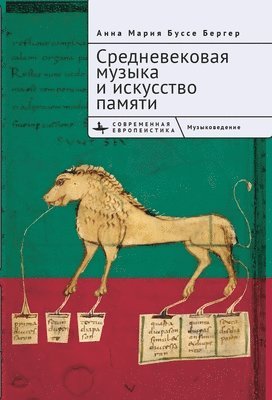
This bold challenge to conventional notions about medieval music disputes the assumption of pure literacy and replaces it with a more complex picture of a world in which literacy and orality interacted. Asking such fundamental questions as how singers managed to memorize such an enormous amount of music and how music composed in the mind rather than in writing affected musical style, Anna Maria Busse Berger explores the impact of the art of memory on the composition and transmission of medieval music. Her fresh, innovative study shows that although writing allowed composers to work out pieces in the mind, it did not make memorization redundant but allowed for new ways to commit material to memory. Since some of the polyphonic music from the twelfth century and later was written down, scholars have long assumed that it was all composed and transmitted in written form. Our understanding of medieval music has been profoundly shaped by German philologists from the beginning of the last century who approached medieval music as if it were no different from music of the nineteenth century.But Medieval Music and the Art of Memory deftly demonstrates that the fact that a piece was written down does not necessarily mean that it was conceived and transmitted in writing. Busse Berger's new model, one that emphasizes the interplay of literate and oral composition and transmission, deepens and enriches current understandings of medieval music and opens the field for fresh interpretations.
331 kr
Skickas inom 7-10 vardagar
Winner of the ASCAP Deems Taylor Award and Society of Music Theory's Wallace Berry AwardThis bold challenge to conventional notions about medieval music disputes the assumption of pure literacy and replaces it with a more complex picture of a world in which literacy and orality interacted. Asking such fundamental questions as how singers managed to memorize such an enormous amount of music and how music composed in the mind rather than in writing affected musical style, Anna Maria Busse Berger explores the impact of the art of memory on the composition and transmission of medieval music. Her fresh, innovative study shows that although writing allowed composers to work out pieces in the mind, it did not make memorization redundant but allowed for new ways to commit material to memory.Since some of the polyphonic music from the twelfth century and later was written down, scholars have long assumed that it was all composed and transmitted in written form. Our understanding of medieval music has been profoundly shaped by German philologists from the beginning of the last century who approached medieval music as if it were no different from music of the nineteenth century. But Medieval Music and the Art of Memory deftly demonstrates that the fact that a piece was written down does not necessarily mean that it was conceived and transmitted in writing. Busse Berger's new model, one that emphasizes the interplay of literate and oral composition and transmission, deepens and enriches current understandings of medieval music and opens the field for fresh interpretations.
290 kr
Skickas inom 7-10 vardagar
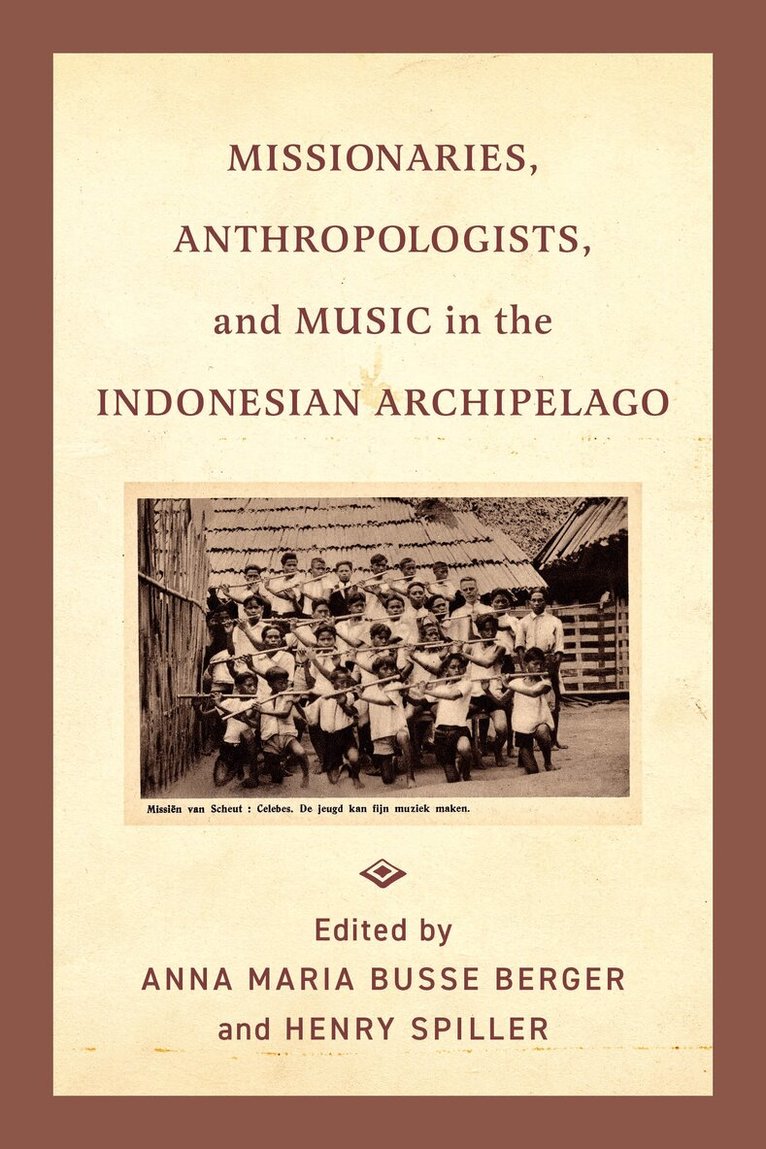
A free ebook version of this title is available through Luminos, University of California Press's Open Access publishing program. Visit www.luminosoa.org to learn more.Although the history of Indonesian music has received much attention from ethnomusicologists and Western composers alike, almost nothing has been written on the interaction of missionaries with local culture. This study represents the first attempt to concentrate on the musical dimension of missionary activities in Indonesia. In fourteen essays, a group of distinguished scholars show the complexity of the topic: while some missionaries did important scholarship on local music, making recordings and attempting to use local music in services, others tried to suppress whatever they found. Many were collaborating closely with anthropologists who admitted freely that they could not have done their work without them. And both parties brought colonial biases into their work. By grappling with these realities and records, this book is a collective effort to decolonize the project of making music histories.
2 310 kr
Skickas inom 7-10 vardagar
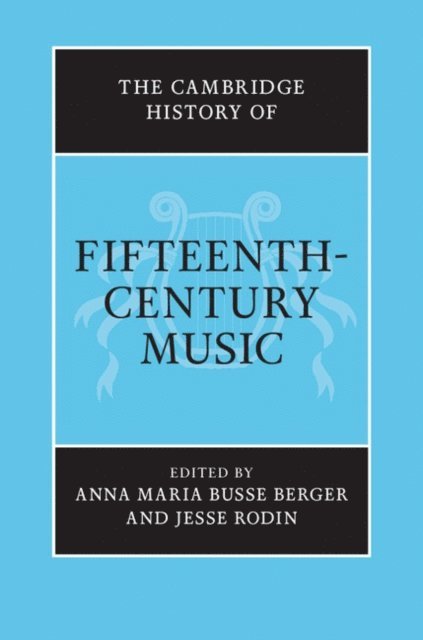
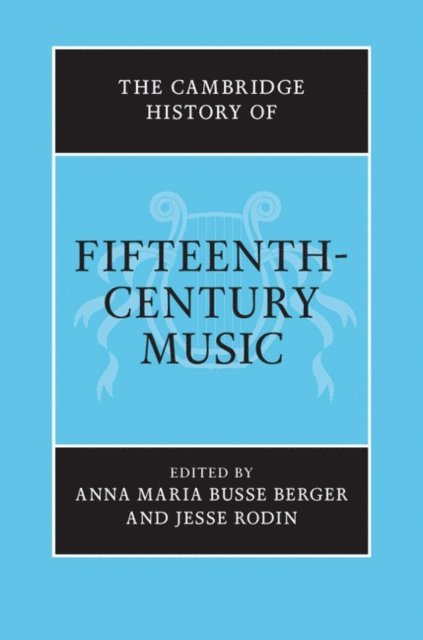
Through forty-five creative and concise essays by an international team of authors, this Cambridge History brings the fifteenth century to life for both specialists and general readers. Combining the best qualities of survey texts and scholarly literature, the book offers authoritative overviews of central composers, genres, and musical institutions as well as new and provocative reassessments of the work concept, the boundaries between improvisation and composition, the practice of listening, humanism, musical borrowing, and other topics. Multidisciplinary studies of music and architecture, feasting, poetry, politics, liturgy, and religious devotion rub shoulders with studies of compositional techniques, musical notation, music manuscripts, and reception history. Generously illustrated with figures and examples, this volume paints a vibrant picture of musical life in a period characterized by extraordinary innovation and artistic achievement.
482 kr
Skickas inom 7-10 vardagar
Through forty-five creative and concise essays by an international team of authors, this Cambridge History brings the fifteenth century to life for both specialists and general readers. Combining the best qualities of survey texts and scholarly literature, the book offers authoritative overviews of central composers, genres, and musical institutions as well as new and provocative reassessments of the work concept, the boundaries between improvisation and composition, the practice of listening, humanism, musical borrowing, and other topics. Multidisciplinary studies of music and architecture, feasting, poetry, politics, liturgy, and religious devotion rub shoulders with studies of compositional techniques, musical notation, music manuscripts, and reception history. Generously illustrated with figures and examples, this volume paints a vibrant picture of musical life in a period characterized by extraordinary innovation and artistic achievement.
508 kr
Skickas inom 5-8 vardagar
This bold challenge to conventional notions about medieval music disputes the assumption of pure literacy and replaces it with a more complex picture of a world in which literacy and orality interacted. Asking such fundamental questions as how singers managed to memorize such an enormous amount of music and how music composed in the mind rather than in writing affected musical style, Anna Maria Busse Berger explores the impact of the art of memory on the composition and transmission of medieval music. Her fresh, innovative study shows that although writing allowed composers to work out pieces in the mind, it did not make memorization redundant but allowed for new ways to commit material to memory.
345 kr
Skickas inom 3-6 vardagar
This bold challenge to conventional notions about medieval music disputes the assumption of pure literacy and replaces it with a more complex picture of a world in which literacy and orality interacted. Asking such fundamental questions as how singers managed to memorize such an enormous amount of music and how music composed in the mind rather than in writing affected musical style, Anna Maria Busse Berger explores the impact of the art of memory on the composition and transmission of medieval music. Her fresh, innovative study shows that although writing allowed composers to work out pieces in the mind, it did not make memorization redundant but allowed for new ways to commit material to memory.