Anna Marie Prentiss – författare
Visar alla böcker från författaren Anna Marie Prentiss. Handla med fri frakt och snabb leverans.
14 produkter
Archaeology of Households, Kinship, and Social Change
Av Lacey B. Carpenter, Anna Marie Prentiss
Inbunden, 2021
2578 kr
Lägg i varukorg
Archaeology of Households, Kinship, and Social Change offers new perspectives on the processes of social change from the standpoint of household archaeology.This volume develops new theoretical and methodological approaches to the archaeology of households pursuing three critical themes: household …
Archaeology of Households, Kinship, and Social Change
Av Lacey B. Carpenter, Anna Marie Prentiss
Häftad, 2023
665 kr
Lägg i varukorg
Archaeology of Households, Kinship, and Social Change offers new perspectives on the processes of social change from the standpoint of household archaeology.This volume develops new theoretical and methodological approaches to the archaeology of households pursuing three critical themes: household …
Archaeology of Households, Kinship, and Social Change
Av Anna Marie Prentiss, Lacey B. Carpenter
E-bok, 2021
760 kr
Lägg i varukorg
Archaeology of Households, Kinship, and Social Change offers new perspectives on the processes of social change from the standpoint of household archaeology. This volume develops new theoretical and methodological approaches to the archaeology of households pursuing three critical themes: household …
Archaeology of Households, Kinship, and Social Change
Av Anna Marie Prentiss, Lacey B. Carpenter
E-bok, 2021
785 kr
Lägg i varukorg
Archaeology of Households, Kinship, and Social Change offers new perspectives on the processes of social change from the standpoint of household archaeology. This volume develops new theoretical and methodological approaches to the archaeology of households pursuing three critical themes: household …
Ancient and Pre-modern Economies of the North American Pacific Northwest
E-bok, 2023
303 kr
Lägg i varukorg
Ancient and Pre-modern Economies of the North American Pacific Northwest
Häftad, 2023
284 kr
Lägg i varukorg
This Element provides an overview of pre-modern and ancient economies of the Pacific Northwest region of North America. The region is widely known for its densely occupied semisedentary villages, intensive production economies, dramatic ritual life, and complex social relations. Scholars recognize …
Ancient and Pre-modern Economies of the North American Pacific Northwest
E-bok, 2023
303 kr
Lägg i varukorg
Handbook of Evolutionary Research in Archaeology
Inbunden, 2019
1800 kr
Lägg i varukorg
Evolutionary Research in Archaeology seeks to provide a comprehensive overview of contemporary evolutionary research in archaeology. The book will provide a single source for introduction and overview of basic and advanced evolutionary concepts and research programs in archaeology. Content will be …
Handbook of Evolutionary Research in Archaeology
E-bok, 2019
2341 kr
Lägg i varukorg
Evolutionary Research in Archaeology seeks to provide a comprehensive overview of contemporary evolutionary research in archaeology. The book will provide a single source for introduction and overview of basic and advanced evolutionary concepts and research programs in archaeology. Content will be …
People of the Middle Fraser Canyon
An Archaeological History
Av Anna Marie Prentiss, Ian Kuijt
Inbunden, 2012
1146 kr
Tillfälligt slut
The Middle Fraser Canyon contains some of the most important archaeological sites in British Columbia, including the remains of ancient villages that supported hundreds, if not thousands, of people. How and why did these villages come into being? Why were they abandoned?In search of answers to …
People of the Middle Fraser Canyon
An Archaeological History
Av Anna Marie Prentiss, Ian Kuijt
Häftad, 2013
396 kr
Tillfälligt slut
The Middle Fraser Canyon contains some of the most important archaeological sites in British Columbia, including the remains of ancient villages that supported hundreds, if not thousands, of people. How and why did these villages come into being? Why were they abandoned?In search of answers to …
Field Seasons
Reflections on Career Paths and Research in American Archaeology
Häftad, 2012
338 kr
Tillfälligt slut
In Field Seasons, Anna Marie Prentiss chronicles her experiences as an archaeologist, providing an insider’s look at the diverse cultures, personal agendas, and career pathways associated with American archaeology since the late twentieth century. As the narrative moves from her academic training …
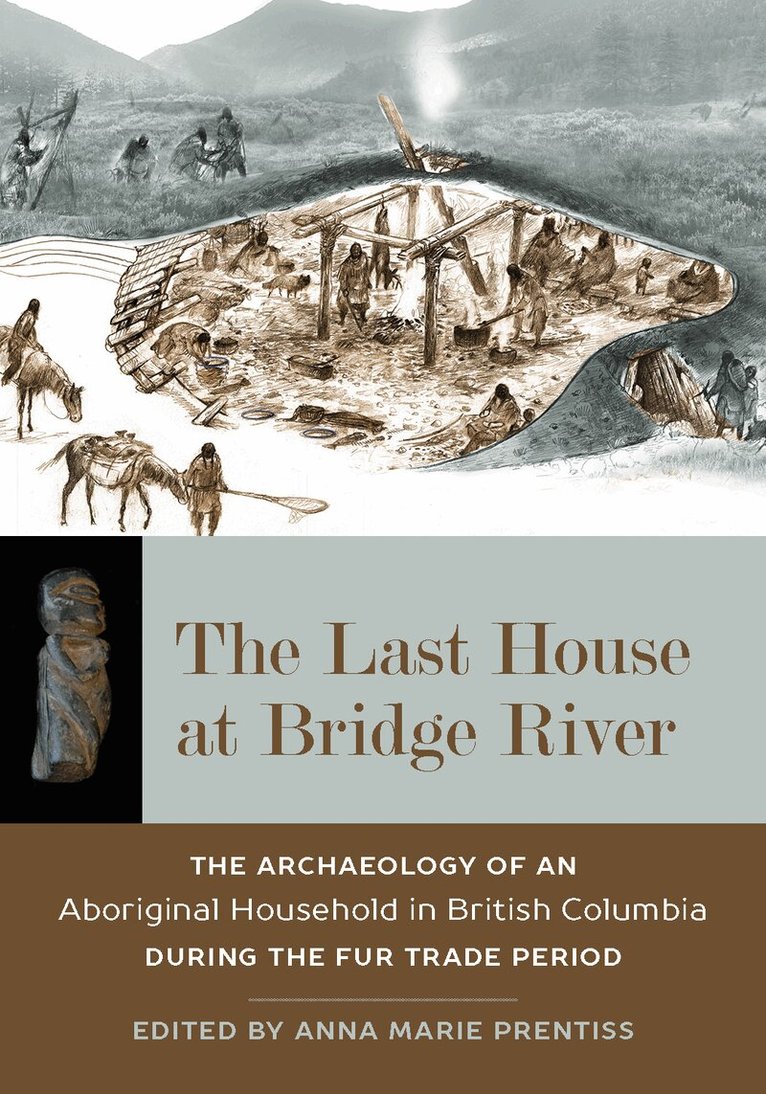
Last House at Bridge River
The Archaeology of an Aboriginal Household in British Columbia During the Fur Trade Period
Av Anna Marie Prentiss, Anna Marie Prentiss
Inbunden, 2017
683 kr
Tillfälligt slut
The Last House at Bridge River offers a comprehensive archaeological study of a single-house floor and roof deposit dated to approximately 1835–1858 C.E.Although the Fur Trade period of the nineteenth century was a time of significant change for aboriginal peoples in the Pacific Northwest, it is a …
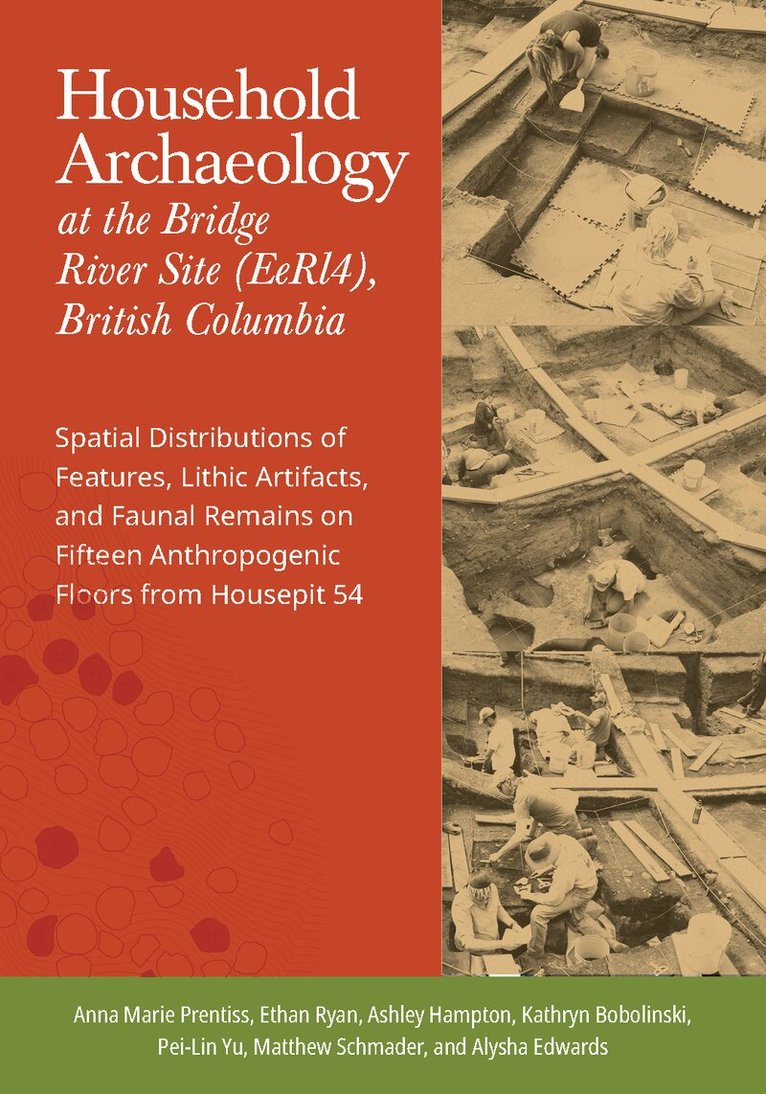
Household Archaeology at the Bridge River Site (EeRI4), British Columbia
Spatial Distributions of Features, Lithic Artifacts, and Faunal Remains on Fifteen Anthropogenic Floors from Housepit 54
Av Anna Marie Prentiss, Ethan Ryan m. fl.
Inbunden, 2022
754 kr
Tillfälligt slut
Household Archaeology at Bridge River offers a unique contribution to the study of household archaeology, providing unprecedented insights into the history of a long-lived house in the Interior Pacific Northwest. With fifteen intact anthropogenic floors dating to pre-Colonial times, Bridge River’s …