Anna Matysek-Jędrych - Böcker
Visar alla böcker från författaren Anna Matysek-Jędrych. Handla med fri frakt och snabb leverans.
6 produkter
6 produkter
1 895 kr
Skickas inom 10-15 vardagar
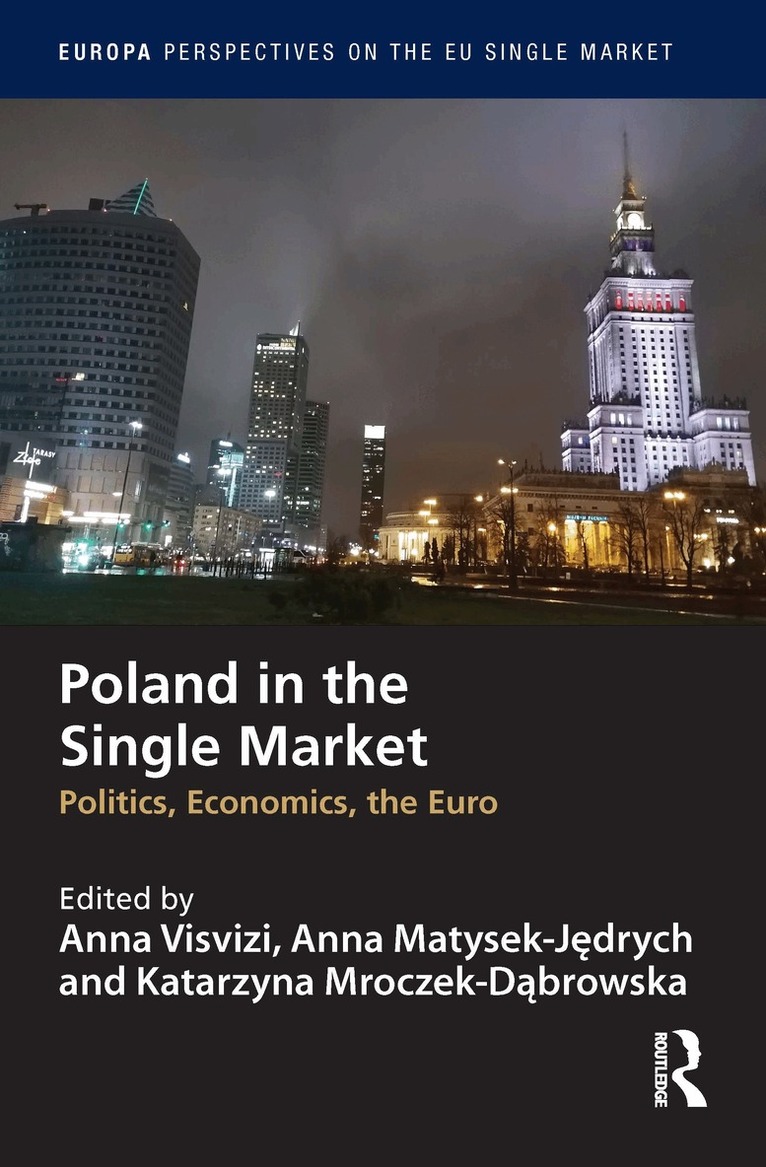
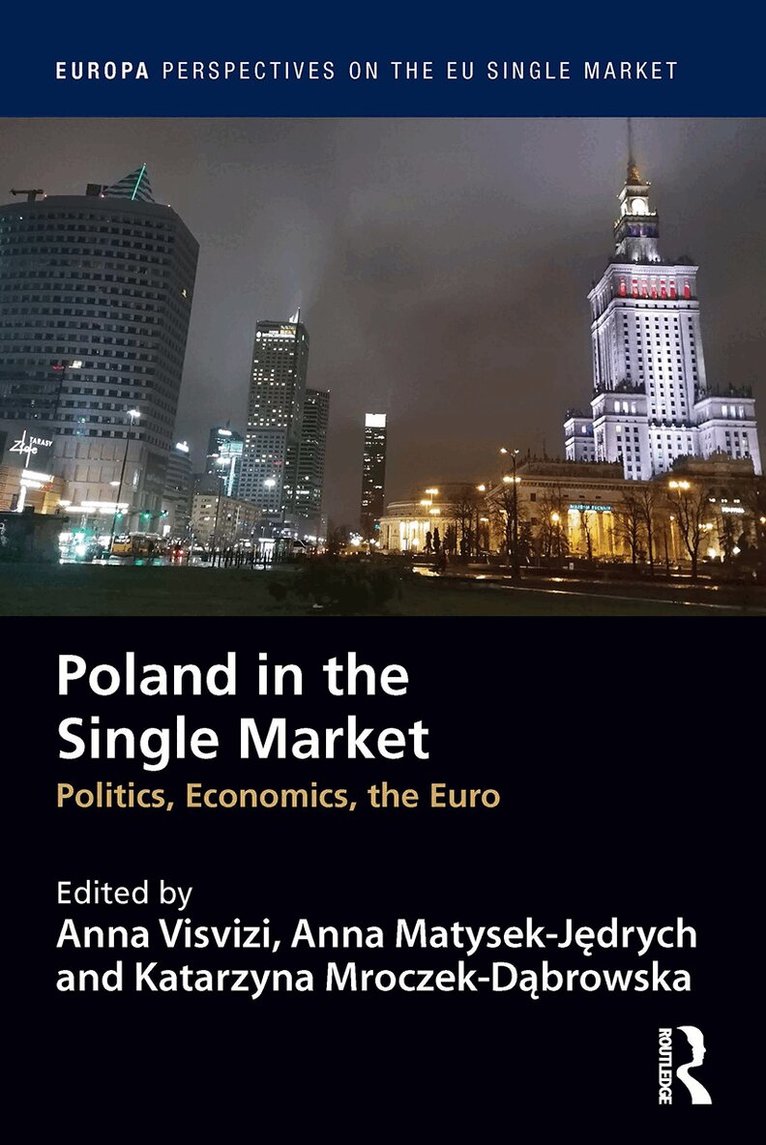
By all accounts, the case of Poland and its segue to market economy and democracy is a success story: 30 years of uninterrupted growth and development, infrastructure expansion, and modernization of the economy and society. Epochal changes have unfolded in a timespan of merely three decades. Change has taken place so fast that children born in late 1980s and onwards cannot remember what life in Poland under communism was like and cannot relate to it. Also, many elderly people, easy victims of romanticizing their own youth, tend to forget. As a result, the uniqueness of Polish transition and transformation, the boldness and efficiency of reforms, and the success that Polish society mastered together, tend to be undermined today both domestically and internationally. Poland has now been a member of the EU for more than 15 years. During that time, Poland’s image on the EU scene evolved from newcomer, through ‘model child’, champion of growth, to – in some respects – a maverick. This volume’s objective is to remind society, old and young, researchers, scholars and practitioners, that Poland’s success is an outcome of well-thought out and bold structural reforms implemented in a swift and timely manner, of society’s support for these reforms, and of third actors’ benign assistance. Looking back on the 30 years since the collapse of communism, and at the over 15 years of EU membership, this book offers an interdisciplinary, comprehensive and critical insight into factors and processes that have led to today’s Poland.
Economic Policy, COVID-19 and Corporations
Perspectives from Central and Eastern Europe
Inbunden, Engelska, 2023
2 021 kr
Skickas inom 10-15 vardagar
This book addresses the economic impact of the COVID-19 outbreak on Central and East European countries and examines the effect the pandemic has had on organizations in the region. It focuses on the widely understood business environment, covering companies’ responses to the crisis, the role of institutions in stabilizing markets, and the reshaping of global business trends.The book is a complex and multidimensional work that draws its roots from distinct yet simultaneously interlinked research areas. All of the chapters, whether they refer to macro-, meso-, or micro-perspectives, always highlight how crises – global and regional – change the global trends we have observed in business in the last 20 years. The book includes the most topical issues that delineate public discourse on firms’ resilience. In this way, it ‘connects the dots’ and uncovers the missing links necessary for any reader wishing to understand the specificity of contemporary companies’ responses to unexpected events such as pandemics or geopolitical crises. Further, it tackles questions such as what role institutions play in building the adaptive capacity of companies, how companies build their resilience capacity for 21st-century crises, and what the significance is of the uncertainty, the information asymmetry, and the bounded rationality concept on the company’s decision-making process. The book will find a broad audience among academics and students across diverse fields of study, as well as practitioners and policymakers. It is a key reference for all those who want to better understand the complex nature of uncertainty, crisis management, and its implications, not only for CEE countries but, first and foremost, the business environment.
Economic Policy, COVID-19 and Corporations
Perspectives from Central and Eastern Europe
Häftad, Engelska, 2024
594 kr
Skickas inom 10-15 vardagar
This book addresses the economic impact of the COVID-19 outbreak on Central and East European countries and examines the effect the pandemic has had on organizations in the region. It focuses on the widely understood business environment, covering companies’ responses to the crisis, the role of institutions in stabilizing markets, and the reshaping of global business trends.The book is a complex and multidimensional work that draws its roots from distinct yet simultaneously interlinked research areas. All of the chapters, whether they refer to macro-, meso-, or micro-perspectives, always highlight how crises – global and regional – change the global trends we have observed in business in the last 20 years. The book includes the most topical issues that delineate public discourse on firms’ resilience. In this way, it ‘connects the dots’ and uncovers the missing links necessary for any reader wishing to understand the specificity of contemporary companies’ responses to unexpected events such as pandemics or geopolitical crises. Further, it tackles questions such as what role institutions play in building the adaptive capacity of companies, how companies build their resilience capacity for 21st-century crises, and what the significance is of the uncertainty, the information asymmetry, and the bounded rationality concept on the company’s decision-making process. The book will find a broad audience among academics and students across diverse fields of study, as well as practitioners and policymakers. It is a key reference for all those who want to better understand the complex nature of uncertainty, crisis management, and its implications, not only for CEE countries but, first and foremost, the business environment.
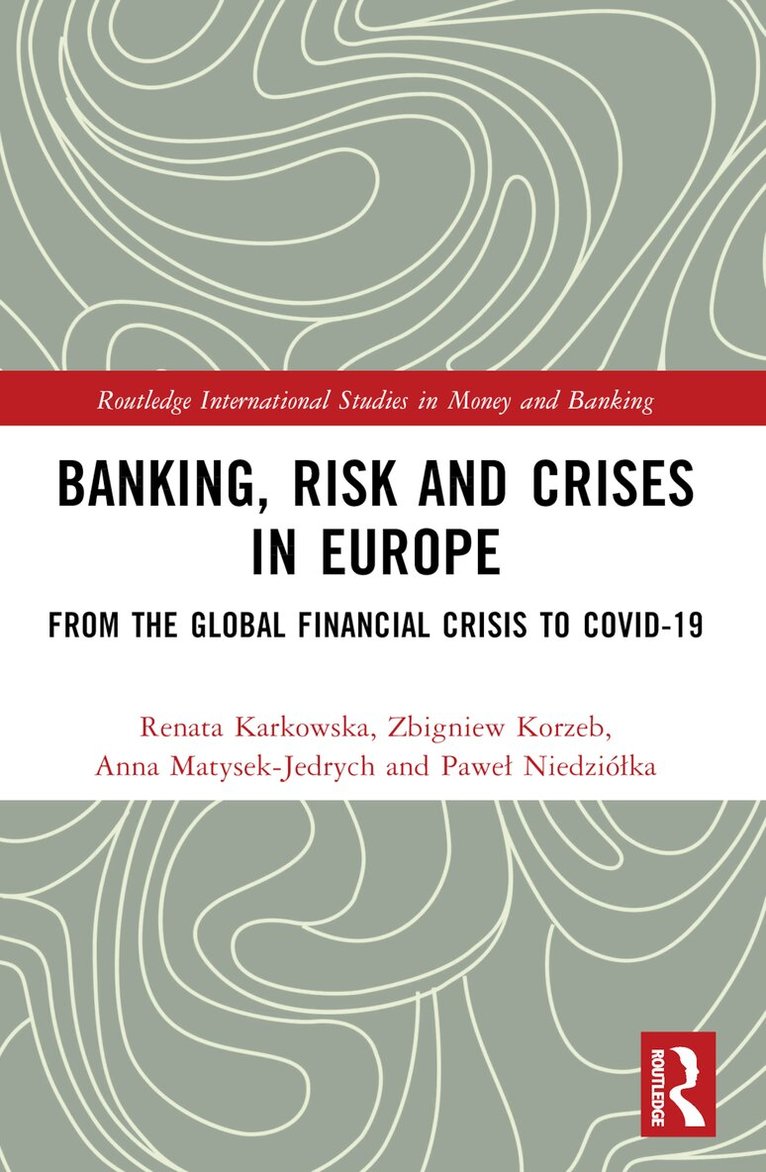
Banking, Risk and Crises in Europe
From the Global Financial Crisis to COVID-19
Inbunden, Engelska, 2023
2 012 kr
Skickas inom 10-15 vardagar
European economies have been plagued by successive crises, from the Global Financial Crisis (GFC) to the COVID-19 pandemic, through to the economic and geopolitical instability in Ukraine. These events, the uncertainty they generate combined with dynamic technological progress and significant sociocultural changes, have profoundly modified the character of modern finance. Understanding what happened, what mechanisms worked, and the reaction of the banking sector, bank customers, and policymakers require an in-depth and structured analysis. This book critically assesses the impact of these events, notably the COVID-19 pandemic, on the performance of the banking sector in Europe and serves as a compendium of knowledge on recent changes in European banking from two perspectives: firstly, European banking transformation, analyzing the process of what has already taken place, in particular, the GFC and COVID-19 crises; secondly, the challenges facing the operations and strategic management of European banks. It identifies specific areas of impact on the activity of commercial banks and the determining factors that will shape the economic and financial condition of banks and their customers – borrowers – in the future. Risk management, particularly credit risk, is a key focus of this volume. Each chapter, implicitly or explicitly, address a variety of questions that can help the reader to understand the complex nature of the transformation of the banking sector. The book provides a structured reference for those concerned with the impact of volatility on the business models of modern banks. As such, it will find a broad audience among students, academics, banking, financial, business, and industry professionals, policymakers, and market regulators.
Banking, Risk and Crises in Europe
From the Global Financial Crisis to COVID-19
Häftad, Engelska, 2024
594 kr
Skickas inom 10-15 vardagar
European economies have been plagued by successive crises, from the Global Financial Crisis (GFC) to the COVID-19 pandemic, through to the economic and geopolitical instability in Ukraine. These events, the uncertainty they generate combined with dynamic technological progress and significant sociocultural changes, have profoundly modified the character of modern finance. Understanding what happened, what mechanisms worked, and the reaction of the banking sector, bank customers, and policymakers require an in-depth and structured analysis. This book critically assesses the impact of these events, notably the COVID-19 pandemic, on the performance of the banking sector in Europe and serves as a compendium of knowledge on recent changes in European banking from two perspectives: firstly, European banking transformation, analyzing the process of what has already taken place, in particular, the GFC and COVID-19 crises; secondly, the challenges facing the operations and strategic management of European banks. It identifies specific areas of impact on the activity of commercial banks and the determining factors that will shape the economic and financial condition of banks and their customers – borrowers – in the future. Risk management, particularly credit risk, is a key focus of this volume. Each chapter, implicitly or explicitly, address a variety of questions that can help the reader to understand the complex nature of the transformation of the banking sector. The book provides a structured reference for those concerned with the impact of volatility on the business models of modern banks. As such, it will find a broad audience among students, academics, banking, financial, business, and industry professionals, policymakers, and market regulators.
563 kr
Skickas inom 10-15 vardagar
By all accounts, the case of Poland and its segue to market economy and democracy is a success story: 30 years of uninterrupted growth and development, infrastructure expansion, and modernization of the economy and society. Epochal changes have unfolded in a timespan of merely three decades. Change has taken place so fast that children born in late 1980s and onwards cannot remember what life in Poland under communism was like and cannot relate to it. Also, many elderly people, easy victims of romanticizing their own youth, tend to forget. As a result, the uniqueness of Polish transition and transformation, the boldness and efficiency of reforms, and the success that Polish society mastered together, tend to be undermined today both domestically and internationally. Poland has now been a member of the EU for more than 15 years. During that time, Poland’s image on the EU scene evolved from newcomer, through ‘model child’, champion of growth, to – in some respects – a maverick. This volume’s objective is to remind society, old and young, researchers, scholars and practitioners, that Poland’s success is an outcome of well-thought out and bold structural reforms implemented in a swift and timely manner, of society’s support for these reforms, and of third actors’ benign assistance. Looking back on the 30 years since the collapse of communism, and at the over 15 years of EU membership, this book offers an interdisciplinary, comprehensive and critical insight into factors and processes that have led to today’s Poland.