Anna Morcom – författare
Visar alla böcker från författaren Anna Morcom. Handla med fri frakt och snabb leverans.
6 produkter
6 produkter
1 499 kr
Kommande
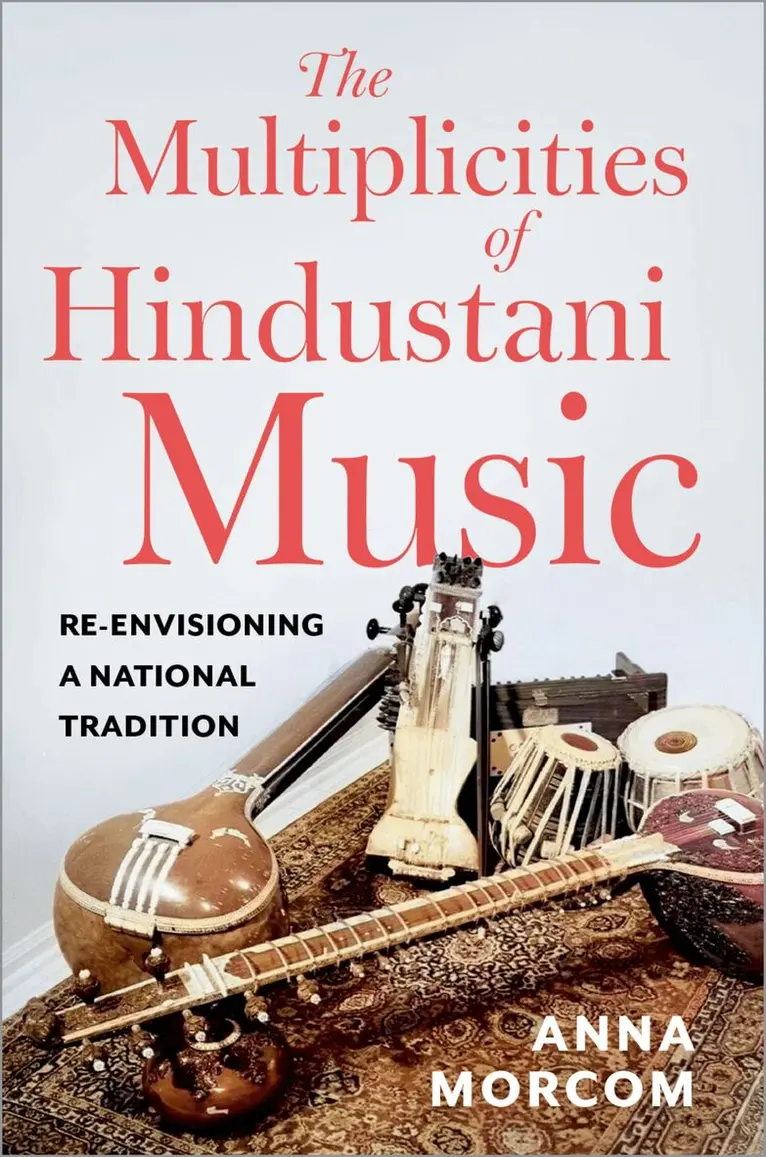
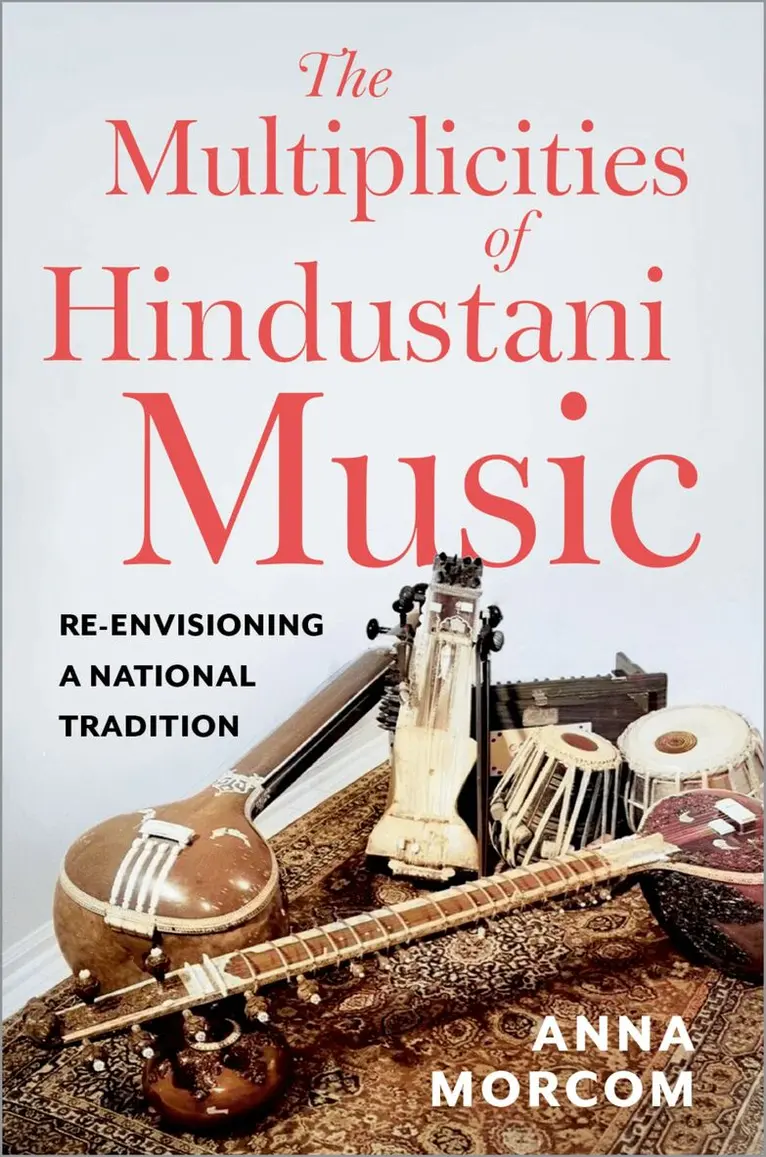
The Multiplicities of Hindustani Music explores the dynamic social and economic world of North Indian raga-based music over the twentieth century and into the present day. By approaching Hindustani music from beyond geographical and social centers, author Anna Morcom challenges the conventional framing of Hindustani music as a singular “classical” tradition, tracing its historical entanglements with popular, devotional, and commercial forms. In doing so, she uncovers new dimensions of its history, richness, strengths, contradictions, and challenges, and provides insights into future sustainability. The Multiplicities of Hindustani Music looks at Hindustani music as historically patronized by elites but existing also as a common culture in fairs and festivals in temples, shrines, and the estates of royalty and landowners. Khyal in particular, today's main classical vocal style, flourished not only as court music but in Sufi shrines as the repertoire of qawwals, and lineages of khyal singers encompassed a myriad of genres, including qawwali. The greatest of them mastered a multiplicity of styles and were known as chaumukhi “all-round” artists. From the late nineteenth century, raga-focused Hindustani music was reformed and canonized as “classical music” with a nationalist ethos. Morcom examines the late colonial and postcolonial reform movements that sought to codify and elevate Hindustani music as a national classical form from new perspectives. These efforts, while aiming to democratize access through music schools and institutions, also reinforced urban, middle-class dominance and marginalized regional and non-elite practices. Morcom pinpoints the paradox of reformist agendas that rejected commercialism yet depended on urban capital and networks. Crucially, she foregrounds the role of “lighter” forms of Hindustani music-often dismissed as peripheral-in sustaining the broader ecosystem. These genres, with greater national reach and accessibility, have enabled social mobility and educational opportunities, particularly for rural and lower-income students. The Multiplicities of Hindustani Music thus argues for a reconceptualization of the classical tradition as inherently pluralistic, highlighting that its vitality lies not in purity or exclusivity, but in its interdependence with a wider spectrum of musical practices.
465 kr
Kommande
The Multiplicities of Hindustani Music explores the dynamic social and economic world of North Indian raga-based music over the twentieth century and into the present day. By approaching Hindustani music from beyond geographical and social centers, author Anna Morcom challenges the conventional framing of Hindustani music as a singular “classical” tradition, tracing its historical entanglements with popular, devotional, and commercial forms. In doing so, she uncovers new dimensions of its history, richness, strengths, contradictions, and challenges, and provides insights into future sustainability. The Multiplicities of Hindustani Music looks at Hindustani music as historically patronized by elites but existing also as a common culture in fairs and festivals in temples, shrines, and the estates of royalty and landowners. Khyal in particular, today's main classical vocal style, flourished not only as court music but in Sufi shrines as the repertoire of qawwals, and lineages of khyal singers encompassed a myriad of genres, including qawwali. The greatest of them mastered a multiplicity of styles and were known as chaumukhi “all-round” artists. From the late nineteenth century, raga-focused Hindustani music was reformed and canonized as “classical music” with a nationalist ethos. Morcom examines the late colonial and postcolonial reform movements that sought to codify and elevate Hindustani music as a national classical form from new perspectives. These efforts, while aiming to democratize access through music schools and institutions, also reinforced urban, middle-class dominance and marginalized regional and non-elite practices. Morcom pinpoints the paradox of reformist agendas that rejected commercialism yet depended on urban capital and networks. Crucially, she foregrounds the role of “lighter” forms of Hindustani music-often dismissed as peripheral-in sustaining the broader ecosystem. These genres, with greater national reach and accessibility, have enabled social mobility and educational opportunities, particularly for rural and lower-income students. The Multiplicities of Hindustani Music thus argues for a reconceptualization of the classical tradition as inherently pluralistic, highlighting that its vitality lies not in purity or exclusivity, but in its interdependence with a wider spectrum of musical practices.
691 kr
Kommande
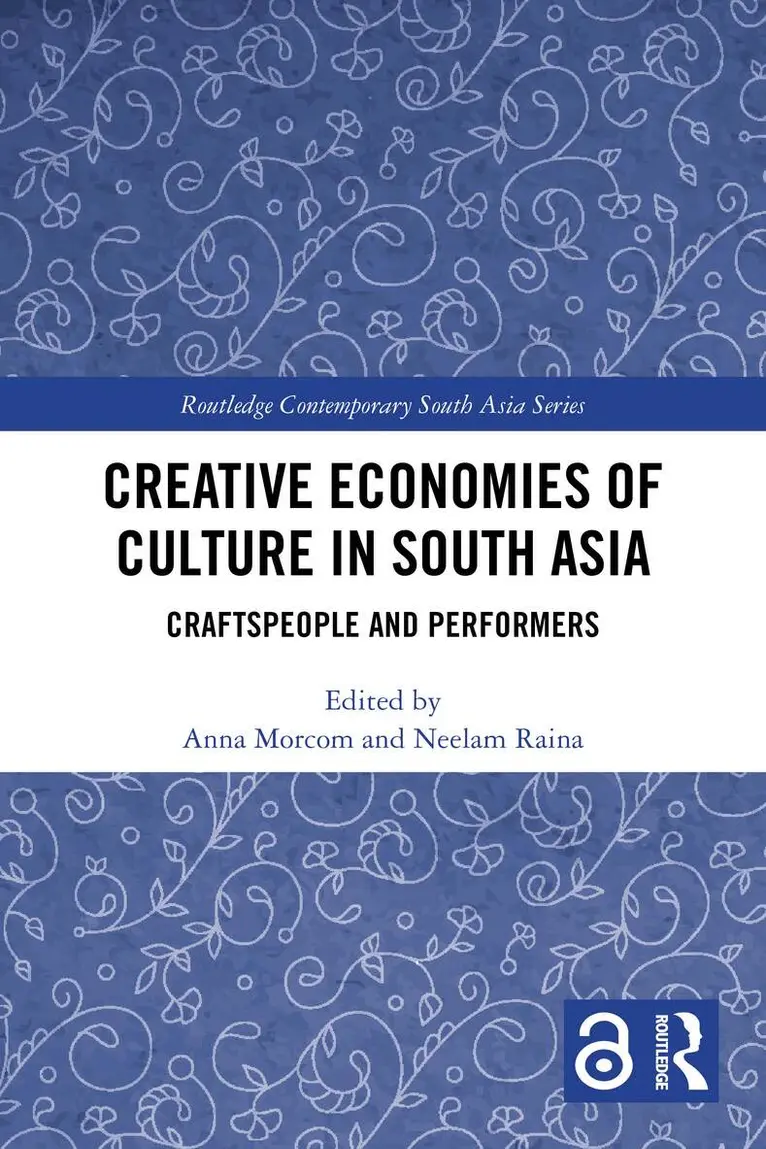
This book explores the crafts and performing arts of South Asia through a focus on labour and livelihood. It brings to light little-researched angles of social and political economies of culture and the ways in which they have shifted and changed in different historical eras and different political, economic, and social formations up to the present. In particular, through this focus on labour and livelihood, the contributors analyse the extensive parallels and similarities of arts and crafts on the one hand and music and performing arts on the other, ranging from questions of lineage, transmission, class/caste/community, professional versus amateur performers and artisans, to the impact of globalisation, neoliberal reforms, and mediatisation. Given the role of gender inequalities and differences within caste/community-based cultural production in South Asia across visual, material, and performing arts and crafts, this interdisciplinary perspective is particularly salient and links together broader sociological and historical trends in South Asian cultural or creative economies.Creative economies of culture explores labour and livelihood through a gamut of crafts and performing arts ranging from courtly and classical to commissioned to mass-produced, and in epochs ranging from colonial or feudal to globalised and neoliberal. In the process, it revisits, refines, or revises notions of social and cultural capital; socio-economic mobility; the value, role, and agency of crafts and performing arts; and the status of their artisans and performers. Original chapters written by contributors with an interdisciplinary background look at the survival and adaption of traditional artisanal communities; traditional forms of practice; historical shifts such as colonialism, industrialisation, and nationalism; as well as modern industries and institutions, including technologies of mass production and creative entrepreneurship.This book contextualises current debates within art, craft, music, and dance in South Asia. It develops new theoretical understandings of creative culture through a focus on labour and contributes to a range of social sciences, arts, and humanities disciplines, including South Asian studies, Ethnomusicology, Crafts and Design, Economic Anthropology, (Historical) Sociology and (Historical) Economics, Cultural History, Human Geography, and Creative Industries and Economies.Chapter 12 of this book is freely available as a downloadable Open Access PDF at http://www.taylorfrancis.com under a Creative Commons Attribution-Non Commercial-No Derivatives (CC-BY-NC-ND) 4.0 license
2 056 kr
Skickas inom 10-15 vardagar
This book explores the crafts and performing arts of South Asia through a focus on labour and livelihood. It brings to light little-researched angles of social and political economies of culture and the ways in which they have shifted and changed in different historical eras and different political, economic, and social formations up to the present. In particular, through this focus on labour and livelihood, the contributors analyse the extensive parallels and similarities of arts and crafts on the one hand and music and performing arts on the other, ranging from questions of lineage, transmission, class/caste/community, professional versus amateur performers and artisans, to the impact of globalisation, neoliberal reforms, and mediatisation. Given the role of gender inequalities and differences within caste/community-based cultural production in South Asia across visual, material, and performing arts and crafts, this interdisciplinary perspective is particularly salient and links together broader sociological and historical trends in South Asian cultural or creative economies.Creative economies of culture explores labour and livelihood through a gamut of crafts and performing arts ranging from courtly and classical to commissioned to mass-produced, and in epochs ranging from colonial or feudal to globalised and neoliberal. In the process, it revisits, refines, or revises notions of social and cultural capital; socio-economic mobility; the value, role, and agency of crafts and performing arts; and the status of their artisans and performers. Original chapters written by contributors with an interdisciplinary background look at the survival and adaption of traditional artisanal communities; traditional forms of practice; historical shifts such as colonialism, industrialisation, and nationalism; as well as modern industries and institutions, including technologies of mass production and creative entrepreneurship.This book contextualises current debates within art, craft, music, and dance in South Asia. It develops new theoretical understandings of creative culture through a focus on labour and contributes to a range of social sciences, arts, and humanities disciplines, including South Asian studies, Ethnomusicology, Crafts and Design, Economic Anthropology, (Historical) Sociology and (Historical) Economics, Cultural History, Human Geography, and Creative Industries and Economies.Chapter 12 of this book is freely available as a downloadable Open Access PDF at http://www.taylorfrancis.com under a Creative Commons Attribution-Non Commercial-No Derivatives (CC-BY-NC-ND) 4.0 license
601 kr
Skickas inom 10-15 vardagar
Since their beginnings in the 1930s, Hindi films and film songs have dominated Indian public culture in India, and have also made their presence felt strongly in many global contexts. Hindi film songs have been described on the one hand as highly standardized and on the other as highly eclectic. Anna Morcom addresses many of the paradoxes eccentricities and myths of not just Hindi film songs but also of Hindi cinema by analysing film songs in cinematic context. While the presence of songs in Hindi films is commonly dismissed as ’purely commercial’, this book demonstrates that in terms of the production process, musical style, and commercial life, it is most powerfully the parent film that shapes and defines the film songs and their success rather than the other way round. While they constitute India’s still foremost genre of popular music, film songs are also situational, dramatic sequences, inherently multi-media in style and conception. This book is uniquely grounded in detailed musical and visual analysis of Hindi film songs, song sequences and films as well as a wealth of ethnographic material from the Hindi film and music industries. Its findings lead to highly novel ways of viewing Hindi film songs, their key role in Hindi cinema, and how this affects their wider life in India and across the globe. It will be indispensable to scholars seeking to understand both Hindi film songs and Hindi cinema. It also forms a major contribution to popular music, popular culture, film music studies and ethnomusicology, tackling pertinent issues of cultural production, (multi-)media, and the cross-cultural use of music in Hindi cinema. The book caters for both music specialists as well as a wider audience.
652 kr
Skickas inom 7-10 vardagar
Until the 1930s no woman could perform in public and retain respectability in India. Professional female performers were courtesans and dancing girls who lived beyond the confines of marriage, but were often powerful figures in social and cultural life. Women's roles were often also taken by boys and men, some of whom were simply female impersonators, others transgender. Since the late nineteenth century the status, livelihood and identity of these performers have all diminished, with the result that many of them have become involved in sexual transactions and sexualised performances. Meanwhile, upper-class, upper-caste women have taken control of the classical performing arts and also entered the film industry, while a Bollywood dance and fitness craze has recently swept middle class India. In her historical on-the-ground study, Anna Morcom investigates the emergence of illicit worlds of dance in the shadow of India's official performing arts. She explores over a century of marginalisation of courtesans, dancing girls, bar girls and transgender performers, and de- scribes their lives as they struggle with stigmatisation, derision and loss of livelihood.