Anne Hendershott - Böcker
Visar alla böcker från författaren Anne Hendershott. Handla med fri frakt och snabb leverans.
6 produkter
6 produkter
858 kr
Skickas inom 10-15 vardagar
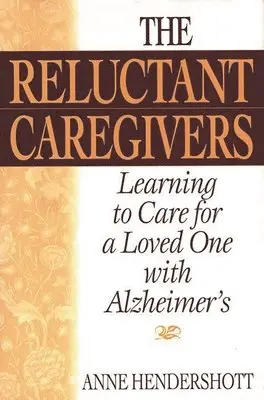
Although Hendershott has spent many years teaching and writing about the sociological aspects of aging, she writes that none of this could have prepared me for the overwhelming challenge of caring for my own mother-in-law in my home. She introduces baby boomers as the unexpected caregivers of the coming decades. The process of family denial about symptoms, work-family conflict, and the unique problems of children of caregivers are explored in an effort to find solutions to the caregiving challenge.Social science research is made accessible and is coupled with anecdotal information gleaned from interactions with other caregivers and personal experience. Throughout the book, Hendershott shows family caregivers that by gaining insight into their motivations for caregiving and by drawing from family support and help from the community, they can move beyond maladaptive caregiving coping styles, to a rewarding reality-based caregiving experience.
662 kr
Skickas inom 10-15 vardagar
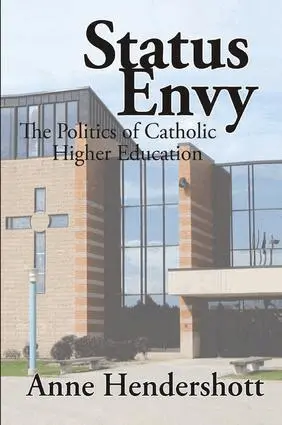
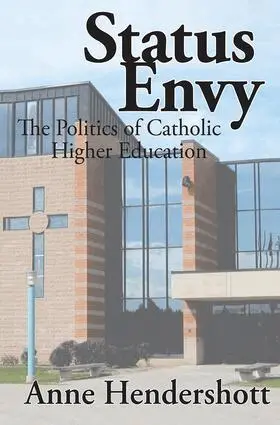
The debate within Catholic educational circles on whether church sponsored colleges and universities perpetuate mediocrity by giving too great a priority to the moral development of students instead of scholarship and intellectual excellence continues in this book by sociologist Anne Hendershott. She asserts that part of the reason for the crisis of faith within Catholic colleges is due to status envy--the desire to compete with the top colleges in the country. Catholic universities are generally not rated as top-notch. They are viewed as having a lower status than secular institutions, which, of course, creates resentment. Catholic universities, in turn, become more secular as they become consumed with status concerns.Detailing how this resentment manifests itself on campuses, Hendershott explains faculty and administrative attempts to distance universities from Catholic ideas and curriculum. Some have distanced themselves so far from their Catholic origins that the church no longer recognizes them as Catholic institutions. The author questions whether even determined Catholic universities will be able to avoid the pressures to become more secular. Hendershott, who clearly sympathizes with the original mission of Catholic universities, leads the reader through the earliest signs that Catholic colleges were beginning to lose their way in the 1960s, up through the ongoing issues of feminism and homosexuality and their impact.In focusing on these secular issues, colleges are denying exposure to the traditional Catholic views on subjects such as homosexuality, women's ordination, and abortion. Like all culture wars, the interaction among people defines the situation. The campus is a reflection of the greater culture between those who assert that there are no truths, only readings--and those who believe that the truths have been revealed and require constant rereading and application. It is a conflict between those dedicated to the negation of the authority of Scripture and the hierarchy of the church, and those proposing a renaissance of the Catholic intellect and a renewed appreciation of the church itself.
2 088 kr
Skickas inom 10-15 vardagar
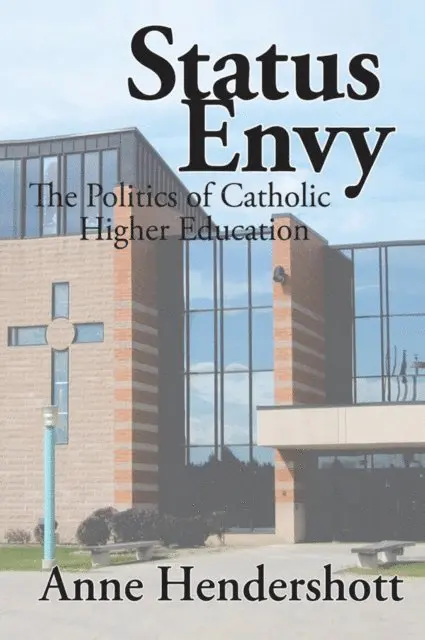
The debate within Catholic educational circles on whether church sponsored colleges and universities perpetuate mediocrity by giving too great a priority to the moral development of students instead of scholarship and intellectual excellence continues in this book by sociologist Anne Hendershott. She asserts that part of the reason for the crisis of faith within Catholic colleges is due to status envy--the desire to compete with the top colleges in the country. Catholic universities are generally not rated as top-notch. They are viewed as having a lower status than secular institutions, which, of course, creates resentment. Catholic universities, in turn, become more secular as they become consumed with status concerns.Detailing how this resentment manifests itself on campuses, Hendershott explains faculty and administrative attempts to distance universities from Catholic ideas and curriculum. Some have distanced themselves so far from their Catholic origins that the church no longer recognizes them as Catholic institutions. The author questions whether even determined Catholic universities will be able to avoid the pressures to become more secular. Hendershott, who clearly sympathizes with the original mission of Catholic universities, leads the reader through the earliest signs that Catholic colleges were beginning to lose their way in the 1960s, up through the ongoing issues of feminism and homosexuality and their impact.In focusing on these secular issues, colleges are denying exposure to the traditional Catholic views on subjects such as homosexuality, women's ordination, and abortion. Like all culture wars, the interaction among people defines the situation. The campus is a reflection of the greater culture between those who assert that there are no truths, only readings--and those who believe that the truths have been revealed and require constant rereading and application. It is a conflict between those dedicated to the negation of the authority of Scripture and the hierarchy of the church, and those proposing a renaissance of the Catholic intellect and a renewed appreciation of the church itself.
154 kr
Skickas inom 5-8 vardagar
Until the 1960s, sociologists had asserted that a willingness to identify deviance, or what constitutes appropriate behavior, was indispensable to the process of generating and sustaining cultural values, clarifying moral boundaries, and promoting social solidarity. Yet today, after three decades of lacerating debate, shifts in values and social relations, and questioning social authority, the subject has virtually disappeared from sociology's radar screen. Deviance, in the famous phrase of Daniel Patrick Moynihan, has been "dumbed down." In "The Politics of Deviance," Anne Hendershott, a leading sociologist herself, tries to understand how this major change in the way we see our world occurred. How did we adopt such different views of human nature and personal responsibility? How did we "medicalize" what was once proscribed behavior? While in the past there was a moral consensus that conditioned our attitudes toward teenage sex, suicide, substance abuse, and other questionable behaviors, Hendershott points out that today it is pressure groups that define and redefine deviance.("As I write these words," she says at one point in the narrative, "the advocacy of the North American Man-Boy Love Association is invisibly changing the way we see pedophilia.") As they succeed in redefining our attitudes toward their "clients," these groups significantly altered our view of each other and of our world. Arguing against the grain of her own discipline, Anne Hendershott asserts the value and strength of the most important of all determinants of behavior--social norms and the commitment to accept them. "The Politics of Deviance" maintains that definitions of deviance that rely upon reason, and not emotion or political advocacy, are indispensable to the process of generating and sustaining cultural values and reaffirming the moral ties that bind us together.
217 kr
Tillfälligt slut
In The Politics of Abortion, Anne Hendershott carefully analyzes the politics behind our most contentious issue. How did the culture shift that produced Roe v Wade occur? How did the Democratic Party move from being the party of the New Deal, Medicare, and Aid to Families with Dependent Children to the party of abortion-on-demand? Why are black women targeted as the primary consumers of abortion services? Why does Hollywood celebrate abortion and abortion providers in films and television? Why do pro-choice clergy assure followers that abortion is a sacred choice? Finally, arguing that Roe v Wade effectively radicalized the abortion debate by denying to the pro-life side the ordinary tools of politics and persuasion, Hendershott asks that we begin to move the discussions from the courts back to the realm of politics where there might be some prospect of resolution.
Renewal
How a New Generation of Faithful Priests and Bishops Is Revitalizing the Catholic Church
Inbunden, Engelska, 2014
217 kr
Tillfälligt slut
In the wake of the clergy abuse scandal of the last decade, many media commentators predicted the "end" of the Catholic priesthood. Demands for an end to celibacy, coupled with calls for women's ordination, dominated discussions on the effectiveness of the Catholic Church in America. Renewal argues that rather than a decline of the priesthood and a diminishing influence of the Catholic Church, we are living in a time of transformation and revitalization. The aging generation of progressives that continues to lobby Church leaders to change Catholic teachings on reproductive rights, same-sex marriage and women's ordination is being replaced by younger men and women who are attracted to the Church because of the very timelessness of its teachings.