Anne Winslow – författare
Visar alla böcker från författaren Anne Winslow. Handla med fri frakt och snabb leverans.
2 produkter
2 produkter
1 520 kr
Skickas inom 10-15 vardagar
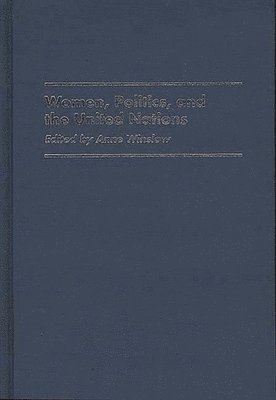
How have women used global institutions and the networking possible through them to assure women's emergence on the world stage? How successful have women been at the United Nations and at international conferences over the years in their pressures for equality and for a full partnership with men? To what extent have women gained a foothold in the political arena internationally, and have they been able to exert their influence and to improve their situation? Expert participants and scholars give varying perspectives and insights about the history of women's worldwide efforts through governmental and nongovernmental organizations. They trace the role of the UN Commission on the Status of Women and the Convention on the Elimination of All Forms of Discrimination Against Women. They analyze the politics of the three world women's conferences in the 1970s and the 1980s, the evolution of institutions set up as catalysts to resolve key issues in developing countries, and the changing conditions for women in the UN Secretariat and specialized agencies. These unusual appraisals and a lengthy bibliography are for interdisciplinary audiences of women and men around the world—essential background to understanding the 1995 UN conference in Beijing.
1 272 kr
Skickas inom 7-10 vardagar
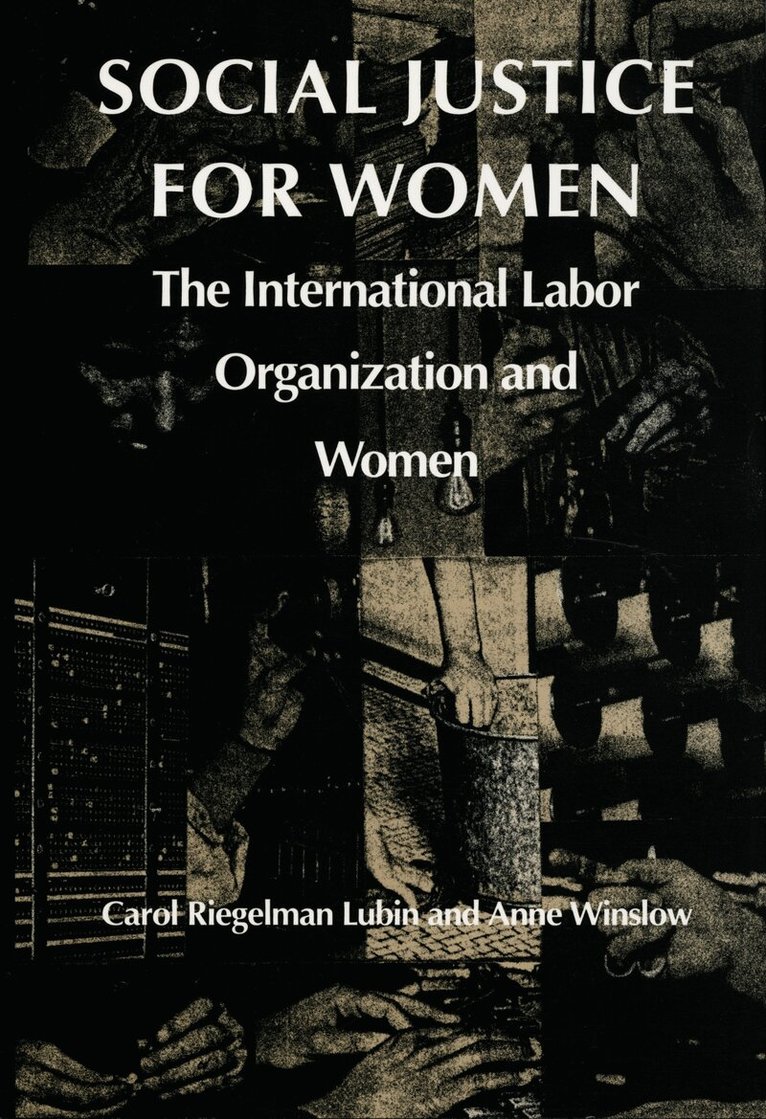
The International Labor Organization (ILO), founded in 1919 at the Paris Peace Conference, was the first international organization established prior to World War II to mention women in its constitution. Organized to promote the “protection of young children, young persons and women,” its original Labor Charter stood by the principle that “men and women should receive equal renumeration for work of equal value.” Social Justice for Women provides the first comprehensive and analytical history of the ILO with respect to women, examining the origins, operations, and successes and weaknesses of its policies.Carol Riegelman Lubin, a staff member of ILO for seventeen years, and Anne Winslow, for twenty-two years editor for the Carnegie Endowment, explore the important role played by women of the American and British trade union movement in the founding of the ILO. In surveying the organization’s history and structure, they ask how the ILO’s concern with women has manifested over the years, if it was faithful to its constitution, how it dealt with conflicting needs of women from industrialized nations and Third World countries, and what its relationship was to the international feminist movement. Drawing on case studies and analyses of literature on women and work, the authors identify the role of other international organizations in response to the ILO in fostering, or sometimes hindering, women’s development in the labor area.