Annemarie Samuels - Böcker
Visar alla böcker från författaren Annemarie Samuels. Handla med fri frakt och snabb leverans.
5 produkter
5 produkter
647 kr
Skickas inom 10-15 vardagar
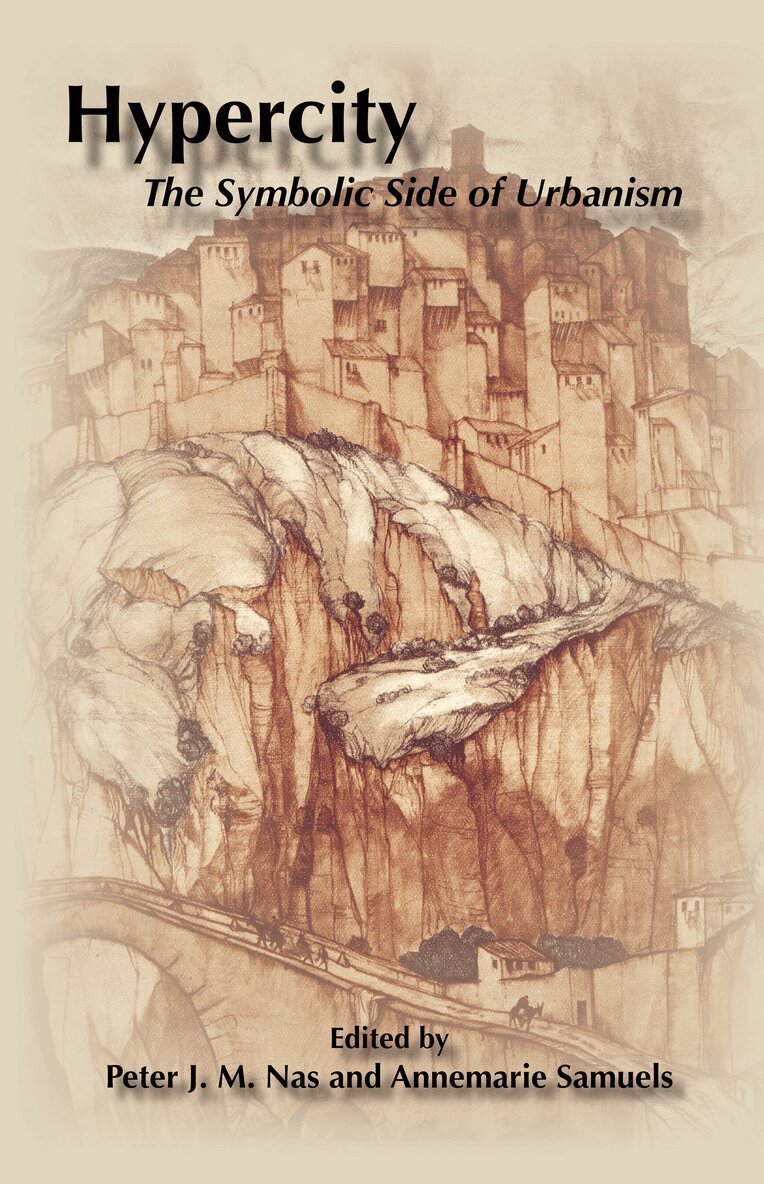
First published in 2006. Cities are sites of multiple meanings and symbols, ranging from statues and street names to festivals and architecture. Some times the symbolic side of urbanism is so strong that it outshines reality - then we speak of hypercity. Urban symbolic ecology and hypercity studies are relatively new fields that deal with the production, distribution and consumption of symbols and meanings in urban space, timely concerns in an era of increasing globalization and competition between mega-urban regions. This volume presents a detailed introduction to the new fields, followed by case studies of the cultural layer of symbolism in Brussels (Belgium), Cape Town (South Africa), Cuenca (Ecuador), Delft (The Netherlands), Kingston (Jamaica), Ljubljana (Slovenia), Paris (France) and cities in Italy and Indonesia. It amply demonstrates that the time has come for urban symbolic ecology and hypercity studies to be included in regular urban studies training in the fields of anthropology, sociology, social geography and architecture.
2 098 kr
Skickas inom 10-15 vardagar
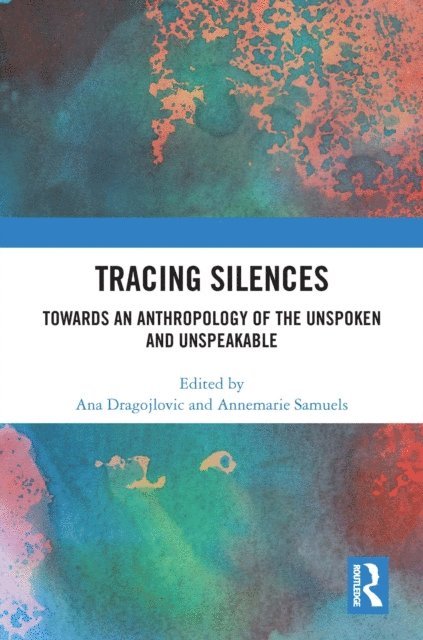
Silence is crucial to our social world. Responding to the growing scholarly interest in social sciences and humanities for more in-depth engagements with social silence, this book explores what it means to trace silences and to include traces of silences in our scholarly representations.What qualifies as silence, and how does it relate to articulation, to voice, visibility and representation? How can silences be sensed and experienced viscerally as well as narratively? And how do we think with and interpret silences in the face of potential unknowability? Grounded in ethnographic research in the Netherlands, Israel, Turkey, China, and Indonesia, the chapters all contribute to a theorization of silence that embraces multivocality, unintelligibility and uncertainty of interpretation. As a collection of cutting-edge scholarly work at the intersection of anthropology and history, Tracing Silences argues for an in-depth engagement with the unspeakable and unspoken, through a range of modes and methods, and in the historical, social, and political ways in which they emerge and are enacted in the particularities of people’s lives.This book will be of interest to scholars and students of history, anthropology, sociology, political science and archival studies. The chapters in this book were originally published as a special issue of History and Anthropology.
579 kr
Skickas inom 10-15 vardagar
Silence is crucial to our social world. Responding to the growing scholarly interest in social sciences and humanities for more in-depth engagements with social silence, this book explores what it means to trace silences and to include traces of silences in our scholarly representations.What qualifies as silence, and how does it relate to articulation, to voice, visibility and representation? How can silences be sensed and experienced viscerally as well as narratively? And how do we think with and interpret silences in the face of potential unknowability? Grounded in ethnographic research in the Netherlands, Israel, Turkey, China, and Indonesia, the chapters all contribute to a theorization of silence that embraces multivocality, unintelligibility and uncertainty of interpretation. As a collection of cutting-edge scholarly work at the intersection of anthropology and history, Tracing Silences argues for an in-depth engagement with the unspeakable and unspoken, through a range of modes and methods, and in the historical, social, and political ways in which they emerge and are enacted in the particularities of people’s lives.This book will be of interest to scholars and students of history, anthropology, sociology, political science and archival studies. The chapters in this book were originally published as a special issue of History and Anthropology.
4 114 kr
Skickas inom 7-10 vardagar
This comprehensive Research Handbook provides an accessible overview of research on palliative and end of life care in its social context. It examines key theories, methods, and research findings, presenting crucial social science and public health perspectives.Leading and emerging international scholars discuss a range of issues including population ageing, growing pressures on health and social care systems, assisted dying, and new cultural responses to human mortality and bereavement. They delve into detailed case studies, such as the genealogies of culturally specific nursing, home care in Europe, patient and public involvement in the UK, end of life care pathways in Japan, and palliative care in resource-poor settings within African countries. Adopting an interdisciplinary approach, the Research Handbook also addresses models of end of life care in relation to wider society, and outlines future research priorities.This insightful Research Handbook will greatly benefit students and scholars of sociology, anthropology, and social policy, particularly those who are studying public health, the welfare state, and social work. It is also a vital resource for practitioners and policymakers in palliative and end of life care.
347 kr
Skickas inom 10-15 vardagar
First published in 2006. Cities are sites of multiple meanings and symbols, ranging from statues and street names to festivals and architecture. Some times the symbolic side of urbanism is so strong that it outshines reality - then we speak of hypercity. Urban symbolic ecology and hypercity studies are relatively new fields that deal with the production, distribution and consumption of symbols and meanings in urban space, timely concerns in an era of increasing globalization and competition between mega-urban regions. This volume presents a detailed introduction to the new fields, followed by case studies of the cultural layer of symbolism in Brussels (Belgium), Cape Town (South Africa), Cuenca (Ecuador), Delft (The Netherlands), Kingston (Jamaica), Ljubljana (Slovenia), Paris (France) and cities in Italy and Indonesia. It amply demonstrates that the time has come for urban symbolic ecology and hypercity studies to be included in regular urban studies training in the fields of anthropology, sociology, social geography and architecture.