Annette Davison - Böcker
Visar alla böcker från författaren Annette Davison. Handla med fri frakt och snabb leverans.
7 produkter
7 produkter
565 kr
Skickas inom 5-8 vardagar
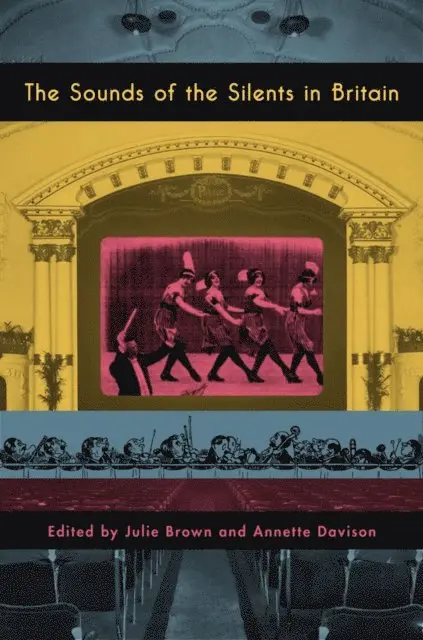
The Sounds of the Silents in Britain explores the sonic dimension of film exhibition in Britain, from the emergence of cinema through to the introduction of synchronized sound. Edited by Julie Brown and Annette Davison, the volume includes original scholarship from many highly-regarded experts on British silent film from a range of disciplinary backgrounds, such as film history, theatre studies, economic history, and musicology. The essays provide an introduction to diverse aspects of early film sound: vocal performance, from lecturing and reciting, to voicing the drama; music, from the forerunners of music for visual spectacle to the impact of legislation and the development of film music practice; and performance in cinemas more generally, from dancing and singalong films, to live stage prologues, and even musical performances captured in British Pathé's early sound shorts. Other topics include the sonic eclecticism of performances at the Film Society, British International Pictures' first synchronized sound films, and the role of institutions such as the Musicians' Union and the Performing Right Society in relation to cinema music and musicians. In addition to tackling these familiar topics from surprising new angles, The Sounds of the Silents in Britain also debunks some of the myths about the sonic dimension of film exhibition. For example, the book reveals that local venue licensing decisions had a profound effect on whether music could even be performed with film in some British performances spaces and cities, and that the same was true of live acts alongside film - even into the late 1920s. The books also bring to light the fact that, in terms of special film presentation and orchestral accompaniment, practices in London were arguably more sophisticated than those in New York before the onset of World War I; that lecturing to film in Aberdeen, Scotland had almost as long a life as Japanese benshi; and that the London Film Society was as eclectic in its approach to sound as it was in programming the films themselves. Filled with both archival research and sound musicological analysis, The Sounds of the Silents in Britain represents an important addition to early film and film music scholarship.
1 989 kr
Skickas inom 5-8 vardagar
The Sounds of the Silents in Britain explores the sonic dimension of film exhibition in Britain, from the emergence of cinema through to the introduction of synchronized sound. Edited by Julie Brown and Annette Davison, the volume includes original scholarship from many highly-regarded experts on British silent film from a range of disciplinary backgrounds, such as film history, theatre studies, economic history, and musicology. The essays provide an introduction to diverse aspects of early film sound: vocal performance, from lecturing and reciting, to voicing the drama; music, from the forerunners of music for visual spectacle to the impact of legislation and the development of film music practice; and performance in cinemas more generally, from dancing and singalong films, to live stage prologues, and even musical performances captured in British Pathé's early sound shorts. Other topics include the sonic eclecticism of performances at the Film Society, British International Pictures' first synchronized sound films, and the role of institutions such as the Musicians' Union and the Performing Right Society in relation to cinema music and musicians. In addition to tackling these familiar topics from surprising new angles, The Sounds of the Silents in Britain also debunks some of the myths about the sonic dimension of film exhibition. For example, the book reveals that local venue licensing decisions had a profound effect on whether music could even be performed with film in some British performances spaces and cities, and that the same was true of live acts alongside film - even into the late 1920s. The books also bring to light the fact that, in terms of special film presentation and orchestral accompaniment, practices in London were arguably more sophisticated than those in New York before the onset of World War I; that lecturing to film in Aberdeen, Scotland had almost as long a life as Japanese benshi; and that the London Film Society was as eclectic in its approach to sound as it was in programming the films themselves. Filled with both archival research and sound musicological analysis, The Sounds of the Silents in Britain represents an important addition to early film and film music scholarship.
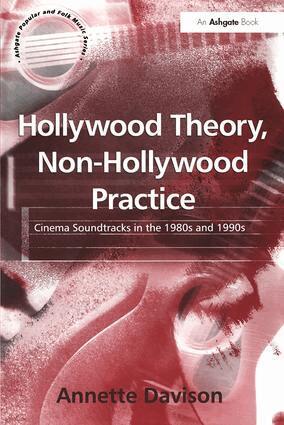
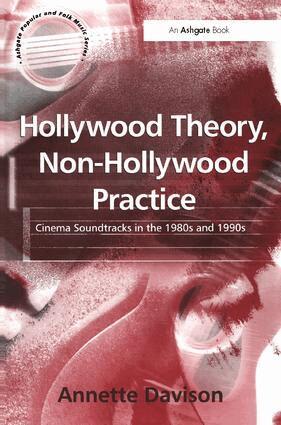
Hollywood Theory, Non-Hollywood Practice
Cinema Soundtracks in the 1980s and 1990s
Inbunden, Engelska, 2004
2 150 kr
Skickas inom 10-15 vardagar
Relatively little has been written about film scores and soundtracks outside of Hollywood cinema. Hollywood Theory, Non-Hollywood Practice addresses this gap by looking at the practices of film soundtrack composition for non-Hollywood films made after 1980. Annette Davison argues that since the mid-1970s the model of the classical Hollywood score has functioned as a form of dominant ideology in relation to which alternative scoring and soundtrack practices may assert themselves. The first part of the book explores some of the key theoretical issues and debates in film studies and film music studies. The second part comprises a series of case studies of non-Hollywood scores. Starting with Jean Luc Godard's Prénom: Carmen (1983), Davison argues that the film's score offers a deconstruction of the relationship between sound and image proposed by classical Hollywood film. Derek Jarman's The Garden (1990) takes the debate a step further in its exploration of the possibility that a film's soundtrack may be liberated from slavery to the image track. Wings of Desire (1987) directed by Wim Wenders offers, Davison believes, a negotiation between classical and alternative scoring and soundtrack practices; while David Lynch's Wild at Heart (1990) actually fully integrates scoring and soundtrack practices so that sounds and dialogue are used in musical ways. Seeking to stimulate debate about the aesthetics and interpretation of film scores and soundtracks in general, this book develops an important synthesis of film studies and musicology.
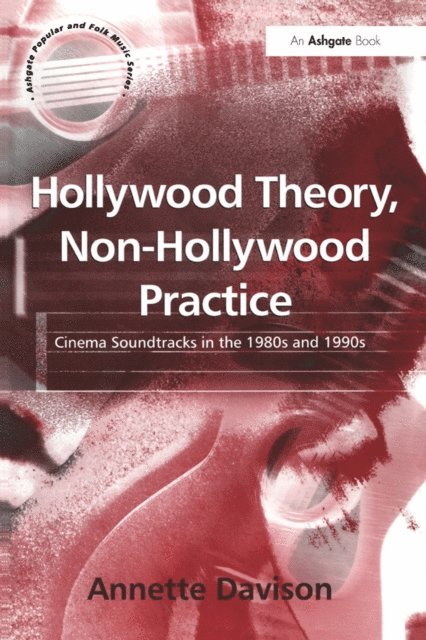
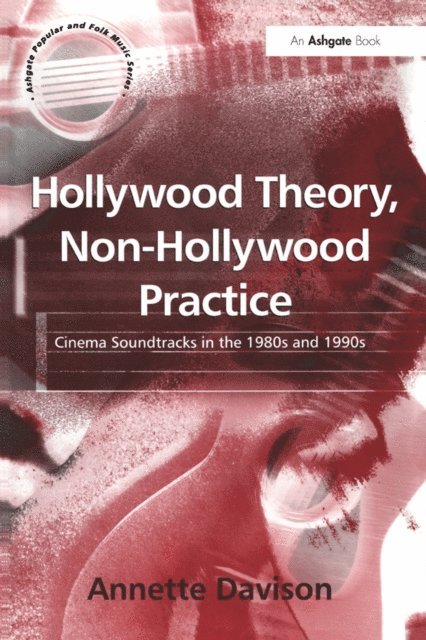
Hollywood Theory, Non-Hollywood Practice
Cinema Soundtracks in the 1980s and 1990s
Häftad, Engelska, 2017
705 kr
Skickas inom 10-15 vardagar
Relatively little has been written about film scores and soundtracks outside of Hollywood cinema. Hollywood Theory, Non-Hollywood Practice addresses this gap by looking at the practices of film soundtrack composition for non-Hollywood films made after 1980. Annette Davison argues that since the mid-1970s the model of the classical Hollywood score has functioned as a form of dominant ideology in relation to which alternative scoring and soundtrack practices may assert themselves. The first part of the book explores some of the key theoretical issues and debates in film studies and film music studies. The second part comprises a series of case studies of non-Hollywood scores. Starting with Jean Luc Godard's Prénom: Carmen (1983), Davison argues that the film's score offers a deconstruction of the relationship between sound and image proposed by classical Hollywood film. Derek Jarman's The Garden (1990) takes the debate a step further in its exploration of the possibility that a film's soundtrack may be liberated from slavery to the image track. Wings of Desire (1987) directed by Wim Wenders offers, Davison believes, a negotiation between classical and alternative scoring and soundtrack practices; while David Lynch's Wild at Heart (1990) actually fully integrates scoring and soundtrack practices so that sounds and dialogue are used in musical ways. Seeking to stimulate debate about the aesthetics and interpretation of film scores and soundtracks in general, this book develops an important synthesis of film studies and musicology.
183 kr
Skickas inom 7-10 vardagar
395 kr
Skickas inom 3-6 vardagar
1 799 kr
Kommande
This open access volume examines the functions, reach and effectiveness of music and sound in climate-themed films, TV, commercials, and video games. The humanities, and sub-disciplines within them, have clear roles and responsibilities in the climate crisis, and none more so than the audiovisual arts and media. It is through these receptors that most people learn truths and post-truths, receive news and 'fake news', are informed of scientific data, hear opinions from across the spectrum, and find inspiration for action.Through close analysis of music and sound in a range of works, Soundtracks of Climate Change covers a variety of media, ethnicities, genders, languages, genres, mainstream and experimental approaches, fiction and documentary, scientific and aesthetic discourses. The authors discuss music and sound in film, TV, and games from a global perspective, covering East Asia, Africa, the Nordic region, and Atlantic anglophone cultures. As we confront the climate crisis, this collection of articles by leading thinkers across film, music, and sound studies asks how audiovisual works convey the gravity and complexity of the problem.The ebook editions of this book are available open access under a CC BY-NC-ND 4.0 licence on bloomsburycollections.com Open access was funded by Knowledge Unlatched.