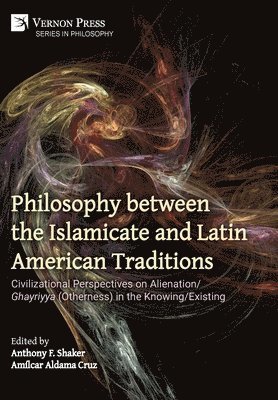
Anthony F Shaker – författare
205 kr
Skickas inom 5-8 vardagar
300 kr
Skickas inom 5-8 vardagar
50 kr
Läs direkt efter köp
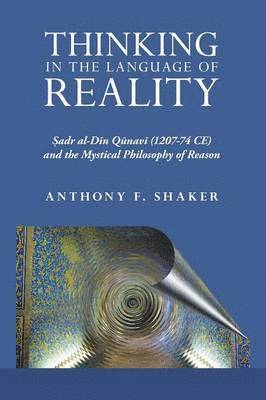
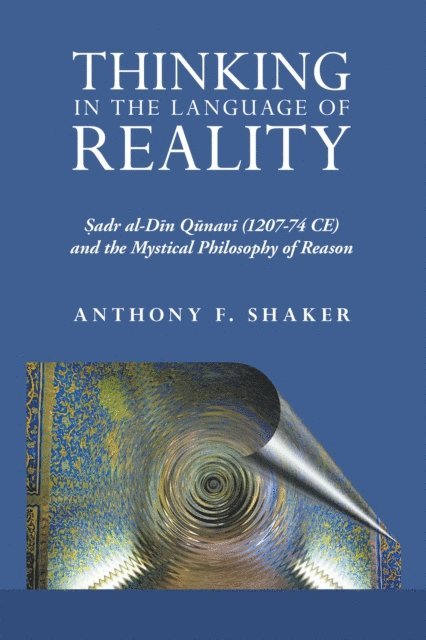
Sadr al-Dn Qnav (1207-74 CE) was pivotal to the development of systematic philosophy, and indirectly contributed to the rise of fields of inquiry considered fundamental to our modern scientific outlook. He formed part of a wider critique of traditional Aristotelian epistemology which, Dr. Shaker argues, culminated in two historic epistemological openings. The first stretched from the 10th to 15th centuries under the aegis of Islamic civilization (taken in a non-confessional sense). The second occurred in early European thouht culminating with Heidegger. Dr. Shaker compares these two periods in his introduction, identifying key points of convergence and placing Qnav in a broad historical context.
In his magnum opus, Kitb ijz al bayn, Qnav takes as his point of departure the age-old problem of knowledge, but in a completely new light. Ibn Snwhom Thomas Aquinas and Latin Scholasticism knew as Avicennahad pithily declared man incapable of truly knowing the realities of things, much less God, by theoretical reasoning alone. Taking up the challenge, Qnav shows under what conditions one may lay claim to such knowledge. He develops a paradigm that draws on the logical, linguistic and exegetical insights of his predecessors, especially Ibn Arab.
The resulting synthesis, which takes the unfolding "Book" of self-manifestation as the root of all knowledge, opens up the infinite possibilities offered by language for talking and thinking about reality. More specifically, linguistic construction and meaning formation are colored by an existential dimension all but hidden from formal logic, which other Islamic philosophers have sought to adapt and transform to a new age.
Here is what the experts are saying about this book:
"Anthony Shaker has written a book that is at once searching, subtle and assured and one that promises to have a powerful impact on the way in which later Islamic philosophy [after Ghazl] will be studied and discussed for many years to come."
"Dr. Shaker sets his inquiry within the widest possible philosophical context. He views his subject not simply as an isolated instance of an obscure system of thought in a remote corner of the Islamic world of the thirteenth century but situates it firmly within the traditions of philosophy east and west. [In his introduction] he draws on both Hegel and Heidegger, as well as other thinkers, to pinpoint and elaborate al-Qunawis genuine relevance to the development of philosophy in the largest sense."
Prof. Eric Ormsby
IIS (London, UK)
1 241 kr
Skickas inom 3-6 vardagar
834 kr
Skickas inom 3-6 vardagar
1 252 kr
Läs direkt efter köp
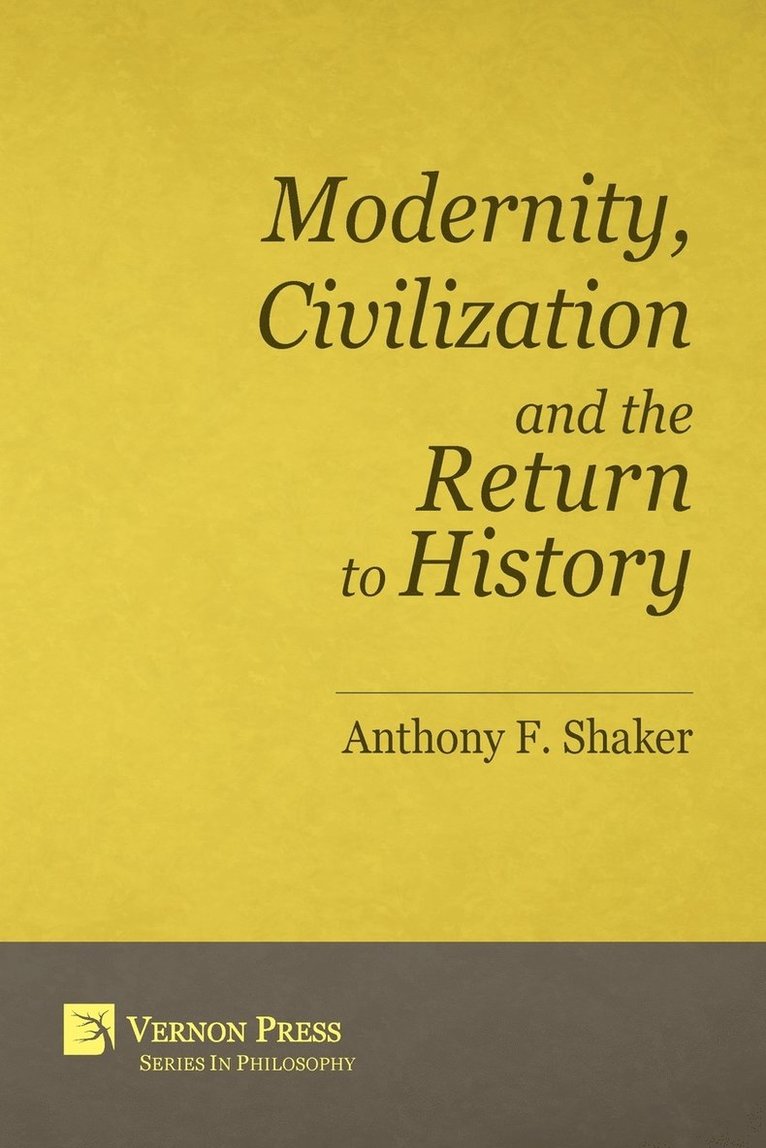
The modern concept and study of civilization have their roots, not in western Europe, but in the spirit of scientific investigation associated with a self-conscious Islamicate civilization. What we call modernity cannot be fathomed without this historical connection. We owe every major branch of science known today to the broad tradition of systematic inquiry that belongs to a “region of being”—as Heidegger would say—whose theoretical, practical and institutional dimensions the philosophy of that civilization played an unprecedented role in creating.
This book focuses primarily on the philosophical underpinnings of questions relating to civilization, personhood and identity. Contemporary society and thinking in western Europe introduced new elements to these questions that have altered how collective and personal identities are conceived and experienced. In the age of “globalization,” expressions of identity (individual, social and cultural) survive precariously outside their former boundaries, just when humanity faces perhaps its greatest challenges—environmental degradation, policy inertia, interstate bellicosity, and a growing culture of tribalism. Yet, the world has been globalized for at least a millennium, a fact dimmed by the threadbare but still widespread belief that modernity is a product of something called the West.
One is thus justified in asking, as many people do today, if humanity has not lost its initiative. This is more a philosophical than an empirical question. There can be no initiative without the human agency that flows from identity and personhood—i.e., the way we, the acting subject, live and deliberate about our affairs. Given the heavy scrutiny under which the modern concept of identity has come, Dr. Shaker has dug deeper, bringing to bear a wealth of original sources from both German thought and Ḥikmah (Islamicate philosophy), the latter based on material previously unavailable to scholars. Posing the age-old question of identity anew in the light of these two traditions, whose special historical roles are assured, may help clear the confusion surrounding modernity and, hopefully, our place in human civilization.
Proximity to Scholasticism, and therefore Islamicate philosophy, lent German thought up to Heidegger a unique ability to dialogue with other thought traditions. Two fecund elements common to Heidegger, Qūnawī and Mullā Ṣadrā are of special importance: Logos (utterance, speech) as the structural embodiment at once of the primary meaning (essential reality) of a thing and of divine manifestation; and the idea of unity-in-difference, which Ṣadrā finally formulated as the substantial movement of existence. But behind this complexity is the abiding question of who Man is, which cannot be answered by theory alone.
Heidegger, who occupies a good portion of this study, questioned the modern ontology at a time of social collapse and deep spiritual crisis not unlike ours. Yet, that period also saw the greatest breakthroughs in modern physics and social science. The concluding chapters take up, more specifically, identity renewal in Western literature and Muslim “reformism.” The renewal theme reflects a point of convergence between the Eurocentric worldview, in which modernism has its secular aesthetics roots, and a current originating in Ibn Taymiyyah’s reductionist epistemology and skeptical fundamentalism. It expresses a hopeless longing for origin in a historically pristine “golden age,” an obvious deformation of philosophy’s millennial concern with the commanding, creative oneness of the Being of beings.
1 137 kr
Skickas inom 5-8 vardagar
879 kr
Skickas inom 5-8 vardagar
1 360 kr
Skickas inom 5-8 vardagar
1 439 kr
Skickas inom 5-8 vardagar
948 kr
Skickas inom 5-8 vardagar