Anthony Feiler - Böcker
Visar alla böcker från författaren Anthony Feiler. Handla med fri frakt och snabb leverans.
3 produkter
3 produkter
430 kr
Skickas inom 10-15 vardagar
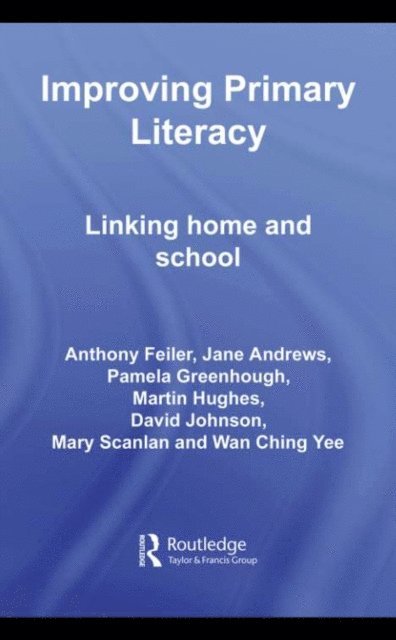
Parents can play an immensely important role in supporting their children's literacy learning at home, but how can primary teachers enlist the support of parents in helping children learn literacy?With a focus on improving children's literacy skills, this book provides practical answers to key questions that are directly relevant to all primary teachers and to many parents. It presents new ways of linking learning in home and school through a range of activities that can be used to share knowledge between children, parents and teachers. Activities include:teachers and children making videos to show parents how children learn literacy in schoolparents and children taking photos of the 'everyday' literacy they use outside schoolparents and teachers exchanging information through Home-School folders and diaries.Particular attention is given to ways of working with parents from a diverse range of family backgrounds reflecting the multi-ethnic nature of many schools today.The practical activities can easily be fitted into the day-to-day activities of busy classrooms and can provide crucial new ways of improving children's learning of literacy skills.
Engaging 'Hard to Reach' Parents
Teacher-Parent Collaboration to Promote Children's Learning
Häftad, Engelska, 2010
444 kr
Skickas inom 7-10 vardagar
Engaging ‘Hard to Reach’ Parents “This is a readable yet academically rigorous book that draws together findings from contemporary theory, research and practice. It provides a range of positive and constructive approaches for schools and other organizations which will help them to meet the challenge of engaging effectively with parents, and in so doing improve the quality of education for all children, especially those from disadvantaged communities.”Peter Farrell, Sarah Fielden Professor of Special Needs and Educational Psychology, School of Education, University of Manchester “Clarity and integrity permeate this important book. An excellent variety of real-life examples of school–parent collaboration is discussed, and the balance of policy, theory and practice is outstandingly well-handled. This highly readable book will appeal to both practitioners and education students from the UK and from international contexts.”Professor Gary Thomas, Head of School of Education, University of Birmingham Teachers often comment that the parents they most want to speak to have least contact with the school. There are many reasons why families’ participation in schooling may be low – from difficulties with English to pressures of work – but there is consistent evidence that all parents are acutely interested in their children’s education and want to know how to help. Parents are a child’s first and most enduring teachers, and they create home environments where children spend much of their waking lives. Their involvement has an impact throughout children’s school careers. In Engaging ‘Hard to Reach’ Parents, Anthony Feiler emphasizes what schools can do to facilitatethe communication process, rather than adopting a ‘blaming’ or ‘deficit’ view of families. Real-world case studies of initiatives that promote effective cooperation between parents and teachers are presented, allowing readers to learn about successful strategies rooted in practical experience. Feiler highlights the particular benefits of home–school collaboration in circumstances that are challenging, and focuses on tactics that schools can adopt in order to better engage with so-called ‘hard to reach’ parents. By supporting the drive for stronger relationships between schools and the communities they serve, this book makes an important contribution to the development of inclusive education.
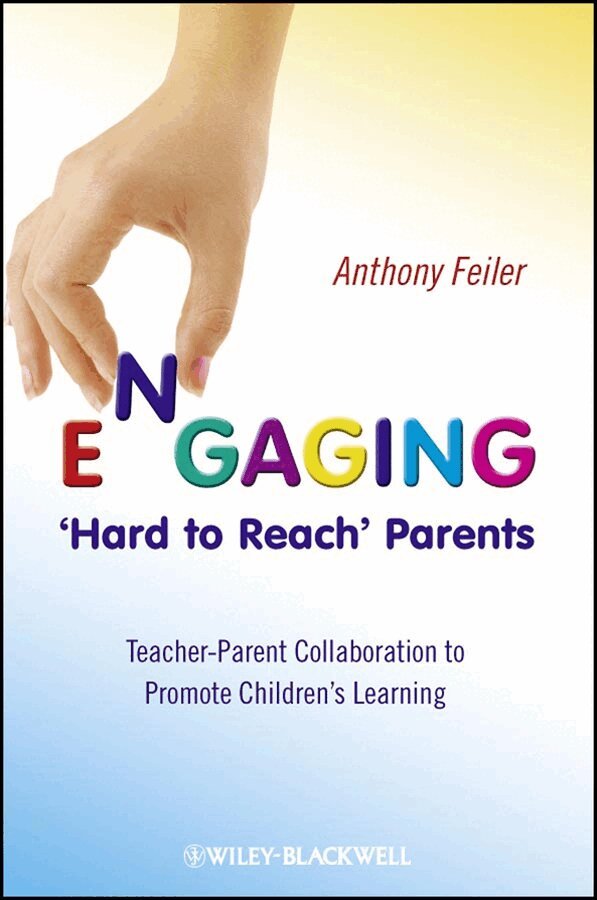
Engaging 'Hard to Reach' Parents
Teacher-Parent Collaboration to Promote Children's Learning
Inbunden, Engelska, 2010
884 kr
Tillfälligt slut
Engaging ‘Hard to Reach’ Parents “This is a readable yet academically rigorous book that draws together findings from contemporary theory, research and practice. It provides a range of positive and constructive approaches for schools and other organizations which will help them to meet the challenge of engaging effectively with parents, and in so doing improve the quality of education for all children, especially those from disadvantaged communities.”Peter Farrell, Sarah Fielden Professor of Special Needs and Educational Psychology, School of Education, University of Manchester “Clarity and integrity permeate this important book. An excellent variety of real-life examples of school–parent collaboration is discussed, and the balance of policy, theory and practice is outstandingly well-handled. This highly readable book will appeal to both practitioners and education students from the UK and from international contexts.”Professor Gary Thomas, Head of School of Education, University of Birmingham Teachers often comment that the parents they most want to speak to have least contact with the school. There are many reasons why families’ participation in schooling may be low – from difficulties with English to pressures of work – but there is consistent evidence that all parents are acutely interested in their children’s education and want to know how to help. Parents are a child’s first and most enduring teachers, and they create home environments where children spend much of their waking lives. Their involvement has an impact throughout children’s school careers. In Engaging ‘Hard to Reach’ Parents, Anthony Feiler emphasizes what schools can do to facilitatethe communication process, rather than adopting a ‘blaming’ or ‘deficit’ view of families. Real-world case studies of initiatives that promote effective cooperation between parents and teachers are presented, allowing readers to learn about successful strategies rooted in practical experience. Feiler highlights the particular benefits of home–school collaboration in circumstances that are challenging, and focuses on tactics that schools can adopt in order to better engage with so-called ‘hard to reach’ parents. By supporting the drive for stronger relationships between schools and the communities they serve, this book makes an important contribution to the development of inclusive education.