Anthony J. Sanford – författare
Visar alla böcker från författaren Anthony J. Sanford. Handla med fri frakt och snabb leverans.
4 produkter
4 produkter
Häftad, Engelska, 2005
315 kr
Skickas inom 5-8 vardagar
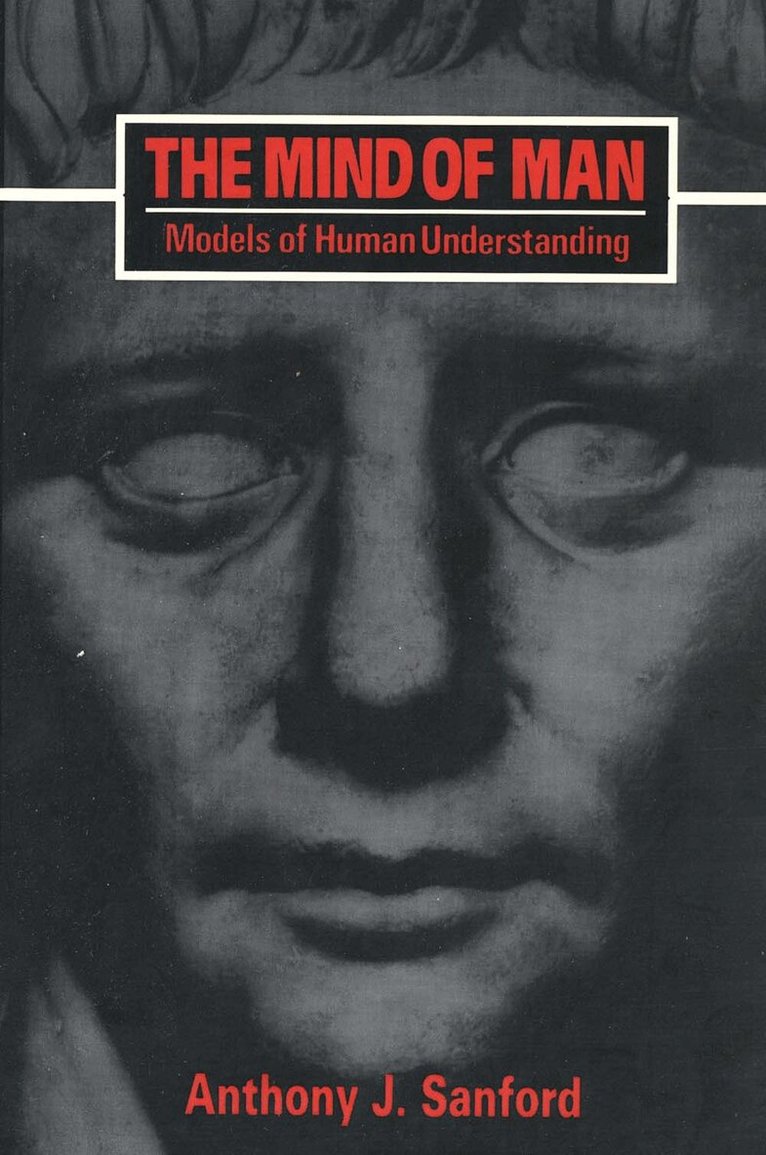
How does the mind work? How do human beings perceive and analyze the various aspects of the world around them? Are occasional misinterpretations inevitable, given the way the brain functions? In this book, a distinguished psychologist describes the most important and up-to-date explanations of our mental processes. Designed specifically for a general audience, the book is written in an accessible and lively style and draws on a wide range of familiar situations to illustrate the concepts it presents.Anthony J. Sanford discusses such intriguing topics as memory, reasoning, learning, and problem solving. In each case, he describes the relevant theories and experiments of cognitive science and psychology and shows how they have increased our knowledge. Sanford explains, for example, that language, thinking, intuition, and judgment depend heavily on mental models (existing memory structures that can be used as analogies to understand a new situation). He considers mental models from two points of view: the first seeks to evaluate the processes underlying some of the variety of human understanding; the second examines limitations and errors in thought and imagination that occur as a natural by-product of normal human understanding.Original, comprehensive, and fascinating, this book will be of interest to students, faculty, and lay people alike.“This book is an excellent introduction to the structure of knowledge. It is very readable, clear, and illuminating without being highly technical.” –R.L. Gregory, University of Bristol
Inbunden, Engelska, 2023
1 357 kr
Skickas inom 10-15 vardagar
Every day, in many situations, we use expressions which seem to provide us with only vague information. The weather forecaster tells us that "some showers are likely in Northern regions during the night", a statement which is vague with respect to number of showers, location, and time. Yet such messages are informative, and often it is not possible for the producer of the message to be more precise. A tutor tells his students that "only a few students fail their exams outright". This does not give a precise incidence. Yet it might be equally misleading to do so. For example, to say that twelve percent failed outright last year says nothing about other years, while to say an average of eight percent over the last five years says nothing about variability. We argue that a precise, numerical statement can be sometimes more misleading in reality than a vague statement.Many researchers in psychology have attempted to capture the meaning of quantities by relating them to scales of quantity. Originally published in 1993, the book explores this idea in detail and shows with original studies how these expressions also serve to control attention and to convey information about the expectations held by those involved in the communication.The book works towards a psychological theory of the meaning of quantifiers and similarly vague terms. New links are drawn between formal theories of quantification and psychological experimentation.
Häftad, Engelska, 2025
412 kr
Skickas inom 10-15 vardagar
Every day, in many situations, we use expressions which seem to provide us with only vague information. The weather forecaster tells us that "some showers are likely in Northern regions during the night", a statement which is vague with respect to number of showers, location, and time. Yet such messages are informative, and often it is not possible for the producer of the message to be more precise. A tutor tells his students that "only a few students fail their exams outright". This does not give a precise incidence. Yet it might be equally misleading to do so. For example, to say that twelve percent failed outright last year says nothing about other years, while to say an average of eight percent over the last five years says nothing about variability. We argue that a precise, numerical statement can be sometimes more misleading in reality than a vague statement.Many researchers in psychology have attempted to capture the meaning of quantities by relating them to scales of quantity. Originally published in 1993, the book explores this idea in detail and shows with original studies how these expressions also serve to control attention and to convey information about the expectations held by those involved in the communication.The book works towards a psychological theory of the meaning of quantifiers and similarly vague terms. New links are drawn between formal theories of quantification and psychological experimentation.
Inbunden, Engelska, 2012
1 382 kr
Skickas inom 7-10 vardagar
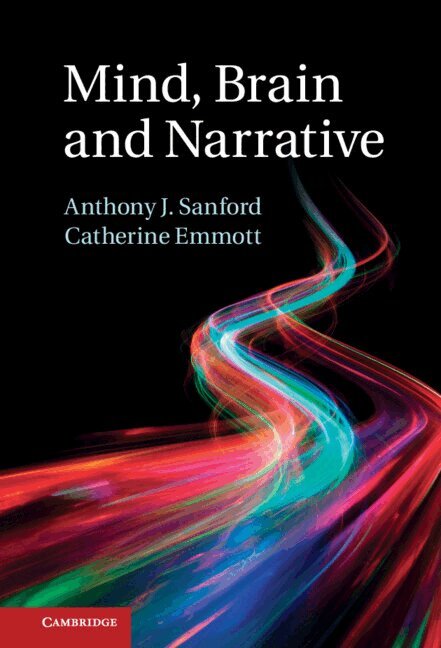
Narratives enable readers to vividly experience fictional and non-fictional contexts. Writers use a variety of language features to control these experiences: they direct readers in how to construct contexts, how to draw inferences and how to identify the key parts of a story. Writers can skilfully convey physical sensations, prompt emotional states, effect moral responses and even alter the readers' attitudes. Mind, Brain and Narrative examines the psychological and neuroscientific evidence for the mechanisms which underlie narrative comprehension. The authors explore the scientific developments which demonstrate the importance of attention, counterfactuals, depth of processing, perspective and embodiment in these processes. In so doing, this timely, interdisciplinary work provides an integrated account of the research which links psychological mechanisms of language comprehension to humanities work on narrative and style.