Anthony Steinhoff – författare
Visar alla böcker från författaren Anthony Steinhoff. Handla med fri frakt och snabb leverans.
2 produkter
2 produkter
2 531 kr
Skickas inom 3-6 vardagar
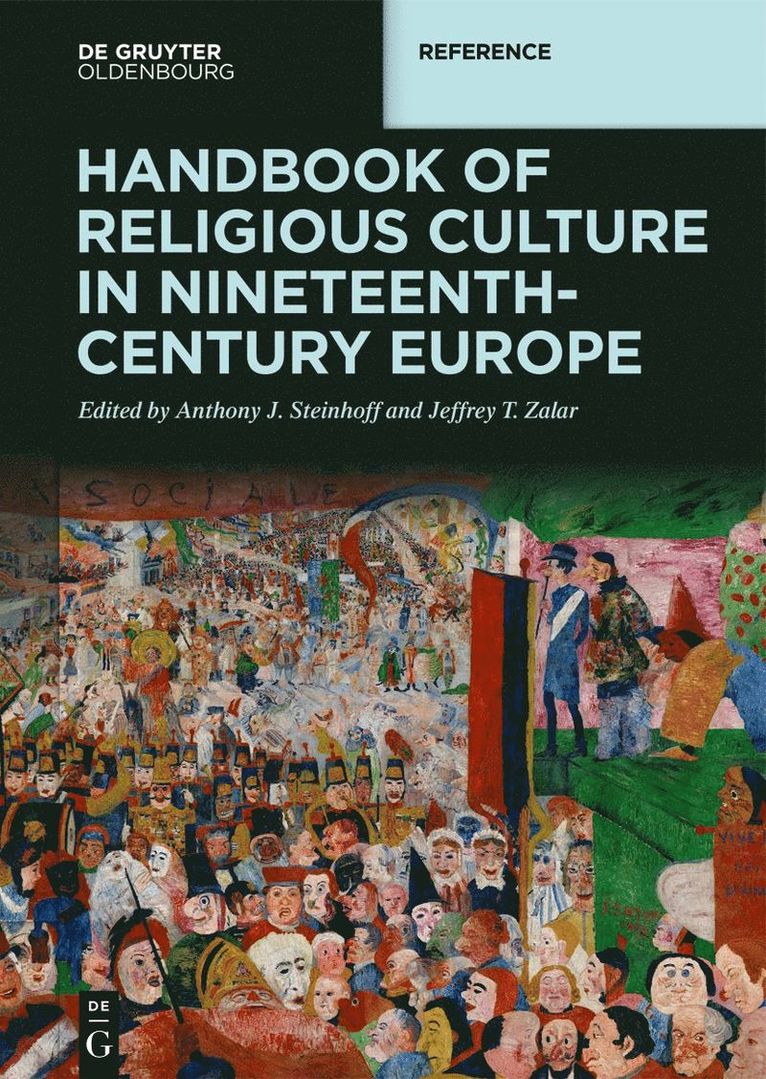
This handbook offers a guide to research on religious culture during Europe’s long nineteenth century (1800–1914). Grounded in the latest theoretical approaches and in line with trends that have produced a "religious turn" in the study of modern Europe, the volume assesses the state of the field while making provocative recommendations for its enlargement. Unique and ambitious in its thematic breadth, it addresses the histories of all five of Europe’s main religious traditions – Eastern Orthodox Christianity, Judaism, Islam, Protestantism, and Roman Catholicism – and brings these histories into comparative analysis. This analysis extends to a wide range of subjects, from popular belief and practice, education and modern knowledge formation, and the arts to the intersections between religion and urbanization, civil society and politics, and missions and imperialism. It also evaluates recent developments in work on religion vis-à-vis both gender and nationalism, while calling attention to newer research that proposes secularism as a form of belief in its own right. Presenting the scholarship of eighteen leaders in their respective fields, the volume explains why religion as a topic of research has moved from the periphery to the center of modern European historiography.
Del 43 - Studies in Central European Histories
Gods of the City
Protestantism and Religious Culture in Strasbourg, 1870-1914
Inbunden, Engelska, 2008
3 624 kr
Skickas inom 3-6 vardagar
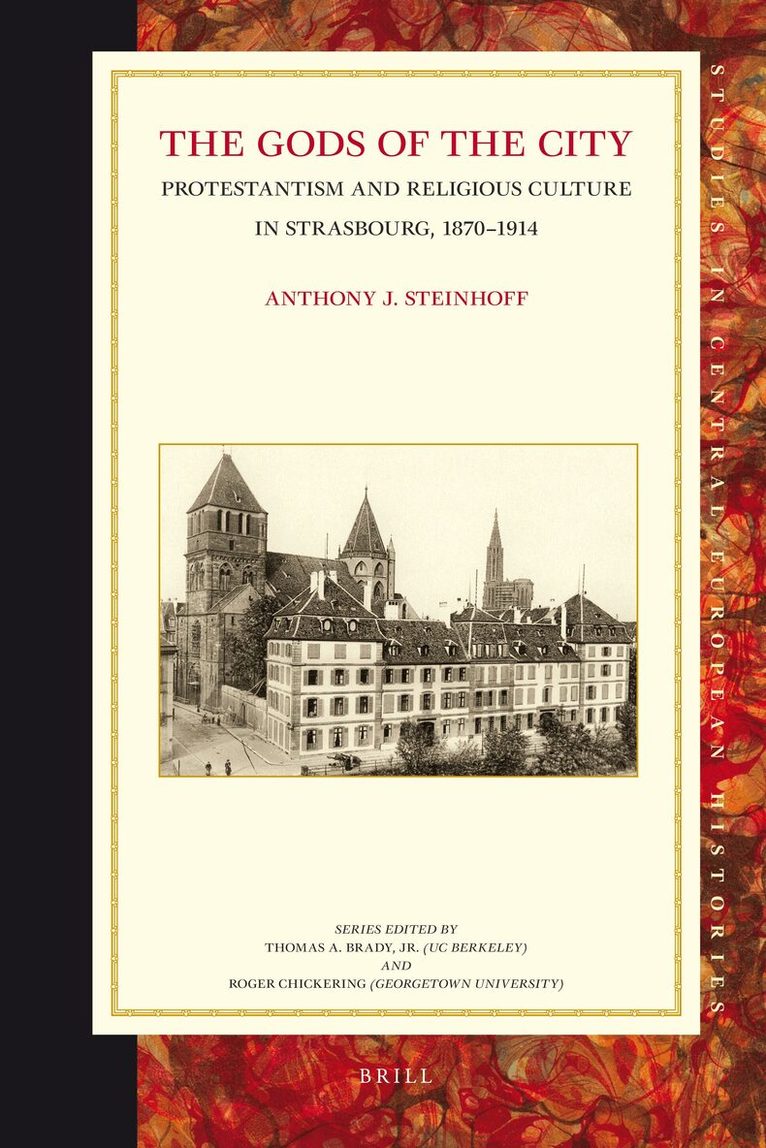
Recent scholarship has criticized the assumption that European modernity was inherently secular. Yet, we remain poorly informed about religion's fate in the nineteenth-century big city, the very crucible of the modern condition. Drawing on extensive archival research and investigations into Protestant ecclesiastical organization, church-state relations, liturgy, pastoral care, associational life, and interconfessional relations, this study of Strasbourg following Germany's annexation of Alsace-Lorraine in 1871 shows how urbanization not only challenged the churches, but spurred them to develop new, forward-looking, indeed, urban understandings of religious community and piety. The work provides new insights into what it meant for Imperial Germany to identify itself as "Protestant" and it provocatively identifies the European big city as an agent for sacralization, and not just secularization.