Anthony T. Kronman - Böcker
Visar alla böcker från författaren Anthony T. Kronman. Handla med fri frakt och snabb leverans.
10 produkter
10 produkter
366 kr
Tillfälligt slut
886 kr
Skickas inom 5-8 vardagar
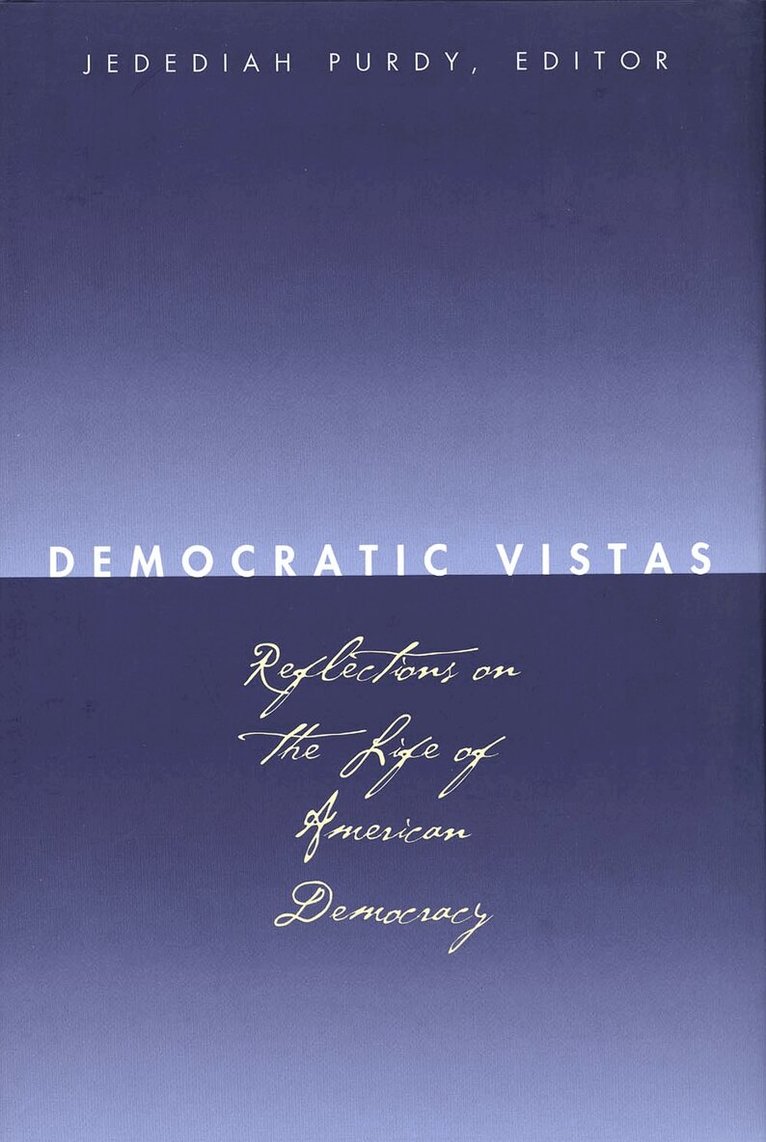
In this thought-provoking collection, leading scholars explore democracy in the United States from a sweeping variety of perspectives. A dozen contributors consider the nature and prospects of democracy as it relates to the American experience—free markets, religion, family life, the Cold War, higher education, and more. These probing essays bring American democracy into fresh focus, complete with its idealism, its moral greatness, its disappointments, and its contradictions.Based on DeVane lectures delivered at Yale University, these writings examine large themes and ask important questions: Why do democratic societies, and the United States in particular, tolerate profound economic inequality? Has the United States ever been truly democratic? How has democratic aspiration influenced the development of practices as diverse as education, religious worship, and family life? With deep insights and lively discussion, the authors expand our understanding of what democracy has meant in the past, how it functions now, and what its course may be in the future.
590 kr
Skickas inom 3-6 vardagar
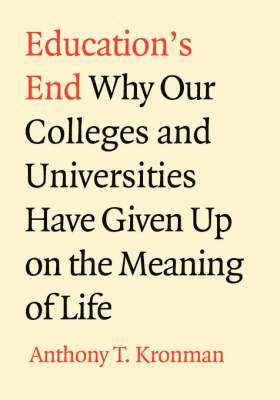
Education's End
Why Our Colleges and Universities Have Given Up on the Meaning of Life
Häftad, Engelska, 2008
196 kr
Tillfälligt slut
A passionate call for our colleges and universities to prepare young people for lives of fulfillment not just successful careersThe question of what living is for—of what one should care about and why—is the most important question a person can ask. Yet under the influence of the modern research ideal, our colleges and universities have expelled this question from their classrooms, judging it unfit for organized study. In this eloquent and carefully considered book, Tony Kronman explores why this has happened and calls for the restoration of life’s most important question to an honored place in higher education.The author contrasts an earlier era in American education, when the question of the meaning of life was at the center of instruction, with our own times, when this question has been largely abandoned by college and university teachers. In particular, teachers of the humanities, who once felt a special responsibility to guide their students in exploring the question of what living is for, have lost confidence in their authority to do so. And they have lost sight of the question itself in the blinding fog of political correctness that has dominated their disciplines for the past forty years. Yet Kronman sees a readiness for change—a longing among teachers as well as students to engage questions of ultimate meaning. He urges a revival of the humanities’ lost tradition of studying the meaning of life through the careful but critical reading of great works of literary and philosophical imagination. And he offers here the charter document of that revival.
228 kr
Skickas
275 kr
Skickas inom 7-10 vardagar
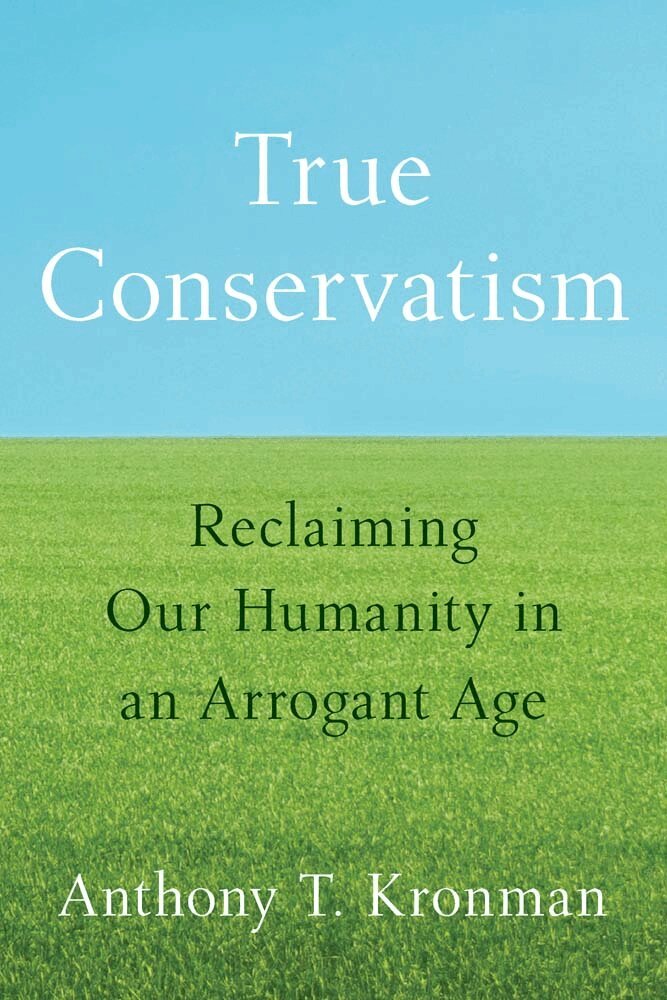
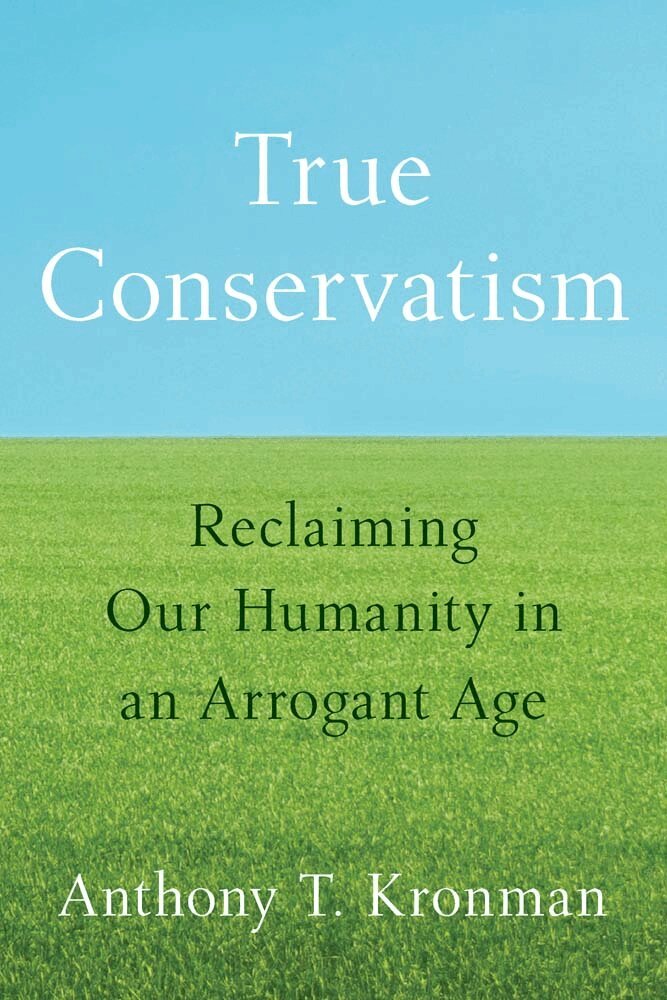
Drawing on the riches of Western tradition, Anthony T. Kronman defends a humane conservatism for our enlightened age “Rigorous and philosophically demanding, Kronman’s book invites principled argument from every side.”—Kirkus Reviews As the party of the left has grown more strident, its conservative critics have responded in kind. Each year conservatives do a poorer job of defending their position as a citadel of human values without lapsing into an angry assault on ideals that they and progressives share. It becomes harder to see the enduring appeal of a true conservatism that celebrates the worth of custom and inheritance; the splendor of what is excellent and rare; the expansive solidarity of our friendship with the dead; and the dignity, indeed necessity, of our longing for a connection to the eternal and divine—while affirming that these timeless human goods are compatible with the modern ideals of equality, toleration, and reasoned argument. In this bracing book, Anthony T. Kronman defends a conservative philosophy of life that respects our enlightened ideals but decries the damage their arrogant simplification causes in our moral, political, and spiritual lives. Drawing on the work of Aristotle, Cicero, Spinoza, Burke, Hume, Madison, Tocqueville, Lincoln, Arendt, Heidegger, and others, he argues that humanism is conservatism, today as in the past. He reminds us that our humbling parameters make possible every form of human greatness, every human glory, every human love worthy of the name.
267 kr
Skickas inom 3-6 vardagar
Drawing on the riches of Western tradition, Anthony T. Kronman defends a humane conservatism for our enlightened age “Rigorous and philosophically demanding, Kronman’s book invites principled argument from every side.”—Kirkus Reviews As the party of the left has grown more strident, its conservative critics have responded in kind. Each year conservatives do a poorer job of defending their position as a citadel of human values without lapsing into an angry assault on ideals that they and progressives share. It becomes harder to see the enduring appeal of a true conservatism that celebrates the worth of custom and inheritance; the splendor of what is excellent and rare; the expansive solidarity of our friendship with the dead; and the dignity, indeed necessity, of our longing for a connection to the eternal and divine—while affirming that these timeless human goods are compatible with the modern ideals of equality, toleration, and reasoned argument. In this bracing book, Anthony T. Kronman defends a conservative philosophy of life that respects our enlightened ideals but decries the damage their arrogant simplification causes in our moral, political, and spiritual lives. Drawing on the work of Aristotle, Cicero, Spinoza, Burke, Hume, Madison, Tocqueville, Lincoln, Arendt, Heidegger, and others, he argues that humanism is conservatism, today as in the past. He reminds us that our humbling parameters make possible every form of human greatness, every human glory, every human love worthy of the name.
326 kr
Skickas inom 7-10 vardagar
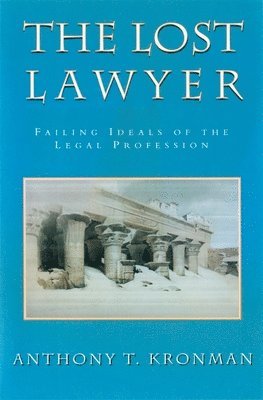
Anthony Kronman describes a spiritual crisis affecting the American legal profession, and attributes it to the collapse of what he calls the ideal of the lawyer-statesman: a set of values that prizes good judgment above technical competence and encourages a public-spirited devotion to the law.For nearly two centuries, Kronman argues, the aspirations of American lawyers were shaped by their allegiance to a distinctive ideal of professional excellence. In the last generation, however, this ideal has failed, undermining the identity of lawyers as a group and making it unclear to those in the profession what it means for them personally to have chosen a life in the law.A variety of factors have contributed to the declining prestige of prudence and public-spiritedness within the legal profession. Partly, Kronman asserts, it is the result of the triumph, in legal thought, of a counterideal that denigrates the importance of wisdom and character as professional virtues. Partly, it is due to an array of institutional forces, including the explosive growth of the country’s leading law firms and the bureaucratization of our courts. The Lost Lawyer examines each of these developments and illuminates their common tendency to compromise the values from which the ideal of the lawyer-statesman draws strength. It is the most important critique of the American legal profession in some time, and an an enduring restatement of its ideals.
165 kr
Skickas inom 5-8 vardagar
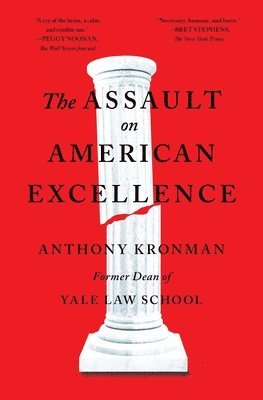
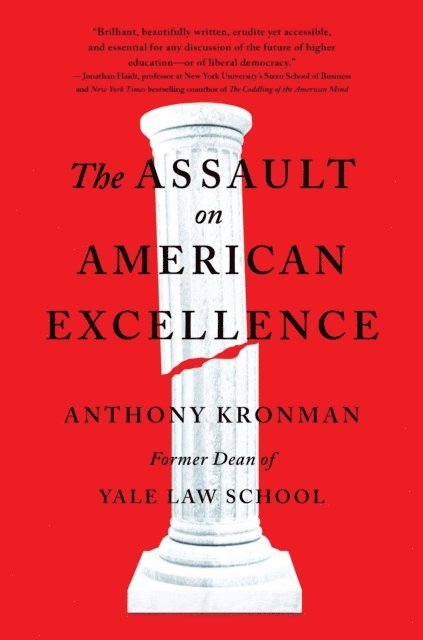
“I want to call it a cry of the heart, but it’s more like a cry of the brain, a calm and erudite one.” —Peggy Noonan, The Wall Street Journal The former dean of Yale Law School argues that the feverish egalitarianism gripping college campuses today is a threat to our democracy.College education is under attack from all sides these days. Most of the handwringing—over free speech, safe zones, trigger warnings, and the babying of students—has focused on the excesses of political correctness. That may be true, but as Anthony Kronman shows, it’s not the real problem. “Necessary, humane, and brave” (Bret Stephens, The New York Times), The Assault on American Excellence makes the case that the boundless impulse for democratic equality gripping college campuses today is a threat to institutions whose job is to prepare citizens to live in a vibrant democracy. Three centuries ago, the founders of our nation saw that for this country to have a robust government, it must have citizens trained to have tough skins, to make up their own minds, and to win arguments not on the basis of emotion but because their side is closer to the truth. Without that, Americans would risk electing demagogues. Kronman is the first to tie today’s campus clashes to the history of American values, drawing on luminaries like Alexis de Tocqueville and John Adams to argue that our modern controversies threaten the best of our intellectual traditions. His tone is warm and wise, that of an educator who has devoted his life to helping students be capable of living up to the demands of a free society—and to do so, they must first be tested in a system that isn’t focused on sympathy at the expense of rigor and that values excellence above all.
314 kr
Kommande