Anthony Warner - Böcker
Visar alla böcker från författaren Anthony Warner. Handla med fri frakt och snabb leverans.
5 produkter
5 produkter
4 143 kr
Skickas inom 5-8 vardagar
Historical syntax occupies a pivotal position within the larger field of research into the nature, use, and acquisition of language. It is responsive to theoretical advances in linguistic theory, language acquisition, and theories of language use, as well as to less adjacent fields such as statistical techniques and evolutionary biology. Linguistic theory has undergone deep changes since the early 1990s, given the widespread impact of Chomsky's Minimalist Programme, Kayne's Antisymmetry Theory, and Kayne's Theory of Overt Movement. This work has brought into sharper focus questions concerning the architecture of linguistic theory that have a direct impact on our understanding of the process of change. At the same time, the recently developed framework of Optimality Theory, which has had a major influence in phonology, is beginning to provide new insights and raise new questions as it is applied to syntax and historical change. This collection of new writing by largely generative-based syntacticians advances this work. This book contains selected material from the Fifth Diachronic Generative Syntax Conference (DIGS 5) held in 1998. The chapters have been chosen to reflect developments in the study of language change and variation, and to exemplify work in a wide range of languages, including Germanic, Romance, Celtic, Slavic, and Sinitic. The book is divided into parts dealing with theoretical frameworks, comparative change, features and categories, and movement. A substantial opening chapter by the editors provides a critical overview of the subject and introduces the following chapters.
1 002 kr
Skickas inom 5-8 vardagar
This collection of new writing on grammatical change advances research in the field and shows its breadth and liveliness. The study of how and why syntax changes occupies a pivotal position in research into the nature, use, and acquisition of language. It is responsive to theoretical advances in linguistic theory, language acquisition, and theories of language use as well as to less adjacent fields such as statistical techniques and evolutionary biology. Chomsky's Minimalist Programme and Kayne's theories of antisymmetry and overt movement have brought into sharper focus questions concerning the architecture of linguistic theory, and this has had a direct impact on the understanding of the processes of change. Optimality Theory has also begun to raise new questions as it is applied to syntax and historical change. The sociolinguistic causes and consequences of syntactic change have also become newly prominent. These are among the many issues and themes discussed and explored by the authors. The book's fourteen chapters exemplify work in a wide range of languages, including Germanic (Icelandic and Swedish, as well as Old and Middle English); Romance (Latin, Italian, Portuguese, Spanish); Slavonic; and Chinese. A substantial introduction provides a critical synthesis of the field and sets the following chapters in context. The book is then divided into parts dealing with theoretical frameworks, comparative change, features and categories, and movement. The single collated bibliography to the entire volume is a valuable research tool in itself.Diachronic Syntax is innovative in both theory and method and makes a substantial contribution to its subject. It will be of interest to all those concerned to understand and explain the internal dynamics of language.
118 kr
Skickas
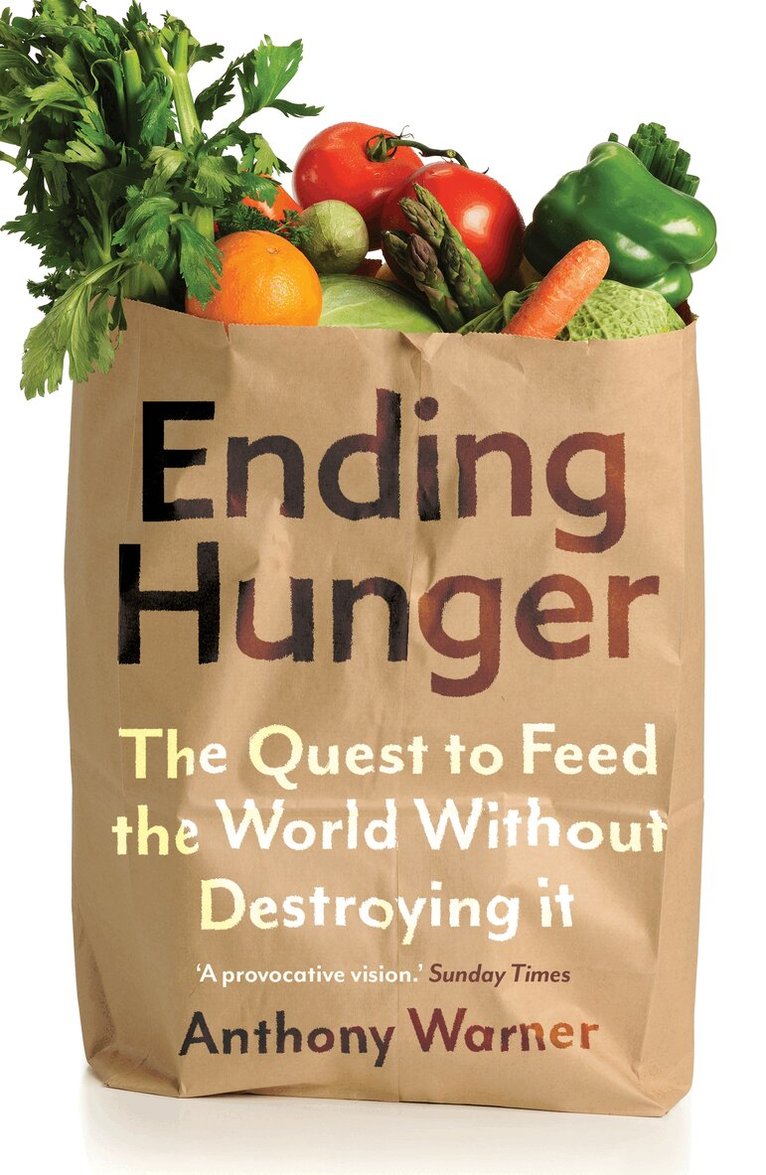
‘A provocative vision.’ Sunday TimesIn 2017, the number of people going hungry in the world increased, for the first time in a decade. Pesticide-resistant bugs lay waste to crops across the globe, from bananas to potatoes. Food production releases billions of tons of carbon into the world, and it’s only getting worse. The writing is on the wall: our food system must change. But no one can agree on how.With his trademark counterintuition, Anthony Warner reveals that we have the ability to make a world where no one starves. And one where we don’t feel guilty about tucking in.
108 kr
Skickas
Never before have we had so much information available to us about food and health. There’s GAPS, paleo, detox, gluten-free, alkaline, the sugar conspiracy, clean eating... Unfortunately, a lot of it is not only wrong but actually harmful. So why do so many of us believe this bad science?Assembling a crack team of psychiatrists, behavioural economists, food scientists and dietitians, the Angry Chef unravels the mystery of why sensible, intelligent people are so easily taken in by the latest food fads, making brief detours for an expletive-laden rant. At the end of it all you’ll have the tools to spot pseudoscience for yourself and the Angry Chef will be off for a nice cup of tea – and it will have two sugars in it, thank you very much.
111 kr
Skickas
Most people try out diets just to see if they work. One friend cuts out sugar, a second cuts out fat. Another mumbles something about gut microbes. Even scientists still seem to be arguing about what causes obesity, so what hope is there for the rest of us?Anthony Warner, author of The Angry Chef, has decided to get to the bottom of it once and for all. Is obesity really an epidemic? Can you be addicted to food? Can’t you just exercise your way to freedom? And what the heck is a food desert?You want the truth? The science, without the prejudice? You can handle it.