Antoine Lilti - Böcker
Visar alla böcker från författaren Antoine Lilti. Handla med fri frakt och snabb leverans.
7 produkter
7 produkter
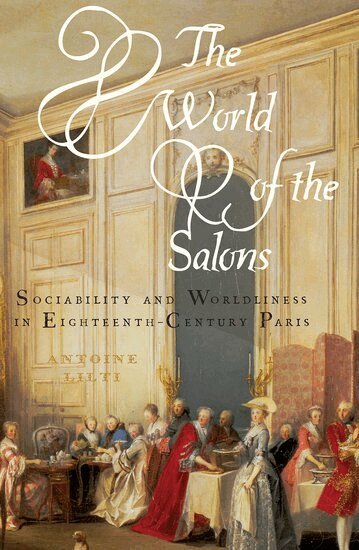
The World of the Salons
Sociability and Worldliness in Eighteenth-Century Paris
Häftad, Engelska, 2020
684 kr
Skickas inom 3-6 vardagar
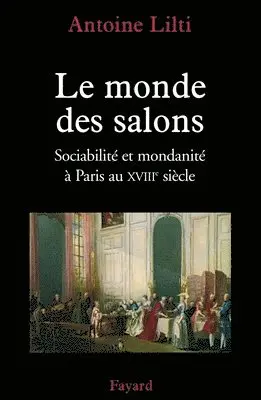
The world of the eighteenth-century salon has long been lauded as a meritocratic setting where writers, philosophers, and women created the Enlightenment. In The World of the Salons, historian Antoine Lilti proposes a fresh interpretation of salons in eighteenth-century Paris. Drawing on cultural history, social history, and the history of literature, he challenges the commonly accepted vision of salons as literary circles that were part of the Republic of Letters. Lilti argues, instead, that salons were institutions of worldly sociability that helped shape "the world" (le monde) and high society. They were essential places where the aristocratic elites of the capital met and interacted with literary figures. Attending them required a mastery of the codes of polite conversation. There news circulated and personal reputations were made and lost. As opposed to the salon being a realm separate from the court at Versailles, it was a site where elites gained enough influence to forge marital alliances, secure government appointments or pensions, and win over royal censors. These discussion circles were part of refined society, not public opinion, and those writers who gained mass appeal were shunned by salon-goers.For those who think they know what the salon meant in early modern European culture, politics, and intellectual circles, Antoine Lilti's The World of the Salons offers an important corrective of what went on behind the closed doors of the French salons.
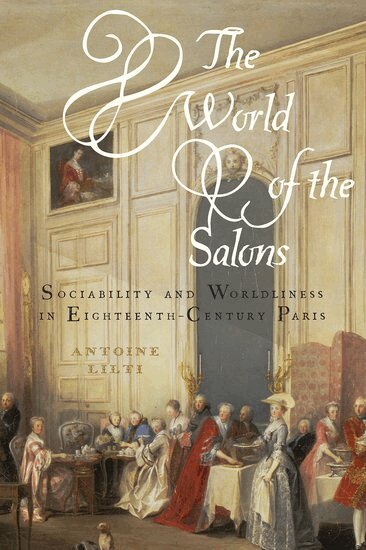
The World of the Salons
Sociability and Worldliness in Eighteenth-Century Paris
Inbunden, Engelska, 2015
1 182 kr
Skickas inom 5-8 vardagar
The world of the 18th century salon has long been lauded as a meritocratic setting where writers, philosophers, and women created the Enlightenment. Jurgen Habermas' influential theory of the public sphere was largely based on the salon. Based on a thorough study of archival sources and using methodology derived from cultural history, social history, and the history of literature, The World of Salons proposes a completely new reading of salons' sociability in eighteenth-century Paris. It challenges the commonly accepted vision of salons as literary circles that were part of the Republic of Letters. It argues, instead, that salons were institutions of wordly sociability, had helped shape "the world" (le monde) and high society. They have been essential places where the aristocratic elites of the capital met and interacted with literary figures. These interactions based on the mastery of the codes of polite conversation but also on the circulation of news and of personal reputations are the subject of this book. The World of the Salon looks at the way in which eighteenth-century social elites redefined themselves through their practices of worldly sociability. It highlights why some men of letters of the Enlightenment attended the salons.Moving from the salons to worldliness permits taking on some broader debates as well. What relations did worldly sociability maintain with the public sphere? How did the Parisian nobility use the idea of worldly merit and the figure of the man of the world (homme du monde) to preserve its social preeminence? Was the new political culture characterized by an appeal to the public compatible with the monarchical apparatus and with court intrigues?A shortened and revised version of the French edition of this book, The World of the Salons is suitable for an Anglophone audience of early modern European cultural, political, and intellectual historians.
507 kr
Skickas
Going against the grain, this refreshing book argues for a non-ideological portrait of the Enlightenment as having been, above all else, a self-critical enterprise. The Enlightenment has come under substantial attack over the past several years, with some going so far as to recommend leaving behind its thinkers and their Eurocentric prejudices. In response, the most orthodox defenders of the Enlightenment have insisted that its values are not just foundational but indispensable and that abandoning them would mean opening the door to nihilism and relativism. For Antoine Lilti, one of the leading scholars of the French Enlightenment, both sides are wrong. In this tactfully argued series of essays, Lilti emphasizes a non-dogmatic, non-ideological view of the Enlightenment—one that sees its legacy as a critical, attentive approach that can and should serve as its own best critic. Along the way, he engages with everyone from Rousseau and Kant to Foucault and Habermas, as well as prominent contemporary voices, such as Jonathan Israel. The result is a remarkable new reading of the Enlightenment that redraws the stakes of old debates and offers an alternative way to engage with both canonical thinkers and later scholarship that is both honest about the past and useful for the future.
1 540 kr
Skickas inom 7-10 vardagar
Au XXIe siècle, l’Europe ne fait plus rêver: son modèle est contesté, tant sur le plan économique qu’intellectuel et politique. Face à ces désillusions, il est urgent d’interroger les origines de l’idée d’Europe: quand et comment la notion d’Europe s’est-elle définie?L’ouvrage dirigé par Antoine Lilti et Céline Spector propose un détour par les Lumières. Si l’Europe peut s’enorgueillir d’une longue histoire, c’est bien au XVIIIe siècle qu’elle est devenue un enjeu philosophique, historique et politique majeur. De Montesquieu à Kant, de Voltaire à Burke ou à Robertson, l’idée d’Europe est au cœur des controverses sur le droit international comme sur l’économie politique, sur la légitimité de l’expansion coloniale comme sur les espoirs d’un monde pacifié. Véritable enquête collective conduite par des historiens et des philosophes, Penser l’Europe au XVIIIe siècle aborde trois éléments majeurs autour desquels gravite le concept naissant d’Europe: l’empire, le commerce et la civilisation. Après avoir décrit la manière dont l’ordre européen a été conçu, les auteurs examinent la question de l’expansion commerciale et coloniale de l’Europe, ainsi que les théories de la civilisation, qui permettent d’interroger le statut de l’exceptionnalisme européen. Le siècle des Lumières ne nous présente pas un idéal européen à ressusciter, mais un champ d’interrogations dont nous ne sommes jamais véritablement sortis.
790 kr
Skickas inom 7-10 vardagar
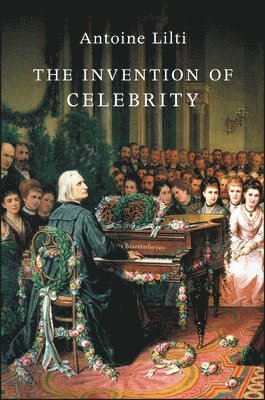
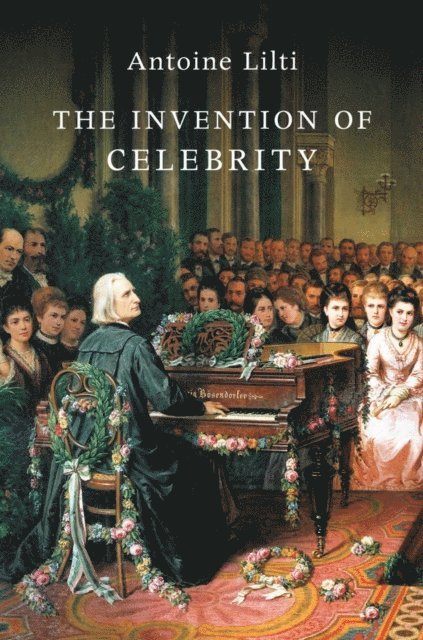
Frequently perceived as a characteristic of modern culture, the phenomenon of celebrity has much older roots. In this book Antoine Lilti shows that the mechanisms of celebrity were developed in Europe during the Enlightenment, well before films, yellow journalism, and television, and then flourished during the Romantic period on both sides of the Atlantic. Figures from across the arts like Voltaire, Garrick, and Liszt were all veritable celebrities in their time, arousing curiosity and passionate loyalty from their “fans.” The rise of the press, new advertising techniques, and the marketing of leisure brought a profound transformation in the visibility of celebrities: private lives were now very much on public show. Nor was politics spared this cultural upheaval: Marie-Antoinette, George Washington, and Napoleon all experienced a political world transformed by the new demands of celebrity. And when the people suddenly appeared on the revolutionary scene, it was no longer enough to be legitimate; it was crucial to be popular too.Lilti retraces the profound social upheaval precipitated by the rise of celebrity and explores the ambivalence felt toward this new phenomenon. Both sought after and denounced, celebrity evolved as the modern form of personal prestige, assuming the role that glory played in the aristocratic world in a new age of democracy and evolving forms of media. While uncovering the birth of celebrity in the eighteenth century, Lilti's perceptive history at the same time shines light on the continuing importance of this phenomenon in today’s world.
278 kr
Skickas inom 7-10 vardagar
Frequently perceived as a characteristic of modern culture, the phenomenon of celebrity has much older roots. In this book Antoine Lilti shows that the mechanisms of celebrity were developed in Europe during the Enlightenment, well before films, yellow journalism, and television, and then flourished during the Romantic period on both sides of the Atlantic. Figures from across the arts like Voltaire, Garrick, and Liszt were all veritable celebrities in their time, arousing curiosity and passionate loyalty from their “fans.” The rise of the press, new advertising techniques, and the marketing of leisure brought a profound transformation in the visibility of celebrities: private lives were now very much on public show. Nor was politics spared this cultural upheaval: Marie-Antoinette, George Washington, and Napoleon all experienced a political world transformed by the new demands of celebrity. And when the people suddenly appeared on the revolutionary scene, it was no longer enough to be legitimate; it was crucial to be popular too.Lilti retraces the profound social upheaval precipitated by the rise of celebrity and explores the ambivalence felt toward this new phenomenon. Both sought after and denounced, celebrity evolved as the modern form of personal prestige, assuming the role that glory played in the aristocratic world in a new age of democracy and evolving forms of media. While uncovering the birth of celebrity in the eighteenth century, Lilti's perceptive history at the same time shines light on the continuing importance of this phenomenon in today’s world.
828 kr
Skickas inom 3-6 vardagar