Anton Eberhard - Böcker
Visar alla böcker från författaren Anton Eberhard. Handla med fri frakt och snabb leverans.
5 produkter
5 produkter
1 473 kr
Skickas inom 5-8 vardagar
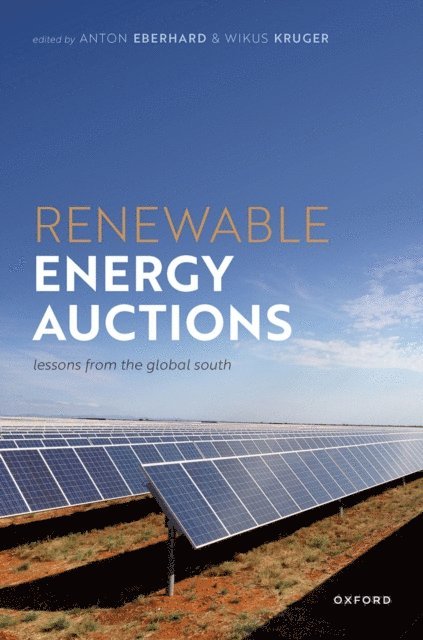
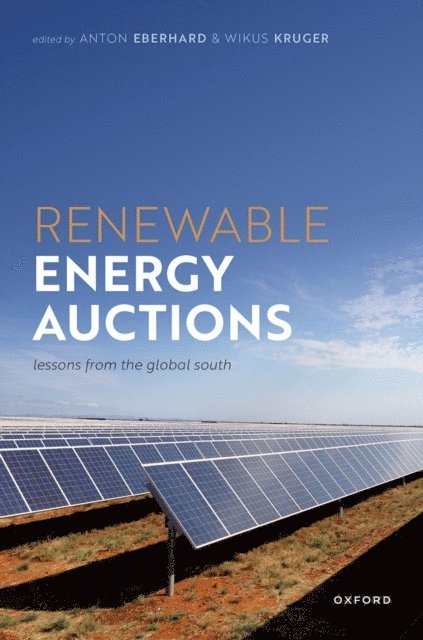
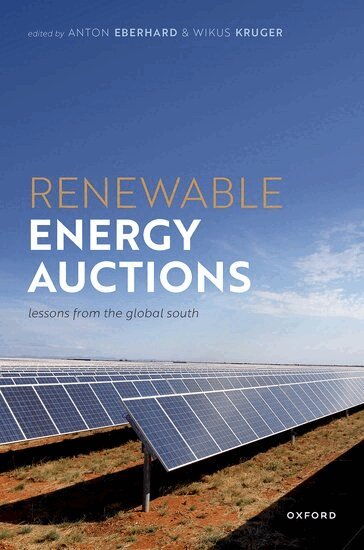
Renewable Energy Auctions provides an overview of renewable energy auctions globally, focusing on the Global South, since this is where auctions have been pioneered and provided most transformative results. Renewable energy auctions have become the dominant method for contracting utility-scale renewable energy projects, in large part due to the cost-efficient tariffs secured through this method. The ascent of auctions has been particularly rapid and transformative in the Global South, where many countries have secured renewable energy supplies at record-breaking prices. This book analyses the experiences of frontier auction markets in Latin America, sub-Saharan Africa, and India, with the aim of improving how auctions are designed and implemented globally. The book goes beyond the topic of auction design - which is concerned with the micro-economics of design choices - to include auction implementation. Across ten chapters, the authors argue that choices around the auction implementing institution and the procurement process are overlooked in most publications on the subject, yet this is often a key factor for determining outcomes. Moving beyond the program level of analysis (auction design and implementation), the book includes both country and project level factors' impacts on auction outcomes, ultimately highlighting that successful price and investment outcomes are dependent upon integration of all three levels of auction design and implementation.
327 kr
Skickas inom 10-15 vardagar
Africa’s chronic power problems have escalated in recent years into a crisis affecting 30 countries, taking a heavy toll on economic growth and productivity. The region has inadequate generation capacity, limited electrification, low power consumption, unreliable services, and high costs. It also faces a power sector financing gap on the order of $21 billion a year. It spends only about a quarter of what it needs to spend on power, much of this on operating expenditure required to run the continent’s high-cost power systems, leaving little for the huge investments needed to provide a long-term solution. Further development of regional power trade would allow Africa to harness larger scale more cost-effective energy sources, reducing energy system costs by $2 billion a year and saving 70 million tons of carbon emissions annually. Economic returns to investments in cross-border transmission are particularly high. But reaping the promise of regional trade depends on a handful of major exporting countries raising the large volumes of finance needed to develop generation capacity for export. It would also require political will in a large number of importing countries that could potentially meet more than half their power demand through trade. Power sector inefficiencies are high, deterring investment in new capacity and electrification. There are three types of sector inefficiencies. First, there are utility inefficiencies, which include system losses, under-collection of revenue and over-manning. These result in a major waste of resources adding up to $4.40 billion a year. Under-collection is the largest component of utility inefficiencies amounting to $1.73 billion, following by system losses at $1.48 billion and by over-manning at $1.15 billion. The second type of sector inefficiency is under-pricing of power. By setting tariffs below the levels needed to cover the actual costs, SSA countries forego revenues of $3.62 billion a year. The third type of inefficiency is poor budget execution. Only 66% of the capital budgets allocated to power are actually spent, with about $258 million in public investment earmarked for the power sector being diverted elsewhere in the budget. Full cost recovery tariffs would already be affordable in countries with efficient large scale hydro or coal-based systems, but not in those relying on small scale oil-based plants. Once regional power trade comes into play, generation costs will fall, and full cost recovery tariffs could be affordable in much of Africa. One of the key policy challenges is to strengthen sector planning capabilities, too often overlooked in today’s hybrid markets. A serious recommitment to reforming state-owned enterprises should emphasize improvements in corporate governance more than purely technical fixes. Improving cost recovery is essential for sustaining investments in electrification and regional power generation projects. Closing the huge financing gap will require improving the creditworthiness of utilities and sustaining the recent upswing in external finance to the sector This book is based on extensive data collection undertaken between 2006 and 2008 by the Africa Country Infrastructure Country Diagnostic, an initiative of the Infrastructure Consortium for Africa delegated to the World Bank under the guidance of the African Union, African Development Bank and other multi-lateral and bilateral development institutions.
367 kr
Skickas inom 5-8 vardagar
231 kr
Skickas inom 5-8 vardagar
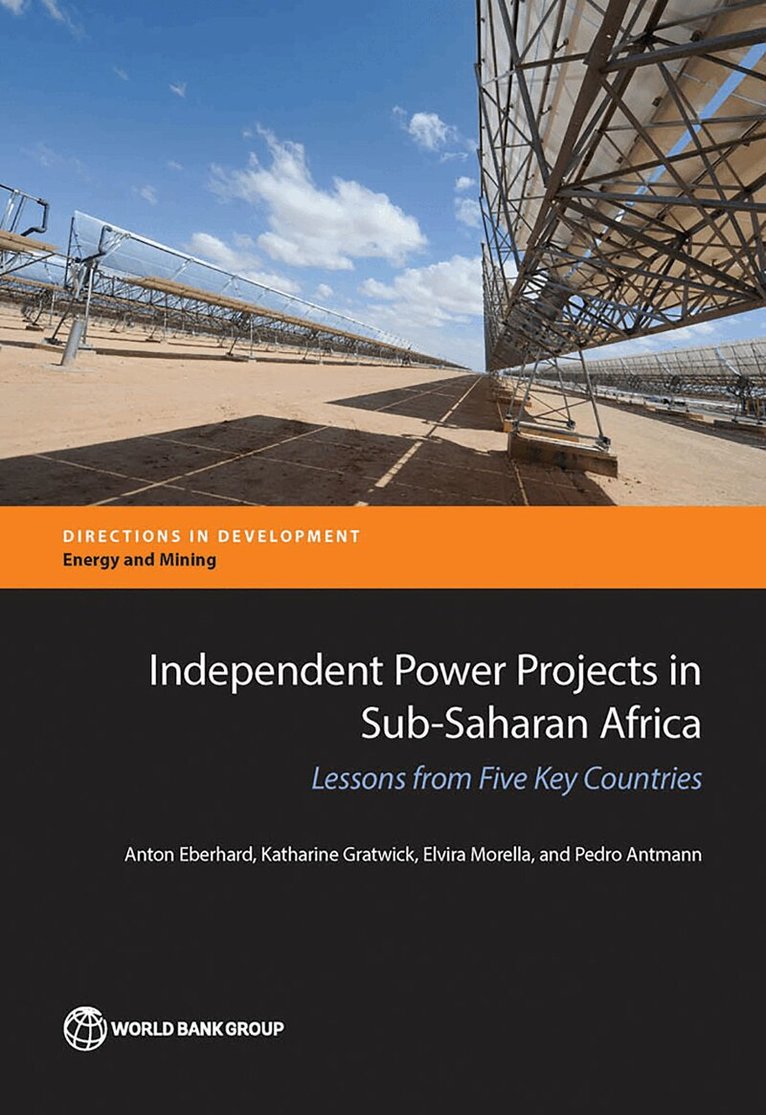
Independent Power Projects in Sub-Saharan Africa
Lessons from Five Key Countries
Häftad, Engelska, 2016
434 kr
Skickas inom 10-15 vardagar
Inadequate electricity services pose a major impediment to reducing extreme poverty and boosting shared prosperity in Sub-Saharan Africa. Simply put, Africa does not have enough power. Despite the abundant low-carbon and low-cost energy resources available to Sub-Saharan Africa, the region s entire installed electricity capacity, at a little over 80 gigawatts (GW), is equivalent to that of the Republic of Korea. Looking ahead, Sub-Saharan Africa will need to ramp up its power generation capacity substantially. The investment needed to meet this goal largely exceeds African countries already stretched public finances. Increasing private investment is critical to help expand and improve electricity supply. Historically, most private sector finance has been channeled through privately financed independent power projects (IPPs), supported by nonrecourse or limited recourse loans, with long-term power purchase agreements with the state utility or another off-taker. Between 1990 and 2014, IPPs have spread across Sub-Saharan Africa and are now present in 18 countries. However, private investment could be much greater and less concentrated. The objective of Independent Power Projects in Sub-Saharan Africa: Lessons from Five Key Countries is to evaluate the experience of IPPs and identify lessons that can help African countries attract more and better private investment. The analysis is based primarily on in-depth case studies carried out in five countries Kenya, Nigeria, South Africa, Tanzania, and Uganda that have the most extensive experience with IPPs. At the core of this analysis is a reflection on whether IPPs have in fact benefited Sub-Saharan Africa, and how they might be improved.