Anton Harber – författare
Visar alla böcker från författaren Anton Harber. Handla med fri frakt och snabb leverans.
6 produkter
6 produkter
E-bok
Engelska, 2008386 kr
Läs direkt efter köp
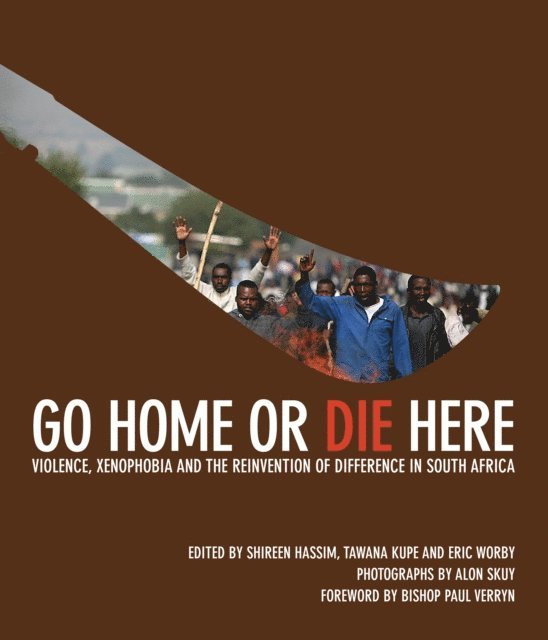
The xenophobic attacks that started in Alexandra, Johannesburg in May 2008 before quickly spreading around the country caused an outcry across the world and raised many fundamental questions: Of what profound social malaise is xenophobia – and the violence that it inspires – a symptom? Have our economic and political choices created new forms of exclusion that fuel anger and distrust? What consequences does the emergence of xenophobia hold for the idea of an equal, non-racial society as symbolised by a democratic South Africa?On 28 May 2008 the Faculty of Humanities in the University of the Witwatersrand, Johannesburg convened an urgent colloquium that focused on searching for short and long-term solutions. Nearly twenty individuals – mostly Wits academics from a variety of disciplines, but also two student leaders, a journalist and a bishop – addressed the unfolding violence in ways that were conversant with the moment, yet rooted in scholarship and ongoing research.Go Home or Die Here emanates directly from the colloquium. It hopes to make sense of the nuances and trajectories of building a democratic society out of a deeply divided and conflictual past, in the conditions of global recession, heightening inequalities and future uncertainty. The authors hoped to pose questions that would lead both to research and to more informed, reflective forms of public action. With extensive photographs by award-winning photographer Alon Skuy, who covered the violence for The Times newspaper, the volume is passionate and engaged, and aims to stimulate reflection, debate and activism among concerned members of a broad public.
Häftad, Engelska, 2020
223 kr
Skickas inom 5-8 vardagar
Veteran journalist Anton Harber brings all his investigative skills to bear on his very own profession, the media. For two years he conducted dozens of interviews with politicians, journalists, policemen and 'deep throats', before piecing together two remarkable tales. The first is a chilling story of police death squads, rogue units and renditions, and how South Africa's leading newspaper was duped into doing the dirty work of corrupt politicians. The second starts with a broken and discarded hard drive and evolves, with many near misses, into the exposure of the depths of the Guptas' influence over the ruling party. Harber's two tales reveal the lows and highs of journalism during an era of state capture. His book is both a disquieting exposé of how easily the media can be duped by a conniving cabal for its own selfish ends, and a celebration of brilliant investigative reporting by brave and ethical journalists.
E-bok
PDF, Engelska, 2008386 kr
Läs direkt efter köp
The xenophobic attacks that started in Alexandra, Johannesburg in May 2008 before quickly spreading around the country caused an outcry across the world and raised many fundamental questions: Of what profound social malaise is xenophobia – and the violence that it inspires – a symptom? Have our economic and political choices created new forms of exclusion that fuel anger and distrust? What consequences does the emergence of xenophobia hold for the idea of an equal, non-racial society as symbolised by a democratic South Africa?On 28 May 2008 the Faculty of Humanities in the University of the Witwatersrand, Johannesburg convened an urgent colloquium that focused on searching for short and long-term solutions. Nearly twenty individuals – mostly Wits academics from a variety of disciplines, but also two student leaders, a journalist and a bishop – addressed the unfolding violence in ways that were conversant with the moment, yet rooted in scholarship and ongoing research.Go Home or Die Here emanates directly from the colloquium. It hopes to make sense of the nuances and trajectories of building a democratic society out of a deeply divided and conflictual past, in the conditions of global recession, heightening inequalities and future uncertainty. The authors hoped to pose questions that would lead both to research and to more informed, reflective forms of public action. With extensive photographs by award-winning photographer Alon Skuy, who covered the violence for The Times newspaper, the volume is passionate and engaged, and aims to stimulate reflection, debate and activism among concerned members of a broad public.
Häftad, Engelska, 2010
216 kr
Skickas inom 5-8 vardagar
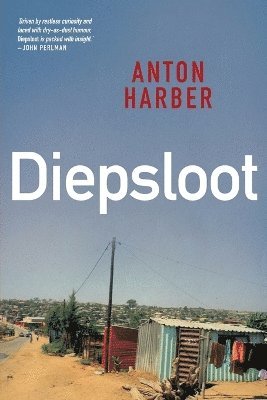
Ask most people about Diepsloot and they will talk of vigilante justice, political unrest, poverty and unemployment, a scene of recent political protests and xenophobic violence, a haven for criminals and undocumented foreigners in the middle of one of the country's wealthiest areas. Diepsloot is a microcosm -- a post-apartheid settlement with about 250,000 crammed into five square miles, with more than its fair share of youth, foreigners and unemployed -- a way of understanding the politics of this country on the ground, a place which presents so many of the questions facing this country. Why are people still living under these conditions? Why are the local politicians tearing each other apart? How do people survive? Do they still believe in democracy? This title takes you inside, walking the streets, meeting the people, probing the bitter local political battles, and asking what and area like Diepsloot portends for the future of South Africa. These are the stories not being told, these are the voices not being heard and these are the insights you can't get from parliament or Luthuli House.
E-bok
Engelska, 201185 kr
Läs direkt efter köp
In a little more than a decade, Diepsloot has transformed from a semi-rural expanse to a dense, seething settlement of about 200 000 people. A post-apartheid creation lying to the north of Johannesburg, Diepsloot is talked about as a place of fear, vigilante justice, xenophobic violence and a haven for criminals and undocumented foreigners. Respected journalist Anton Harber spent several months there, meeting the people, drinking in the taverns and probing the bitter local political battles. He patrolled with volunteer crime-fighters at night. He spoke to politicians, church members and artists. He interviewed city officials, asking them why so little progress was being made in developing Diepsloot. He investigated why the much-need police station stands unfinished. Amidst the poverty, violence and chaos, he found a bustling place much loved by its inhabitants, an active economy with all the associated hustling and trading. He found people who, when neglected by the state, made their own solutions. Most of all, I learned that if you want to understand where this country is headed, you need to listen to the people of Diepsloot. Hear what they are saying. Take note of their hopes and aspirations. You might be surprised.'' Diepsloot is the first study of its kind that seeks to understand change as it is lived on the ground, and not as it is talked about in the media and corridors of power. Rich with detail and local colour, it offers a nuanced examination of life as it is lived despite the State with its half-completed police station and the ANC with its internecine warfare.'' - JACOB DLAMINI
251 kr
Tillfälligt slut
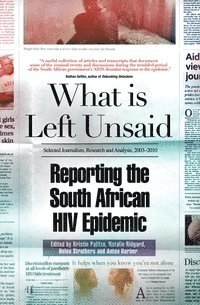
Combining journalism with research to present an analysis that is broad in scope yet focused on the key issues, this publication is a multiauthored investigation into HIV reporting in South Africa. Ranging from in-depth quantitative and qualitative research documents to radio and television transcripts and candid interviews, this collection offers insight into the history and struggles of South African health politics and gives a voice to those whose voices are often not heard against the din of political controversy surrounding HIV. As it demonstrates the role the media has played in shaping the ideas about and the approach toward the virus, this discussion will be of particular interest to academics in both health and politics.