
Häftad, Engelska, 2012
386 kr
Skickas inom 3-6 vardagar
386 kr
Skickas inom 3-6 vardagar
854 kr
Skickas
1 470 kr
Skickas
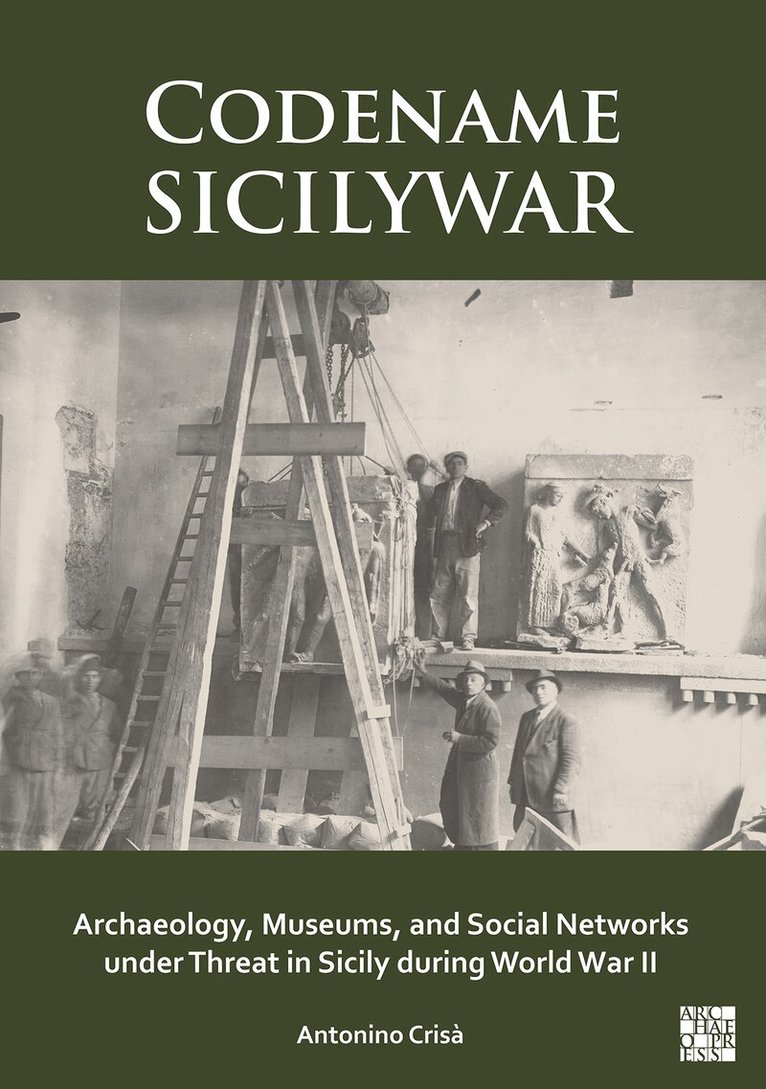
Codename SICILYWAR is a multidisciplinary, innovative investigation into the impact of World War II on archaeological sites and museums in Sicily (1940–45). The island’s cultural and archaeological heritage was under major threat from Allied bombing, landing and military occupation. The book has three main aims. Firstly, it investigates how national, local civilian and military authorities dealt with discoveries of archaeological finds in the area from construction of military structures by the Italian and Allied forces to the protection of antiquities. Secondly, it looks to reconstruct contexts and social networks involving the national and military authorities, archaeologists and local communities, acting and ‘clashing’ in a state of war and emergency. Finally, it contextualises Sicilian archaeology on the wider European stage, comparing Sicily with other European contexts.
The book benefits from a thorough analysis of hundreds of newly-discovered documents (dispatches, letters, reports, pictures, etc.) which are included in a substantial appendix. Social contexts are assessed by a four-level system to identify networks on a national, regional, local and supranational scale. Through the lens of archaeology, history, archival records, museum, social and military studies, the book will benefit a variety of scholars and experts who are jointly interested in the study of Sicilian antiquities, local communities and war contexts in the 1930s and 1940s.
2 104 kr
Skickas inom 5-8 vardagar
386 kr
Skickas inom 3-6 vardagar
854 kr
Skickas
1 470 kr
Skickas
Codename SICILYWAR is a multidisciplinary, innovative investigation into the impact of World War II on archaeological sites and museums in Sicily (1940–45). The island’s cultural and archaeological heritage was under major threat from Allied bombing, landing and military occupation. The book has three main aims. Firstly, it investigates how national, local civilian and military authorities dealt with discoveries of archaeological finds in the area from construction of military structures by the Italian and Allied forces to the protection of antiquities. Secondly, it looks to reconstruct contexts and social networks involving the national and military authorities, archaeologists and local communities, acting and ‘clashing’ in a state of war and emergency. Finally, it contextualises Sicilian archaeology on the wider European stage, comparing Sicily with other European contexts.
The book benefits from a thorough analysis of hundreds of newly-discovered documents (dispatches, letters, reports, pictures, etc.) which are included in a substantial appendix. Social contexts are assessed by a four-level system to identify networks on a national, regional, local and supranational scale. Through the lens of archaeology, history, archival records, museum, social and military studies, the book will benefit a variety of scholars and experts who are jointly interested in the study of Sicilian antiquities, local communities and war contexts in the 1930s and 1940s.
2 104 kr
Skickas inom 5-8 vardagar