Anuradha Veeravalli – författare
Visar alla böcker från författaren Anuradha Veeravalli. Handla med fri frakt och snabb leverans.
2 produkter
2 produkter
2 129 kr
Skickas inom 10-15 vardagar
Can Gandhi be considered a systematic thinker? While the significance of Gandhi’s thought and life to our times is undeniable it is widely assumed that he did not serve any discipline and cannot be considered a systematic thinker. Despite an overwhelming body of scholarship and literature on his life and thought the presuppositions of Gandhi’s experiments, the systematic nature of his intervention in modern political theory and his method have not previously received sustained attention. Addressing this lacuna, the book contends that Gandhi’s critique of modern civilization, the presuppositions of post-Enlightenment political theory and their epistemological and metaphysical foundations is both comprehensive and systematic. Gandhi’s experiments with truth in the political arena during the Indian Independence movement are studied from the point of view of his conscious engagement with method and theory rather than merely as a personal creed, spiritual position or moral commitment. The author shows how Gandhi’s experiments are illustrative of his theoretical position, and how they form the basis of his opposition to the foundations of modern western political theory and the presuppositions of the modern nation state besides envisioning the foundations of an alternative modernity for India, and by its example, for the world.
Del 413 - Cognitive Science
What’s in a Name? A Grammar of Pluralism and Foundations of the Vernacular
Inbunden, Engelska, 2026
1 976 kr
Skickas inom 3-6 vardagar
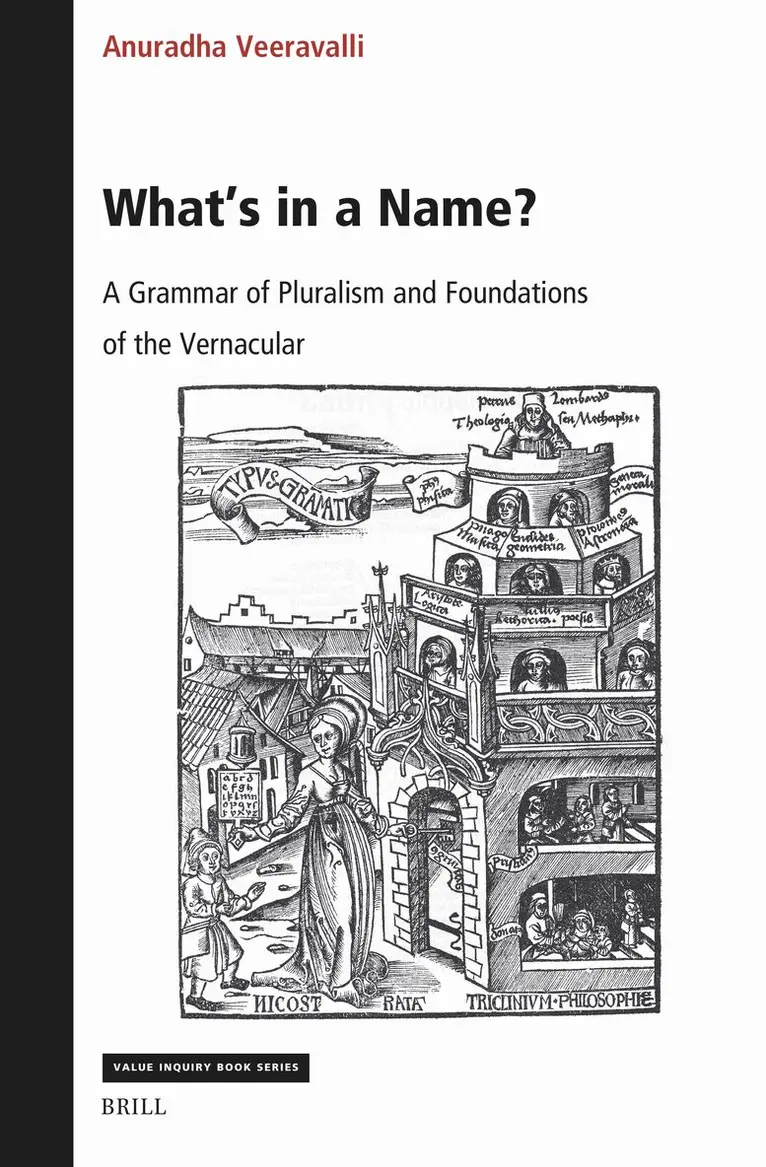
Would it be possible to overcome the dualism of universalism and relativism that the story of the Tower of Babel portends, and modernity perpetuates? Between the dominant paradigms of the dualism of the classical and the vernacular, of universal grammar of Chomskian bio-linguistics and hermeneutic relativism of Steiner, of the ideal and ordinary language theories of Wittgensteinian socio-linguistics, this dichotomy plays itself out, again and again. Tracing the genealogy of the fundamental difference between the presuppositions of a grammar of pluralism and of universal grammar to the disagreement between Plato and Aristotle on the theory of forms, this book brings into focus the dramatic and crucial changes wrought in the liturgy of the Eucharist, in the 13th century, that consolidated Aristotelianism as the dominant regime of the Christian Church and laid the foundations of universal grammar both of the European modernity and of the modern world at large. It argues that it is the vernacular traditions however, that continually challenge this regime within different religious orthodoxies and in modernity with the reiteration and re-affirmation of the theory of the true name as the basis of a grammar of pluralism.