Arash Ghajarjazi - Böcker
Visar alla böcker från författaren Arash Ghajarjazi. Handla med fri frakt och snabb leverans.
2 produkter
2 produkter
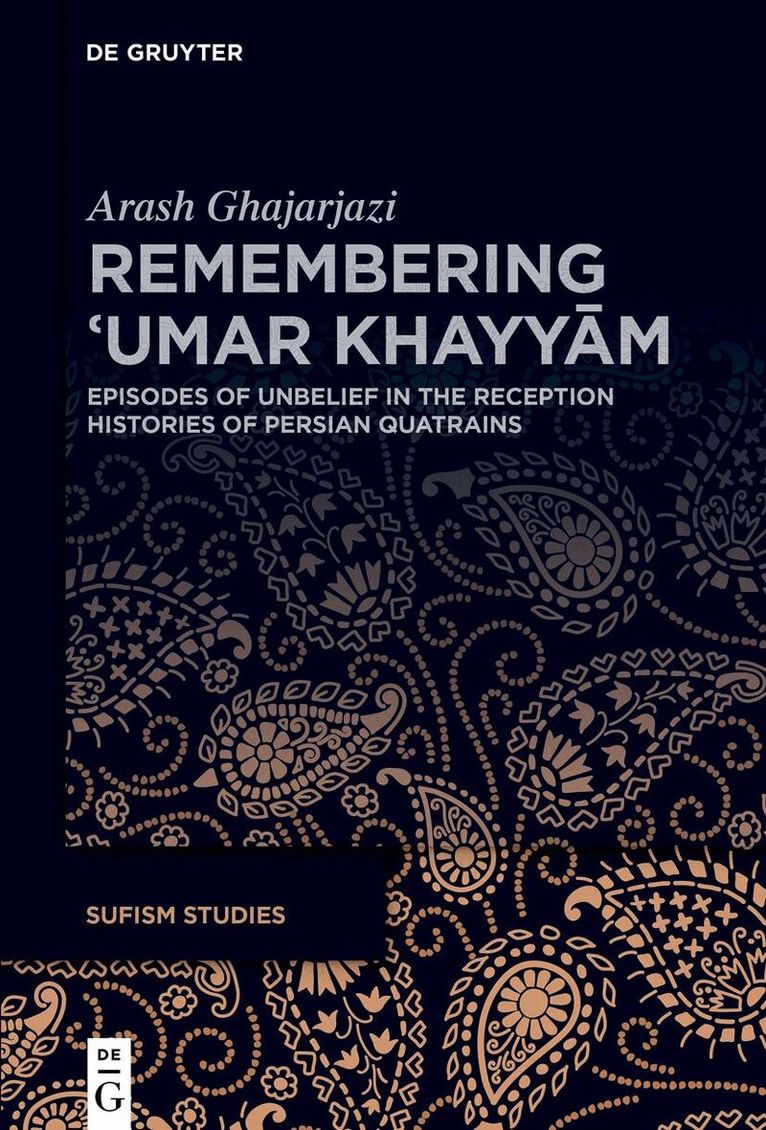
Remembering ʿUmar Khayyām
Episodes of Unbelief in the Reception Histories of Persian Quatrains
Inbunden, Engelska, 2025
1 624 kr
Skickas inom 7-10 vardagar
This book explores the Persian sage ʿUmar Khayyām and the globally renowned quatrains (rubāʿiyyāt) attributed to him from a new angle. These quatrains have unleashed responses from Sufis and Islamic theologians, fostering secular thought in the Persianate world. From the early 12th century to the present, ʿUmar Khayyām’s persona has been a source of inspiration for various literate communities. This monograph addresses an undesirable gap in Khayyām scholarship by re-examining the reception of his quatrains within a changing collective memory. It investigates a wide range of texts and objects, including Sufi texts, chronicles, mystical poetry anthologies, memorial monuments, Victorian illustrations, and modern periodicals. The focus is on how the remembrance of Khayyām has contributed to the formation of a secular intellectual tradition in modern Iran. The book argues for a re-conceptualisation of Khayyām as a nexus of Sufi literature, memory, and secularity. Additionally, it critically examines traditional scholarship on Khayyām’s biography and the debates regarding the authenticity of his quatrains. This work aims to connect scholars of Sufism Studies, memory studies, and Persian and Islamic Studies.
Del 29 - Iranian Studies Series
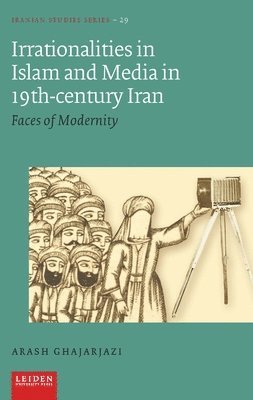
Irrationalities in Islam and Media in Nineteenth-Century Iran
Faces of Modernity
Inbunden, Engelska, 2022
1 162 kr
Skickas inom 7-10 vardagar
This book deals for the first time with the cultural history of media in nineteenth-century Iran, a history that deals with how modern techniques of representation and communication were received in the Iranian Shi.a society. This reception history is examined in religious photography, military reforms, Persian passion plays, Shi.a medicine, and the burgeoning telegraphic culture. The problematic relationship between Sh..a Islam and 19th-century media is conceptualised and contextualised, especially through the lens of the first Polytechnique college (D.r al-Fonun, 1851) in Iran. This college is conceptualised as a media laboratory, where the technological sphere in Iran was fundamentally transforming. It is also contextualised in the age of reform, a period in which the Middle East was undergoing widespread social, political, and military changes. Islamic (art) history, Iranian Studies, and cultural analysis form an interdisciplinary analytic framework to create new knowledge about the historical complexity of 19th-century Iran.