Arianna Lissoni - Böcker
Visar alla böcker från författaren Arianna Lissoni. Handla med fri frakt och snabb leverans.
3 produkter
3 produkter
658 kr
Skickas inom 10-15 vardagar
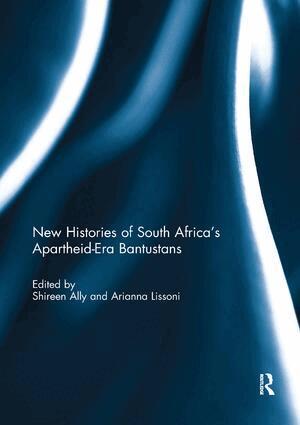
The bantustans – or ‘homelands’ – were created by South Africa’s apartheid regime as ethnically-defined territories for Africans. Granted self-governing and ‘independent’ status by Pretoria, they aimed to deflect the demands for full political representation by black South Africans and were shunned by the anti-apartheid movement. In 1972, Steve Biko wrote that ‘politically, the bantustans are the greatest single fraud ever invented by white politicians’. With the end of apartheid and the first democratic elections of 1994, the bantustans formally ceased to exist, but their legacies remain inscribed in South Africa’s contemporary social, cultural, political, and economic landscape. While the older literature on the bantustans has tended to focus on their repressive role and political illegitimacy, this edited volume offers new approaches to the histories and afterlives of the former bantustans in South Africa by a new generation of scholars. This book was originally published as various special issues of the South African Historical Journal.
2 159 kr
Skickas inom 10-15 vardagar
The bantustans – or ‘homelands’ – were created by South Africa’s apartheid regime as ethnically-defined territories for Africans. Granted self-governing and ‘independent’ status by Pretoria, they aimed to deflect the demands for full political representation by black South Africans and were shunned by the anti-apartheid movement. In 1972, Steve Biko wrote that ‘politically, the bantustans are the greatest single fraud ever invented by white politicians’. With the end of apartheid and the first democratic elections of 1994, the bantustans formally ceased to exist, but their legacies remain inscribed in South Africa’s contemporary social, cultural, political, and economic landscape. While the older literature on the bantustans has tended to focus on their repressive role and political illegitimacy, this edited volume offers new approaches to the histories and afterlives of the former bantustans in South Africa by a new generation of scholars. This book was originally published as various special issues of the South African Historical Journal.
798 kr
Skickas inom 3-6 vardagar
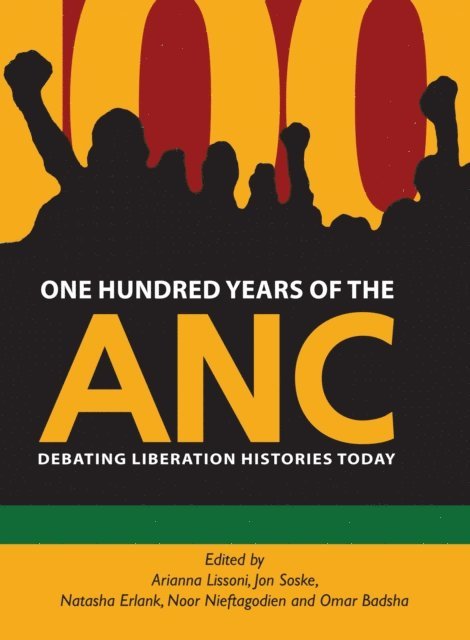
An examination of the ANC in its centennial year.On 8 January 2012 the African National Congress (ANC) of South Africa, the oldest African nationalist organisation on the continent, celebrated its one hundredth anniversary. This historic event has generated significant public debate within both the ANC and South African society at large. There is no better time to critically reflect on the ANC's historical trajectory and struggle against colonialism and apartheid than in its centennial year. One Hundred Years of the ANC is a collection of new work by renowned South African and international scholars. Covering a broad chronological and geographical spectrum and using a diverse range of sources, the contributors build upon but also extend the historiography of the ANC by tapping into marginal spaces in ANC history. By moving away from the celebratory mode that has characterised much of the contemporary discussions on the centenary, the contributors suggest that the relationship between the histories of earlier struggles and the present needs to be rethought in more complex terms. Collectively, the book chapters challenge hegemonic narratives that have become an established part of South Africa's national discourse since 1994. By opening up debate around controversial or obscured aspects of the ANC's century-long history, One hundred years of the ANC sets out an agenda for future research. The book is directed at a wide readership with an interest in understanding the historical roots of South Africa's current politics will find this volume informative. This book is based on a selection of papers presented at the One Hundred Years of the ANC: Debating Liberation Histories and Democracy Today Conference held at the University of Witwatersrand, Johannesburg from 20-23 September2011.