Jon Soske - Böcker
Visar alla böcker från författaren Jon Soske. Handla med fri frakt och snabb leverans.
6 produkter
6 produkter
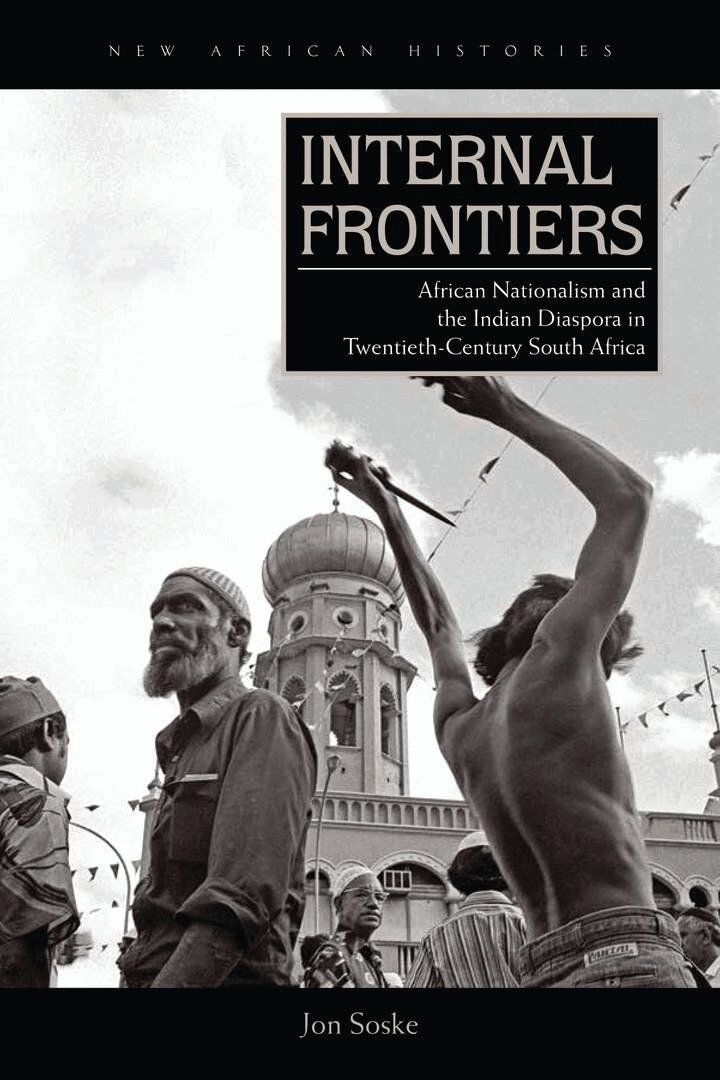
Internal Frontiers
African Nationalism and the Indian Diaspora in Twentieth-Century South Africa
Inbunden, Engelska, 2017
881 kr
Skickas inom 10-15 vardagar
In this ambitious new history of the antiapartheid struggle, Jon Soske places India and the Indian diaspora at the center of the African National Congress's development of an inclusive philosophy of nationalism. In so doing, Soske combines intellectual, political, religious, urban, and gender history to tell a story that is global in reach while remaining grounded in the everyday materiality of life under apartheid.Even as Indian independence provided black South African intellectuals with new models of conceptualizing sovereignty, debates over the place of the Indian diaspora in Africa (the "also-colonized other") forced a reconsideration of the nation's internal and external boundaries. In response to the traumas of Partition and the 1949 Durban Riots, a group of thinkers in the ANC, centered in the Indian Ocean city of Durban and led by ANC president and Nobel Peace Prize winner Albert Luthuli, developed a new philosophy of nationhood that affirmed South Africa's simultaneously heterogeneous and fundamentally African character.Internal Frontiers is a major contribution to postcolonial and Indian Ocean studies and charts new ways of writing about African nationalism.
Internal Frontiers
African Nationalism and the Indian Diaspora in Twentieth-Century South Africa
Häftad, Engelska, 2017
390 kr
Skickas inom 10-15 vardagar
In this ambitious new history of the antiapartheid struggle, Jon Soske places India and the Indian diaspora at the center of the African National Congress's development of an inclusive philosophy of nationalism. In so doing, Soske combines intellectual, political, religious, urban, and gender history to tell a story that is global in reach while remaining grounded in the everyday materiality of life under apartheid.Even as Indian independence provided black South African intellectuals with new models of conceptualizing sovereignty, debates over the place of the Indian diaspora in Africa (the "also-colonized other") forced a reconsideration of the nation's internal and external boundaries. In response to the traumas of Partition and the 1949 Durban Riots, a group of thinkers in the ANC, centered in the Indian Ocean city of Durban and led by ANC president and Nobel Peace Prize winner Albert Luthuli, developed a new philosophy of nationhood that affirmed South Africa's simultaneously heterogeneous and fundamentally African character.Internal Frontiers is a major contribution to postcolonial and Indian Ocean studies and charts new ways of writing about African nationalism.
115 kr
Tillfälligt slut
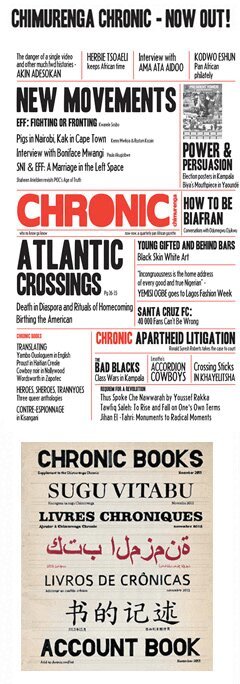
This print edition is a 48-page broadsheet, packaged together with the 72-page Chronic Books supplement. Writers in the broadsheet include Jon Soske, Paula Akugizibwe, Yves Mintoogue, Adewale Maja-Pearce, Parsalelo Kantai, Fred Moten & Stefano Harney, Cedric Vincent, Deji Toye, Derin Ajao, Tony Mochama, Nana Darkoa Sekyiamah,Agri Ismaïl, Lindokuhle Nkosi, Bongani Kona, Stacy Hardy, Emmanuel Induma, Ugochukwu-Smooth Nzewi, Lolade Ayewudi, Simon Kuper and many others. The Chronic Books supplement is a self help guide on reading and writing, with contributions by Dave Mckenzie, Akin Adekosan, Fiston Nasser Mwanza, Yemisi Ogbe, Vivek Nyarangan, Peter Enahoro, Tolu Ogunlesi, Elnathan John,Rustum Kozain, Olufemi Terry, Aryan Kaganof, Rustum Kozain, Harmony Holiday, Sean O?Toole, Gwen Ansell,Binyavanga Wainaina and more.
202 kr
Skickas inom 5-8 vardagar
In Apartheid Israel: The Politics of an Analogy, 18 scholars of Africa and its diaspora reflect on the similarities and differences between apartheid-era South Africa and contemporary Israel, with an eye to strengthening and broadening today's movement for justice in Palestine.
798 kr
Skickas inom 3-6 vardagar
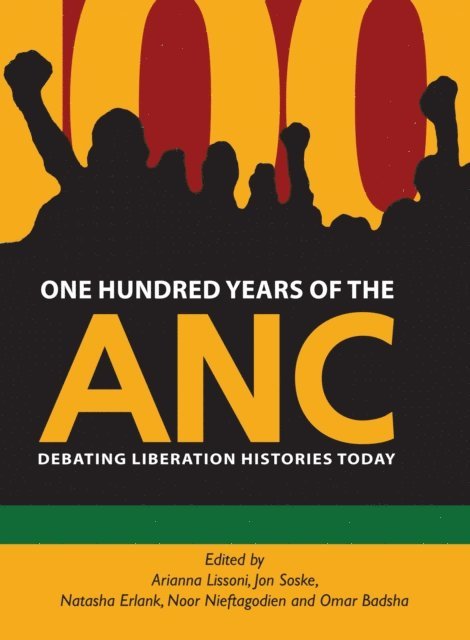
An examination of the ANC in its centennial year.On 8 January 2012 the African National Congress (ANC) of South Africa, the oldest African nationalist organisation on the continent, celebrated its one hundredth anniversary. This historic event has generated significant public debate within both the ANC and South African society at large. There is no better time to critically reflect on the ANC's historical trajectory and struggle against colonialism and apartheid than in its centennial year. One Hundred Years of the ANC is a collection of new work by renowned South African and international scholars. Covering a broad chronological and geographical spectrum and using a diverse range of sources, the contributors build upon but also extend the historiography of the ANC by tapping into marginal spaces in ANC history. By moving away from the celebratory mode that has characterised much of the contemporary discussions on the centenary, the contributors suggest that the relationship between the histories of earlier struggles and the present needs to be rethought in more complex terms. Collectively, the book chapters challenge hegemonic narratives that have become an established part of South Africa's national discourse since 1994. By opening up debate around controversial or obscured aspects of the ANC's century-long history, One hundred years of the ANC sets out an agenda for future research. The book is directed at a wide readership with an interest in understanding the historical roots of South Africa's current politics will find this volume informative. This book is based on a selection of papers presented at the One Hundred Years of the ANC: Debating Liberation Histories and Democracy Today Conference held at the University of Witwatersrand, Johannesburg from 20-23 September2011.
414 kr
Skickas inom 7-10 vardagar
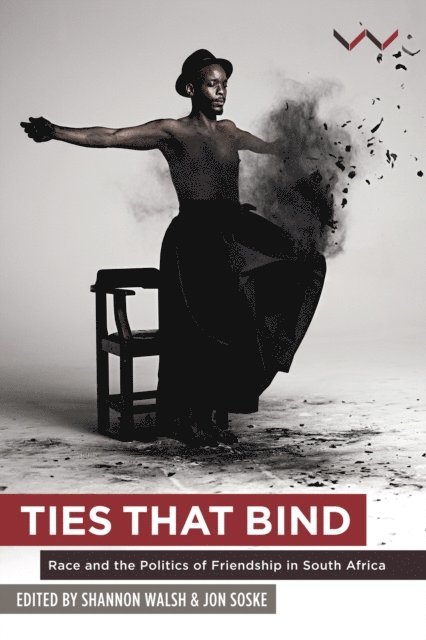
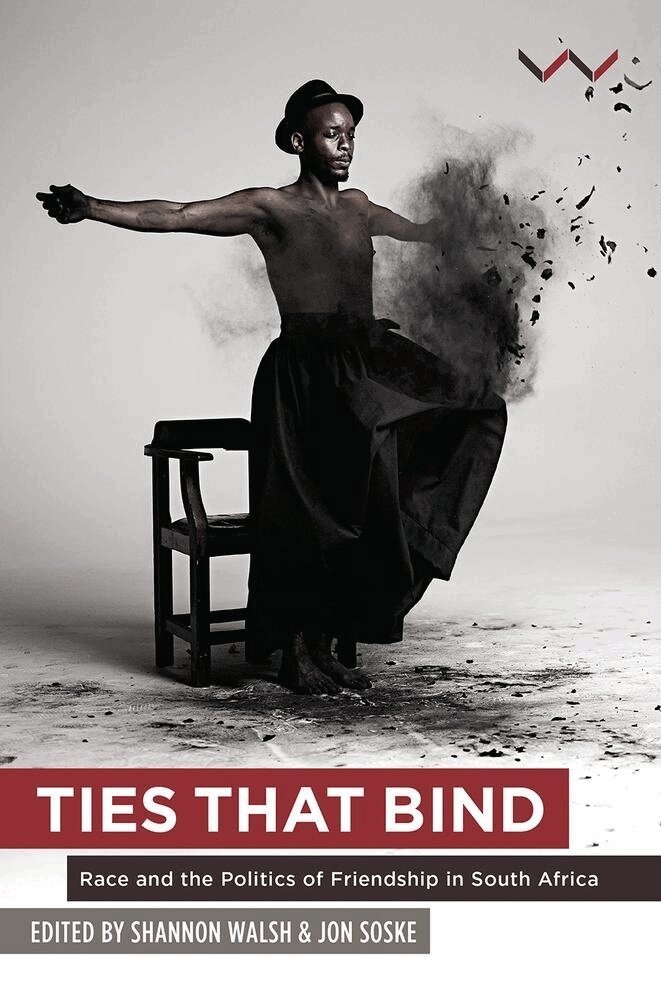
Intimacies of friendship create vital spaces for practices of power and resistance within the histories of apartheid and colonialism. What does friendship have to do with racial difference, settler colonialism and post-apartheid South Africa? While histories of apartheid and colonialism in South Africa have often focused on the ideologies of segregation and white supremacy, Ties that Bind explores how the intimacies of friendship create vital spaces for practices of power and resistance. Combining interviews, history, poetry, visual arts, memoir and academic essay, the collection keeps alive the promise of friendship and its possibilities while investigating how affective relations are essential to the social reproduction of power. From the intimacy of personal relationships to the organising ideology of liberal colonial governance, the contributors explore the intersection of race and friendship from a kaleidoscope of viewpoints and scales. Insisting on a timeline that originates in settler colonialism, Ties that Bind uncovers the implication of anti-blackness within nonracialism, and powerfully challenges a simple reading of the Mandela moment and the rainbow nation. In the wake of countrywide student protests calling for decolonisation of the university, and reignited debates around racial inequality, this timely volume insists that the history of South African politics has always already been about friendship. Written in an accessible and engaging style, Ties that Bind will interest a wide audience of scholars, students and activists, as well as general readers curious about contemporary South African debates around race and intimacy.