Arieh Saposnik – författare
Visar alla böcker från författaren Arieh Saposnik. Handla med fri frakt och snabb leverans.
3 produkter
3 produkter
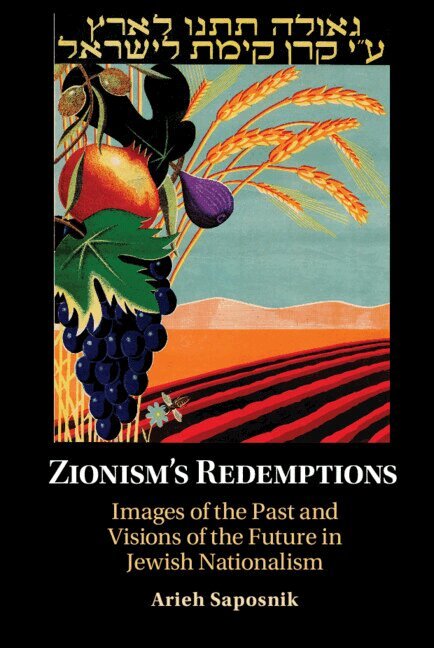
Zionism's Redemptions
Images of the Past and Visions of the Future in Jewish Nationalism
Inbunden, Engelska, 2021
1 034 kr
Skickas inom 7-10 vardagar
In this volume, Arieh Saposnik examines the complicated relations between nationalism and religious (and non-religious) redemptive traditions through the case study of Zionism. He provides a new framework for understanding the central ideas of this movement and its relationship to traditional Jewish ideas, Christian thought, and modern secular messianisms. Providing a longue-durée and broad view of the central themes and motivations in the making of Zionism, Saposnik connects its intellectual history with the concrete development of the Zionist project in Israel in its cultural, social, and political history. Saposnik demonstrates how Zionism offers lessons for a politics in which human perfectibility continues to serve as a guiding light and as a counter-narrative to the contemporary politics of self-interest, self-promotion and 'post-truth.' This is a study that bears implications for our understanding of modernity, of space and place, history and historical trajectories, and the place of Jews and Judaism in the modern world.
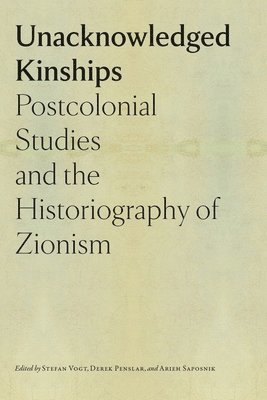
Unacknowledged Kinships – Postcolonial Studies and the Historiography of Zionism
Häftad, Engelska, 2023
333 kr
Skickas inom 7-10 vardagar
The first work to systematically investigate the potential for a dialogue between postcolonial studies and the history of Zionism. There is an “unacknowledged kinship” between studies of Zionism and post-colonial studies, a kinship that deserves to be both discovered and acknowledged. Unacknowledged Kinships strives to facilitate a conversation between the historiography of Zionism and postcolonial studies by identifying and exploring possible linkages and affiliations between their subjects as well as the limits of such connections. The contributors to this volume discuss central theoretical concepts developed within the field of postcolonial studies, and they use these concepts to analyze crucial aspects of the history of Zionism while contextualizing Zionist thought, politics, and culture within colonial and postcolonial histories. This book also argues that postcolonial studies could gain from looking at the history of Zionism as an example of not only colonial domination but also the seemingly contradictory processes of national liberation and self-empowerment. Unacknowledged Kinships is the first work to systematically investigate the potential for a dialogue between postcolonial studies and Zionist historiography. It is also unique in suggesting that postcolonial concepts can be applied to the history of European Zionism just as comprehensively as to the history of Zionism in Palestine and Israel or Arab countries. Most importantly, the book is an overture for a dialogue between postcolonial studies and the historiography of Zionism.
Unacknowledged Kinships – Postcolonial Studies and the Historiography of Zionism
Inbunden, Engelska, 2023
985 kr
Skickas inom 7-10 vardagar
The first work to systematically investigate the potential for a dialogue between postcolonial studies and the history of Zionism. There is an “unacknowledged kinship” between studies of Zionism and post-colonial studies, a kinship that deserves to be both discovered and acknowledged. Unacknowledged Kinships strives to facilitate a conversation between the historiography of Zionism and postcolonial studies by identifying and exploring possible linkages and affiliations between their subjects as well as the limits of such connections. The contributors to this volume discuss central theoretical concepts developed within the field of postcolonial studies, and they use these concepts to analyze crucial aspects of the history of Zionism while contextualizing Zionist thought, politics, and culture within colonial and postcolonial histories. This book also argues that postcolonial studies could gain from looking at the history of Zionism as an example of not only colonial domination but also the seemingly contradictory processes of national liberation and self-empowerment. Unacknowledged Kinships is the first work to systematically investigate the potential for a dialogue between postcolonial studies and Zionist historiography. It is also unique in suggesting that postcolonial concepts can be applied to the history of European Zionism just as comprehensively as to the history of Zionism in Palestine and Israel or Arab countries. Most importantly, the book is an overture for a dialogue between postcolonial studies and the historiography of Zionism.