Aris Trantidis - Böcker
Visar alla böcker från författaren Aris Trantidis. Handla med fri frakt och snabb leverans.
4 produkter
4 produkter
234 kr
Skickas inom 7-10 vardagar
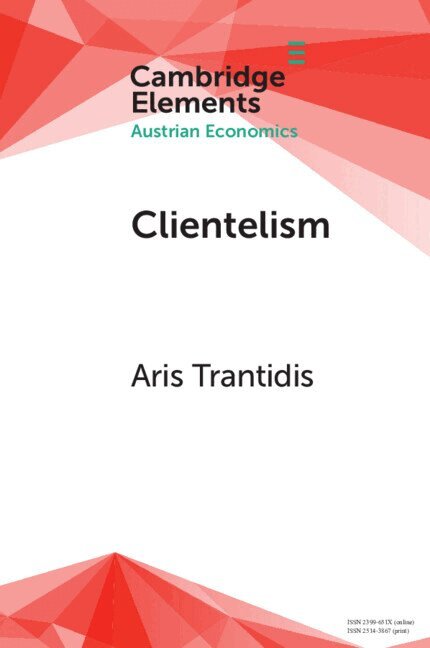
This Element examines clientelism and its impact on democratic institutions and markets, emphasizing that, alongside electoral competition, politics hosts two additional arenas: one where political actors seek campaign resources and active supporters, and another where socioeconomic actors pursue access to state-distributed resources. Clientelism emerges from reciprocal exchanges between these actors. Political parties use clientelism to incentivize collective action and organize campaigns. Playing this 'clientelist game', no party can reduce clientelistic practices without risking electoral defeat or internal fragmentation. Clientelism weakens the provision of public goods and skews policymaking to benefit clients over general welfare. Eventually, it generates an economic 'tragedy of the commons', as state resources are overexploited and the economy suffers, while formal institutions often fail to constrain it. Even in advanced democracies like the United States, political competition is not only electoral, targeting voters, but structurally clientelist. This title is also available as Open Access on Cambridge Core.
753 kr
Skickas inom 7-10 vardagar
This Element examines clientelism and its impact on democratic institutions and markets, emphasizing that, alongside electoral competition, politics hosts two additional arenas: one where political actors seek campaign resources and active supporters, and another where socioeconomic actors pursue access to state-distributed resources. Clientelism emerges from reciprocal exchanges between these actors. Political parties use clientelism to incentivize collective action and organize campaigns. Playing this 'clientelist game', no party can reduce clientelistic practices without risking electoral defeat or internal fragmentation. Clientelism weakens the provision of public goods and skews policymaking to benefit clients over general welfare. Eventually, it generates an economic 'tragedy of the commons', as state resources are overexploited and the economy suffers, while formal institutions often fail to constrain it. Even in advanced democracies like the United States, political competition is not only electoral, targeting voters, but structurally clientelist. This title is also available as Open Access on Cambridge Core.
2 306 kr
Skickas inom 10-15 vardagar
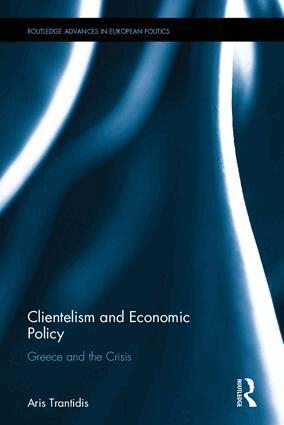
With its deep economic crisis and dramatic political developments Greece has puzzled Europe and the world. What explains its long-standing problems and its incapacity to reform its economy? Using an analytic narrative and a comparative approach, the book studies the pattern of economic reforms in Greece between 1985 and 2015. It finds that clientelism - the allocation of selective benefits by political actors (patrons) to their supporters (clients) - created a strong policy bias that prevented the country from implementing deep-cutting reforms. The book shows that the clientelist system differs from the general image of interest-group politics and that the typical view of clientelism, as individual exchange between patrons and clients, has not fully captured the wide range and implications of this phenomenon. From this, the author develops a theory on clientelism and policy-making, addressing key questions on the politics of economic reform, government autonomy and party politics. The book is an essential addition to the literatures on clientelism, public choice theory, and comparative political economy. It will be of key interest to scholars and students of European Union politics, economic policy and party politics.
724 kr
Skickas inom 10-15 vardagar
With its deep economic crisis and dramatic political developments Greece has puzzled Europe and the world. What explains its long-standing problems and its incapacity to reform its economy? Using an analytic narrative and a comparative approach, the book studies the pattern of economic reforms in Greece between 1985 and 2015. It finds that clientelism - the allocation of selective benefits by political actors (patrons) to their supporters (clients) - created a strong policy bias that prevented the country from implementing deep-cutting reforms. The book shows that the clientelist system differs from the general image of interest-group politics and that the typical view of clientelism, as individual exchange between patrons and clients, has not fully captured the wide range and implications of this phenomenon. From this, the author develops a theory on clientelism and policy-making, addressing key questions on the politics of economic reform, government autonomy and party politics. The book is an essential addition to the literatures on clientelism, public choice theory, and comparative political economy. It will be of key interest to scholars and students of European Union politics, economic policy and party politics.