Arnab K. Basu - Böcker
Visar alla böcker från författaren Arnab K. Basu. Handla med fri frakt och snabb leverans.
2 produkter
2 produkter
1 064 kr
Skickas inom 10-15 vardagar
The attractiveness of product labeling stems from their voluntary nature to achieve environmental and social goals. It is argued that through product price premia which reflect the willingness of consumers to pay more for green and socially conscious products, labels have the potential to generate changes in production techniques. In addition, labeling of products has become the preferred instrument for solving high profile trade disputes amongst members of the World Trade Organization. The contributions in this volume provide an indepth look at labeling and its relation to the governance of global trade. The book aims at bridging the research gaps related to the link between consumers’ perception of a label with their willingness to pay, the impact and the limitations of labeling in the event of food safety hazards, and the trade and development dimensions of labeling. As such, this volume presents research that constitutes a new frontier on issues related to the economics of labeling.
Del 59 - World Scientific Studies in International Economics
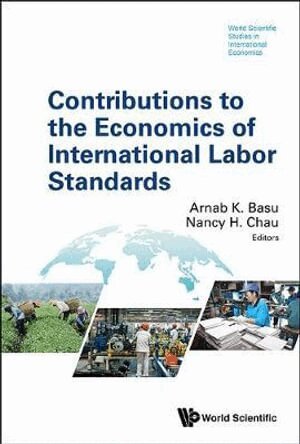
Contributions To The Economics Of International Labor Standards
Inbunden, Engelska, 2017
2 248 kr
Skickas inom 5-8 vardagar
As global production has become dispersed worldwide, so have concerns for the plight of workers employed in the world factory. Standard economic intuitions prescribe sharp tradeoffs between the worker-level benefits that a job confers, and the number of such jobs that are ultimately made available. Such quality-quantity tradeoffs have taken center stage in the global debate on potential benefits and costs of legalizing and enforcing international labor standards. This volume organizes and presents a number of new developments in the economics of international labors standards. The first part of this volume explores a series of labor market institutions particularly in developing country labor markets so far unexplored in international labor standards debate. These include the presence of middlemen market power, the persistence of interlinked debt and labor market exploitations, and the origins of two-tiered labor markets. These studies unveil the determinants of workers' well-being and the associated justification for labor market policy interventions when institutions are lopsided favoring contractors, moneylender-cum-employers, and/or select workers blessed with "good" jobs. The second part explores the effectiveness of policy intervention by explicitly recognizing policy implementation challenges. These include coordination failure in the international context, imperfect enforcement and compliance of national labor regulations, and the limits of market-driven fair trade programs. In doing so, these studies shed light on the pitfalls of wholesale international labor standards prescriptions, and advocate instead in favor of case-by-case approach which duly recognize the specific ways in which the labor market deviate from standard assumptions, and the realities of policy implementation and enforcement difficulties.