Arthur Mason - Böcker
Visar alla böcker från författaren Arthur Mason. Handla med fri frakt och snabb leverans.
16 produkter
16 produkter
1 518 kr
Skickas inom 10-15 vardagar
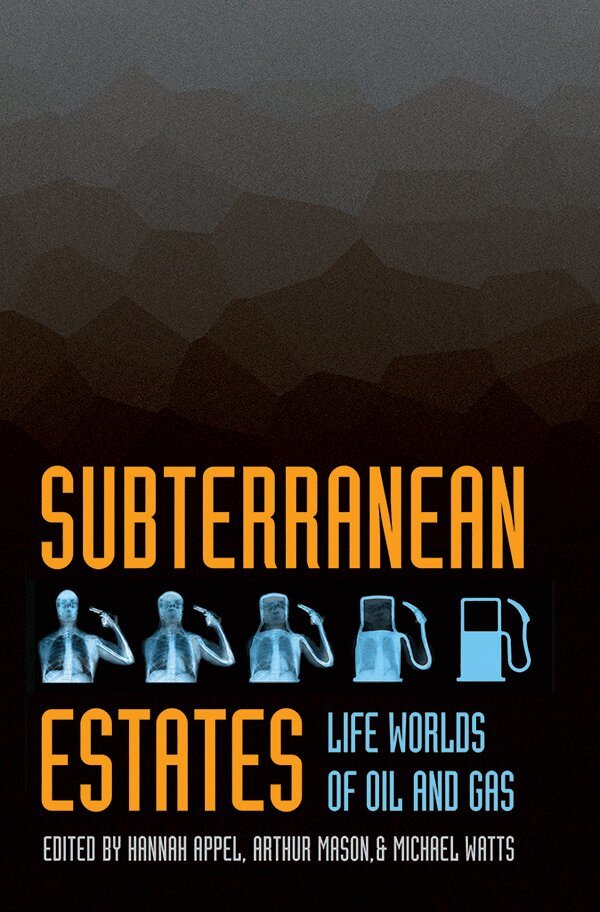
"Oil is a fairy tale, and, like every fairy tale, is a bit of a lie."—Ryzard Kapuscinski, Shah of ShahsThe scale and reach of the global oil and gas industry, valued at several trillions of dollars, is almost impossible to grasp. Despite its vast technical expertise and scientific sophistication, the industry betrays a startling degree of inexactitude and empirical disagreement about foundational questions of quantity, output, and price. As an industry typified by concentrated economic and political power, its operations are obscured by secrecy and security. Perhaps it is not surprising, then, that the social sciences typically approach oil as a metonym—of modernity, money, geopolitics, violence, corruption, curse, ur-commodity—rather than considering the daily life of the industry itself and of the hydrocarbons around which it is built.Subterranean Estates gathers an interdisciplinary group of scholars and experts to instead provide a critical topography of the hydrocarbon industry, understood not solely as an assemblage of corporate forms but rather as an expansive and porous network of laborers and technologies, representation and expertise, and the ways of life oil and gas produce at points of extraction, production, marketing, consumption, and combustion. By accounting for oil as empirical and experiential, the contributors begin to demystify a commodity too often given almost demiurgic power. Subterranean Estates shifts critical attention away from an exclusive focus on global oil firms toward often overlooked aspects of the industry, including insurance, finance, law, and the role of consultants and community organizations. Based on ethnographic research from around the world (Equatorial Guinea, Nigeria, Oman, the United States, Ecuador, Chad, the United Kingdom, Kazakhstan, Canada, Iran, and Russia), and featuring a photoessay on the lived experiences of those who inhabit a universe populated by oil rigs, pipelines, and gas flares, this innovative volume provides a new perspective on the material, symbolic, cultural, and social meanings of this multidimensional world.
422 kr
Skickas inom 11-20 vardagar
"Oil is a fairy tale, and, like every fairy tale, is a bit of a lie."—Ryzard Kapuscinski, Shah of ShahsThe scale and reach of the global oil and gas industry, valued at several trillions of dollars, is almost impossible to grasp. Despite its vast technical expertise and scientific sophistication, the industry betrays a startling degree of inexactitude and empirical disagreement about foundational questions of quantity, output, and price. As an industry typified by concentrated economic and political power, its operations are obscured by secrecy and security. Perhaps it is not surprising, then, that the social sciences typically approach oil as a metonym—of modernity, money, geopolitics, violence, corruption, curse, ur-commodity—rather than considering the daily life of the industry itself and of the hydrocarbons around which it is built.Subterranean Estates gathers an interdisciplinary group of scholars and experts to instead provide a critical topography of the hydrocarbon industry, understood not solely as an assemblage of corporate forms but rather as an expansive and porous network of laborers and technologies, representation and expertise, and the ways of life oil and gas produce at points of extraction, production, marketing, consumption, and combustion. By accounting for oil as empirical and experiential, the contributors begin to demystify a commodity too often given almost demiurgic power. Subterranean Estates shifts critical attention away from an exclusive focus on global oil firms toward often overlooked aspects of the industry, including insurance, finance, law, and the role of consultants and community organizations. Based on ethnographic research from around the world (Equatorial Guinea, Nigeria, Oman, the United States, Ecuador, Chad, the United Kingdom, Kazakhstan, Canada, Iran, and Russia), and featuring a photoessay on the lived experiences of those who inhabit a universe populated by oil rigs, pipelines, and gas flares, this innovative volume provides a new perspective on the material, symbolic, cultural, and social meanings of this multidimensional world.
377 kr
Skickas inom 5-8 vardagar
238 kr
Skickas inom 5-8 vardagar
391 kr
Skickas inom 5-8 vardagar
266 kr
Skickas inom 5-8 vardagar
219 kr
Skickas inom 5-8 vardagar
390 kr
Skickas inom 5-8 vardagar
1 954 kr
Skickas inom 10-15 vardagar
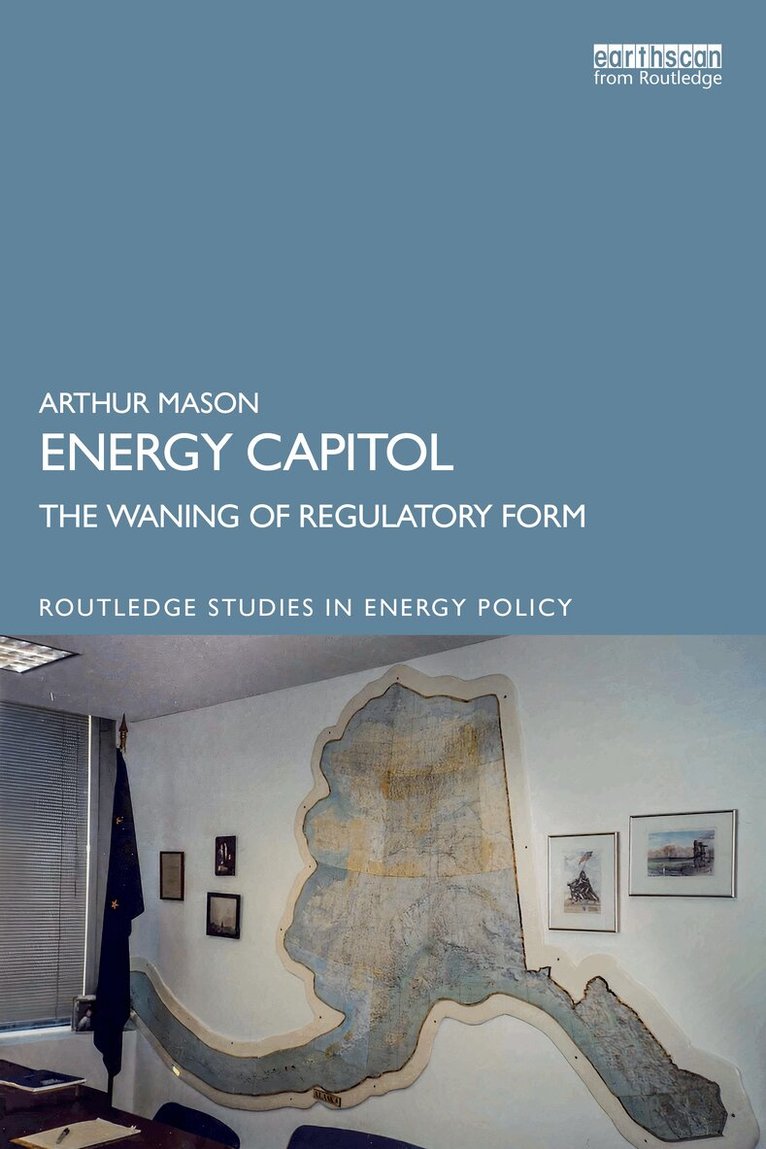
Energy Capitol explores the waning of regulatory politics surrounding large-scale energy systems in the United States at the turn of the millennium.Throughout the twentieth century, large-scale energy systems in North America and Europe were highly regulated by a national political community whose decision-making authority relied on positions of bureaucratic and capitalist-led industry organization. After restructuring in energy markets such as natural gas and electricity during the 1980s, the culture of power surrounding political decision-making began to decline. Against this backdrop, Arthur Mason examines the struggle by oil companies and federal-state agencies to deliver natural gas from Alaska and Canada’s Mackenzie Valley to markets in midcontinental United States, highlighting regulatory collusion to advance their plans. Mason employs perspectives from anthropology, political science, sociology, and science and technology studies to analyze ethnographic data gathered at the Alaska State Legislature and in the Office of the Alaska Governor in Washington, D.C. The focus is primarily on plans for building an estimated $20 billion 3,500 mile pipeline to transport natural gas from the North American Arctic to midcontinental pipeline infrastructure in the United States. By illuminating key aspects of federal-state political decision-making processes on energy transportation infrastructure, Mason highlights the activities of economists, lawyers, and other regulatory intellectuals whose accumulated work impedes Arctic proposals through a reliance on judgments that no longer reflect the conditions in which large-scale projects are increasingly determined.Written by a leading expert in the field, this book will be of great interest to students and scholars of energy policy, environmental politics, governance, and regulation and risk. It will also be relevant to industry professionals working in environmental NGOs and government departments in energy and climate forecasting.Dr. Arthur Mason’s Routledge trilogy Inside the Energy Salon (2024–2026) explores how expert performance and curated interactions shape global energy governance. The trilogy develops an “anthropology of surfaces” arguing that the visual and social staging of expertise – rather than data alone – is what makes energy futures appear investable and morally persuasive to political and industry elites. It features the following books:Energy Capitol: The Waning of Regulatory Form (2024)Consulting Energy: From Judgment to Decision-Making (2025) Energy Images: Aesthetics of Resemblance and Form (2026)
536 kr
Skickas inom 10-15 vardagar
Energy Capitol explores the waning of regulatory politics surrounding large-scale energy systems in the United States at the turn of the millennium.Throughout the twentieth century, large-scale energy systems in North America and Europe were highly regulated by a national political community whose decision-making authority relied on positions of bureaucratic and capitalist-led industry organization. After restructuring in energy markets such as natural gas and electricity during the 1980s, the culture of power surrounding political decision-making began to decline. Against this backdrop, Arthur Mason examines the struggle by oil companies and federal-state agencies to deliver natural gas from Alaska and Canada’s Mackenzie Valley to markets in midcontinental United States, highlighting regulatory collusion to advance their plans. Mason employs perspectives from anthropology, political science, sociology, and science and technology studies to analyze ethnographic data gathered at the Alaska State Legislature and in the Office of the Alaska Governor in Washington, D.C. The focus is primarily on plans for building an estimated $20 billion 3,500 mile pipeline to transport natural gas from the North American Arctic to midcontinental pipeline infrastructure in the United States. By illuminating key aspects of federal-state political decision-making processes on energy transportation infrastructure, Mason highlights the activities of economists, lawyers, and other regulatory intellectuals whose accumulated work impedes Arctic proposals through a reliance on judgments that no longer reflect the conditions in which large-scale projects are increasingly determined.Written by a leading expert in the field, this book will be of great interest to students and scholars of energy policy, environmental politics, governance, and regulation and risk. It will also be relevant to industry professionals working in environmental NGOs and government departments in energy and climate forecasting.Dr. Arthur Mason’s Routledge trilogy Inside the Energy Salon (2024–2026) explores how expert performance and curated interactions shape global energy governance. The trilogy develops an “anthropology of surfaces” arguing that the visual and social staging of expertise – rather than data alone – is what makes energy futures appear investable and morally persuasive to political and industry elites. It features the following books:Energy Capitol: The Waning of Regulatory Form (2024)Consulting Energy: From Judgment to Decision-Making (2025) Energy Images: Aesthetics of Resemblance and Form (2026)
2 088 kr
Skickas inom 10-15 vardagar
Consulting Energy examines a shift in the terrain of energy politics that has given rise to consultant experts as new types of intermediaries capable of orienting crucial decision-making, influencing energy politics, steering governance, and envisioning energy futures.Drawing on fieldwork at executive roundtables in global cities across North America and Europe, the book examines the development and consolidation of consultant expertise, as well as the opulent settings in which it is distributed. By exploring the role of aesthetics and judgment in market-oriented decision-making, the book explores elites, expertise, and ethics by highlighting the relationship between credibility and luxury. The book also considers the enrolment of the expert in a kind of virtue ethics, whereby adherence to neoclassical economic principles is taken to be a character trait worthy of emulation. By adopting this analytic, this book sheds light on the confidence that clients place in experts by drawing out the relationship between depersonalized, quantitative approaches to energy markets and the virtue of the persons who propose them. In turn, the book discusses the implications of relying upon consultant experts to determine, envision, and govern energy futures.This book will be useful for academics, researchers, and students interested in energy studies, energy and environmental politics and policy, energy and environmental governance, anthropology, and political science.Dr. Arthur Mason’s Routledge trilogy Inside the Energy Salon (2024–2026) explores how expert performance and curated interactions shape global energy governance. The trilogy develops an “anthropology of surfaces” arguing that the visual and social staging of expertise – rather than data alone – is what makes energy futures appear investable and morally persuasive to political and industry elites. It features the following books:Energy Capitol: The Waning of Regulatory Form (2024)Consulting Energy: From Judgment to Decision-Making (2025) Energy Images: Aesthetics of Resemblance and Form (2026)
2 258 kr
Kommande
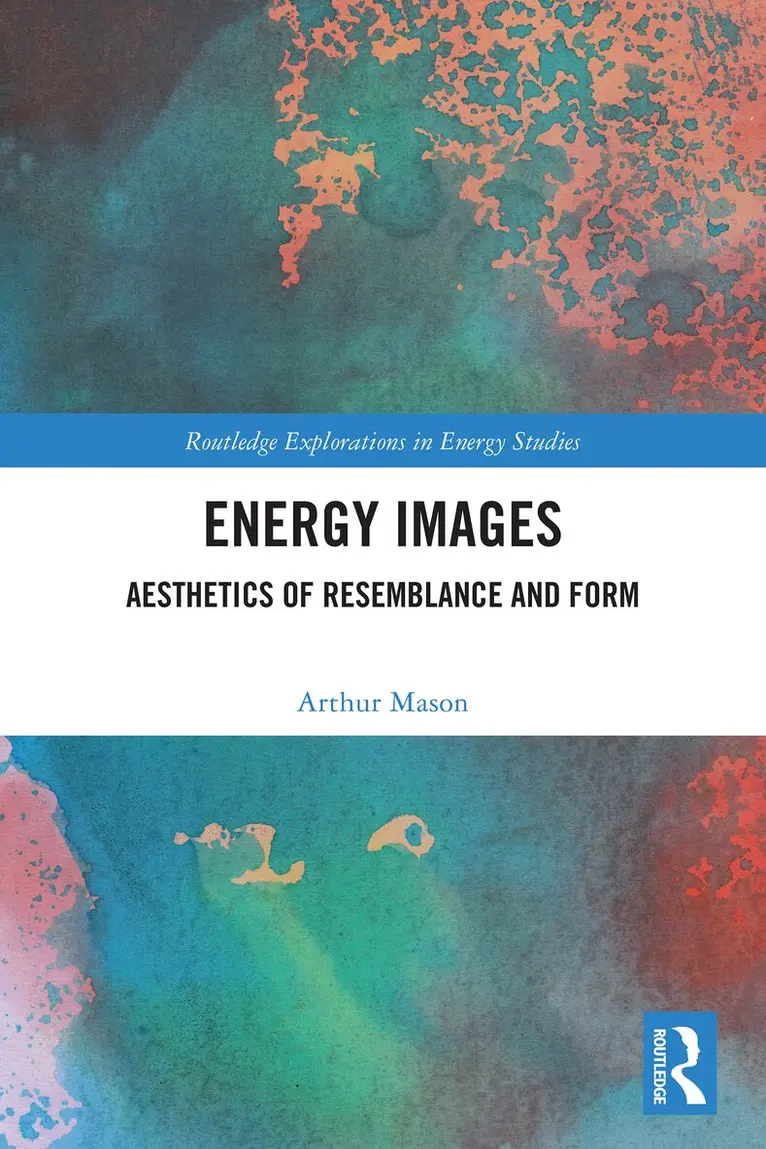
Energy Images: Aesthetics of Resemblance and Form explores how visual representations of future oil and gas resources shape energy policy, investment decisions, and public understanding.Drawing on ethnographic research and visual analysis, the book shows how planners and corporations rely on abstract maps, models, and data visualizations to manage uncertainty and project authority, turning speculative futures into seemingly reliable objects of governance. The book extends the author’s previous investigation into how expertise, perception, and power operate across contemporary energy systems and introduces two aesthetic regimes – resemblance and form. Resemblance organizes perception through proximity and surface similarity, grounding energy in embodied experience and causal links between production and consumption. Form, by contrast, operates through distance and abstraction, transforming infrastructures into patterns, diagrams, and branded images that invite interpretation rather than recognition. Together, these insights reveal how aesthetics function as a central force in energy politics.This book will appeal to scholars in energy studies, anthropology, governance, and environmental humanities.Dr. Arthur Mason’s Routledge trilogy Inside the Energy Salon (2024–2026) explores how expert performance and curated interactions shape global energy governance. The trilogy develops an “anthropology of surfaces” arguing that the visual and social staging of expertise – rather than data alone – is what makes energy futures appear investable and morally persuasive to political and industry elites. It features the following books:Energy Capitol: The Waning of Regulatory Form (2024)Consulting Energy: From Judgment to Decision-Making (2025) Energy Images: Aesthetics of Resemblance and Form (2026)
266 kr
Skickas inom 5-8 vardagar
1 663 kr
Skickas inom 3-6 vardagar
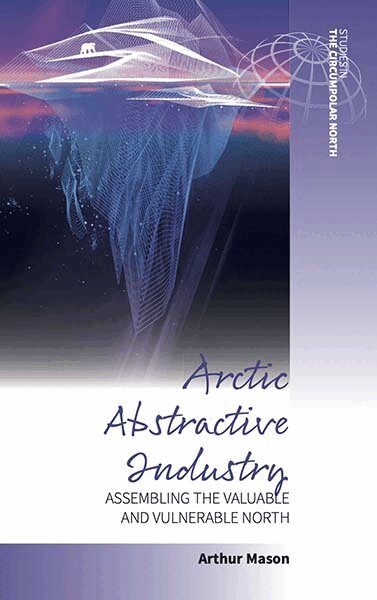
Through diverse engagements with natural resource extraction and ecological vulnerability in the contemporary Arctic, contributors to this volume apprehend Arctic resource regimes through the concept of abstraction. Abstraction refers to the creation of new material substances and cultural values by detaching parts from existing substances and values. The abstractive process differs from the activity of extractive industries by its focus on the conceptual resources that conceal processes of exploitation associated with extraction. The study of abstraction can thus help us attune to the formal operations that make appropriations of value possible while disclosing the politics of extraction and of its representation.
323 kr
Skickas
Through diverse engagements with natural resource extraction and ecological vulnerability in the contemporary Arctic, contributors to this volume apprehend Arctic resource regimes through the concept of abstraction. Abstraction refers to the creation of new material substances and cultural values by detaching parts from existing substances and values. The abstractive process differs from the activity of extractive industries by its focus on the conceptual resources that conceal processes of exploitation associated with extraction. The study of abstraction can thus help us attune to the formal operations that make appropriations of value possible while disclosing the politics of extraction and of its representation.
232 kr
Skickas inom 5-8 vardagar