Arturo Arias - Böcker
Visar alla böcker från författaren Arturo Arias. Handla med fri frakt och snabb leverans.
8 produkter
8 produkter
272 kr
Skickas inom 10-15 vardagar
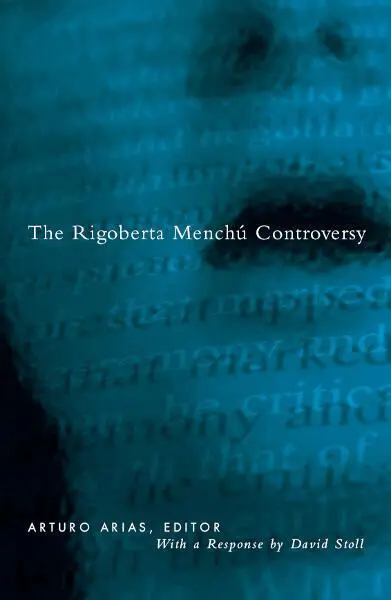
A balanced appraisal of the bitter debate surrounding the autobiography of Guatemala’s 1992 Nobel Peace Prize recipient.Guatemalan indigenous rights activist Rigoberta MenchÚ first came to international prominence following the 1983 publication of her memoir, I, Rigoberta MenchÚ, which chronicled in compelling detail the violence and misery that she and her people suffered during her country’s brutal civil war. The book focused world attention on Guatemala and led to her being awarded the Nobel Peace Prize in 1992. In 1999, a book by David Stoll challenged the veracity of key details in MenchÚ’s account, generating a storm of controversy. Journalists and scholars squared off regarding whether MenchÚ had lied about her past and, if so, what that would mean about the larger truths revealed in her book. In The Rigoberta MenchÚ Controversy, Arturo Arias has assembled a casebook that offers a balanced perspective. The first section of this volume collects the primary documents-newspaper articles, interviews, and official statements-in which the debate raged, many translated into English for the first time. In the second section, a distinguished group of international scholars assesses the political, historical, and cultural contexts of the debate and considers its implications for such issues as the “culture wars,” historical truth, and the politics of memory. Included is a new essay by David Stoll in which he responds to his critics.Contributors: Luis Aceituno; Juan JesÚs AznÁrez; John Beverley, U of Pittsburgh; Allen Carey-Webb, Western Michigan U; Margarita Carrera; Duncan Earle, U of Texas, El Paso; Carolina Escobar Sarti; Claudia Ferman, U of Richmond; Dina FernÁndez GarcÍa; Eduardo Galeano; Dante Liano, U of Milan; W. George Lovell, Queen’s U, Canada; Christopher H. Lutz; Octavio MartÍ; Victor D. Montejo, UC Davis; Rosa Montero; Mario Roberto Morales, U of Northern Iowa; Jorge Palmieri; Daphne Patai, U of Massachusetts, Amherst; Mary Louise Pratt, Stanford U; Danilo RodrÍguez; Ileana RodrÍguez, Ohio State U; Larry Rohter; Jorge Skinner-KleÉ; Elzbieta Sklodowska, Washington U; Carol A. Smith, UC Davis; Doris Sommer, Harvard U; David Stoll, Middlebury College; Manuel VÁsquez MontalbÁn; and Kay B. Warren, Harvard U.
328 kr
Skickas inom 10-15 vardagar
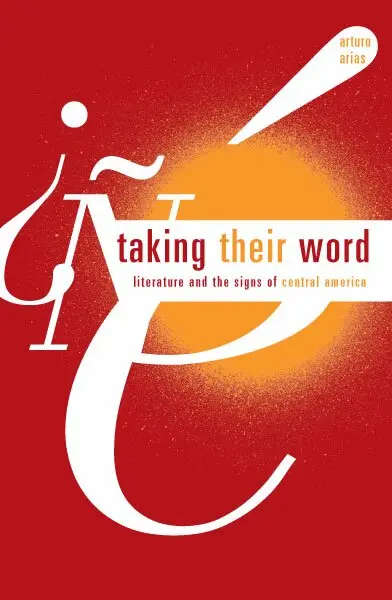
Central Americans are one of the largest Latino population groups in the United States. Yet, Arturo Arias argues, the cultural production of Central Americans remains little known to North Americans. In Taking Their Word, Arias complicates notions of the cultural production of Central America, from Mexico in the North to Panama in the South. He charts the literature of Central America’s liberation struggles of the 1970s and 1980s, its transformation after peace treaties were signed, the emergence of a new Maya literature that decenters Latin American literature written in Spanish, and the rise and fall of testimonio. Arias demonstrates that Central America and its literature are marked by an indigenousness that has never before been fully theorized or critically grasped. Never one to avoid controversy, Arias proffers his views of how the immigration of Central Americans to North America has changed the cultural topography of both zones. With this groundbreaking work, Arias establishes the importance of Central American literature and provides a frame for future studies of the region’s culture. Arturo Arias is director of Latin American studies at the University of Redlands. He is the author of six novels in Spanish and editor of The Rigoberta MenchÚ Controversy (Minnesota, 2001).
238 kr
Skickas inom 3-6 vardagar
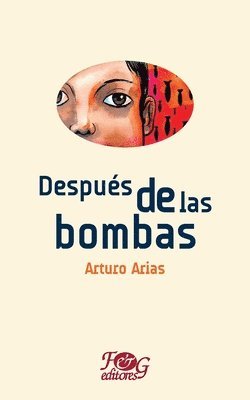
After the Bombs is a coming of age story that holds a mirror up to the modern history of Guatemala - a funhouse mirror of richly inventive and farcical black comedy which provides a better description of life in that country than any history book ever could. It opens with the bombing of Guatemala City in 1954 when the hero, Max, is a small child. In a swiftly moving narrative, Max journeys twoard adulthood, searching for his identitty, for his father, and along the way, for the real Guatemala and the possibility of a society founded on human decency, after the bombs.
1 406 kr
Skickas inom 5-8 vardagar
Analyzes contemporary Maya narratives.Recovering Lost Footprints is the first full-length critical study to analyze Latin American Indigenous literary narratives in a systematic manner. In the book, Arturo Arias looks at Maya narratives in Guatemala. The study of these works is intended to spark changes so that constitutions recognize these cultures, their rights, their languages, their centers of worship, and their cosmologies. Through this study, Arias problematizes the partial or full omission of Latin America's original inhabitants from recognized citizenry. This book analyzes these elements of exclusion in the novelistic output of three salient figures, Luis de Lión, Gaspar Pedro González, and Víctor Montejo. The works by these writers offer evidence that most native people have entered modernity without renouncing their respective cultures or the specifics of their singular identities. The philosophical ethics elaborated in the texts, such as respect for nature and recognition of the holistic value of natural beings, enable non-Indigenous readers to both understand and relate to these values.
440 kr
Tillfälligt slut
Analyzes contemporary Maya narratives.Recovering Lost Footprints is the first full-length critical study to analyze Latin American Indigenous literary narratives in a systematic manner. In the book, Arturo Arias looks at Maya narratives in Guatemala. The study of these works is intended to spark changes so that constitutions recognize these cultures, their rights, their languages, their centers of worship, and their cosmologies. Through this study, Arias problematizes the partial or full omission of Latin America's original inhabitants from recognized citizenry. This book analyzes these elements of exclusion in the novelistic output of three salient figures, Luis de Lión, Gaspar Pedro González, and Víctor Montejo. The works by these writers offer evidence that most native people have entered modernity without renouncing their respective cultures or the specifics of their singular identities. The philosophical ethics elaborated in the texts, such as respect for nature and recognition of the holistic value of natural beings, enable non-Indigenous readers to both understand and relate to these values.
683 kr
Skickas inom 3-6 vardagar
Analyzes contemporary Yucatecan and Chiapanecan Maya narratives.Recovering Lost Footprints, Volume 2 is an in-depth analysis of the sociohistorical conflict impacting Indigenous communities in Latin America. Continuing the project he began in volume 1, Arturo Arias analyzes contemporary Peninsular and Chiapanecan Maya narratives. He examines the works of Yucatecan writers Jorge Cocom Pech, Javier Gómez Navarrete, Isaac Carrillo Can, and Marisol Ceh Moo. For Chiapas, Arias looks at the works of Tseltal novelist Diego Méndez Guzmán, Tsotsil short-story writer Nicolás Huet Bautista, and Tseltal narrative writer Josías López Gómez. Arias problematizes the nature of Western modernity and the crisis of Western models of development in the present. By way of his analysis, he suggests that we are facing a historical impasse because we have neglected native knowledges that offer alternative codes of ethics and beingness that emerge from Indigenous cosmovisions. The text skillfully contributes to and strengthens debates between US-centered and Latin American cultural studies theorists, as well as the hemispheric expansion of Native American and Indigenous Studies. Recovering Lost Footprints, Volume 2 is inspired more by the past as it impinges upon a continuing, constantly expanding present. Arias's reading of Maya literatures forces us to reconsider the space-time structure of Western thinking. Indeed, this book is intriguing precisely because it views literature from an Indigenous perspective, evidencing how that social space is full of multiple contrasting experiences and historical processes.
1 674 kr
Skickas inom 3-6 vardagar
Analyzes contemporary Yucatecan and Chiapanecan Maya narratives.Recovering Lost Footprints, Volume 2 is an in-depth analysis of the sociohistorical conflict impacting Indigenous communities in Latin America. Continuing the project he began in volume 1, Arturo Arias analyzes contemporary Peninsular and Chiapanecan Maya narratives. He examines the works of Yucatecan writers Jorge Cocom Pech, Javier Gómez Navarrete, Isaac Carrillo Can, and Marisol Ceh Moo. For Chiapas, Arias looks at the works of Tseltal novelist Diego Méndez Guzmán, Tsotsil short-story writer Nicolás Huet Bautista, and Tseltal narrative writer Josías López Gómez. Arias problematizes the nature of Western modernity and the crisis of Western models of development in the present. By way of his analysis, he suggests that we are facing a historical impasse because we have neglected native knowledges that offer alternative codes of ethics and beingness that emerge from Indigenous cosmovisions. The text skillfully contributes to and strengthens debates between US-centered and Latin American cultural studies theorists, as well as the hemispheric expansion of Native American and Indigenous Studies. Recovering Lost Footprints, Volume 2 is inspired more by the past as it impinges upon a continuing, constantly expanding present. Arias's reading of Maya literatures forces us to reconsider the space-time structure of Western thinking. Indeed, this book is intriguing precisely because it views literature from an Indigenous perspective, evidencing how that social space is full of multiple contrasting experiences and historical processes.
Del 16 - Colección Premio Nacional de Literatura Miguel Ángel Asturias
Después de las bombas
Häftad, Spanska, 2024
208 kr
Skickas inom 5-8 vardagar