Arturo Casadevall - Böcker
Visar alla böcker från författaren Arturo Casadevall. Handla med fri frakt och snabb leverans.
7 produkter
7 produkter
178 kr
Skickas inom 7-10 vardagar
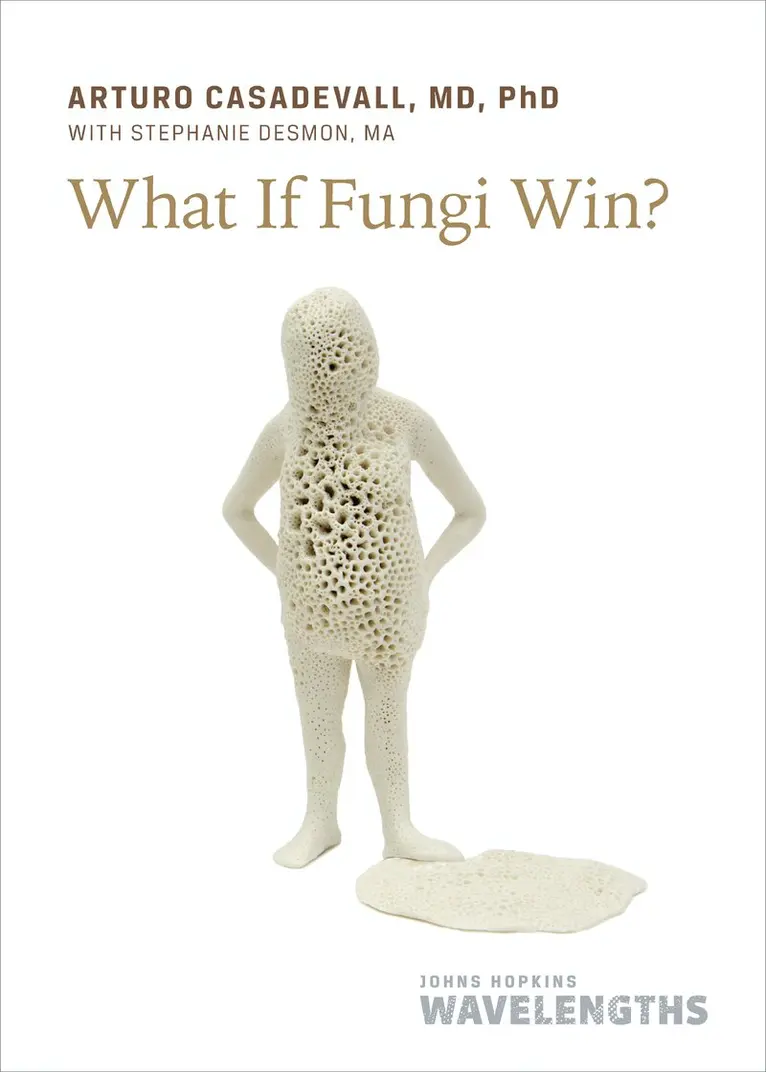
Could fungal pathogens outsmart us before we find ways to combat them?Humans and fungi share nearly 50 percent of the same DNA. Because we're related, designing drugs to combat the varieties that attack us is a challenge. Meanwhile, in an ever hotter, wetter world, fungi may be finding new ways to thrive, queueing up global outbreak potentials for which no vaccine and woefully few medications exist; some fungi are already beginning to resist treatment. Among other lifeforms, bats, amphibians, and essential crops are also increasingly threatened by these pathogens. Enter fungal kingdom frontiersman Dr. Arturo Casadevall, an epidemiologist, professor, and inventor. Casadevall shares how the 1990s AIDS epidemic's fungal complications drove his medical mycology work, how COVID-19's fungal incidences underscore the continuing threat to the immunocompromised, and how he and his Johns Hopkins University laboratory team are discovering ways to counter the threats posed by these cunning, hungry combatants.What If Fungi Win? describes the beneficial roles of fungi along with their mischievous and deadly impacts and illustrates how committed experts like Casadevall are researching ways to save us and our food supplies. In addition to an overview of blights, lichens, molds, mushrooms, rusts, and smuts, readers will learn about:• how fungi proliferated following the mass dinosaur extinction• Oregon's ancient 2,384-acre Armillaria ostoyae—Earth's largest organism • the rye fungus ergot that may have fueled the Salem witch trials• mushrooms used to create vegan leather and eco-friendly packaging, as well as plastic-consuming fungi• why it's critical that funding institutions pay attention to fungal risks and aid scientists in their work.
2 101 kr
Skickas inom 10-15 vardagar
Most studies of bacterial or fungal infectious diseases focus separately on the pathogenic microbe, the host response, or the characterization of therapeutic compounds. Compartmentalization of pathogenesis-related research into an analysis of the “pathogen”, the “host,” or the “antimicrobial compound” has largely been dictated by the lack of model systems in which all of these approaches can be used simultaneously, as well as by the traditional view that microbiology, immunology, and chemical biology and pharmacology are separate disciplines. An increasing number of workers from different fields have turned to insects, fish, worms and other model hosts as facile, ethically expedient, relatively simple, and inexpensive hosts to model a variety of human infectious diseases and to study host responses and innate immunity. Because many of these hosts are genetically tractable, they can be used in conjunction with an appropriate pathogen to facilitate the discovery of novel features of the host innate immune response.This book provides a series of reports from the 1st International Conference on Model Hosts. This first of its kind meeting focused on invertebrate, vertebrate and amoeboid systems used for the study of host-pathogen interactions, virulence and immunity, as well as on the relevance of these pathogenesis systems and mammalian models. Importantly, a common, fundamental set of molecular mechanisms is employed by a significant number of microbial pathogens against a widely divergent array of metazoan hosts. Moreover, the evolutionarily conserved immune responses of these model hosts have contributed important insights to our understanding of the innate immune response of mammals.This book provides a series of reports from the 1st International Conference on Model Hosts. This first of its kind meeting focused on invertebrate,vertebrate and amoeboid systems used for the study of host-pathogen interactions, virulence and immunity, as well as on the relevance of these pathogenesis systems and mammalian models. Importantly, a common, fundamental set of molecular mechanisms is employed by a significant number of microbial pathogens against a widely divergent array of metazoan hosts. Moreover, the evolutionarily conserved immune responses of these model hosts have contributed important insights to our understanding of the innate immune response of mammals.
1 964 kr
Skickas inom 10-15 vardagar
An increasing number of workers from different fields have turned to insects, fish, worms and other model hosts as facile, ethically expedient, relatively simple, and inexpensive hosts to model a variety of human infectious diseases and to study host responses and innate immunity.
957 kr
Tillfälligt slut
1 171 kr
Tillfälligt slut
709 kr
Skickas inom 7-10 vardagar
Convalescent Plasma and Other Antibody Therapies for Infectious Diseases
Lessons learned from COVID-19 and Future Prospects
Inbunden, Engelska, 2025
2 164 kr
Skickas inom 7-10 vardagar
This volume reviews key scientific principles and practices of passive antibody therapy for the treatment of infectious diseases. The main focus is on convalescent plasma, which is the most useful therapeutic option early in an epidemic, and may be especially important in low- and middle-income countries. The book’s first section reviews the history of passive antibody therapies prior to the COVID pandemic, while the second section assesses convalescent plasma use during the COVID pandemic including evidence for safety and effectiveness, factors affecting efficacy, and the importance of convalescent plasma treatment of COVID-19 infections in the immunosuppressed. This section also addresses the roles played in the pandemic by monoclonal antibodies and hyperimmune globulins. Section three discusses the logistics of retrieving, storing and delivering convalescent plasma for therapy, and section four considers the role of passive antibody therapies in the event of a new pandemic involving an unknown microbial pathogen.In March 2020 the editors of this volume founded the national COVID-19 convalescent plasma project (ccpp19), an association of academic physicians organized to investigate the safety and effectiveness of convalescent plasma and to facilitate access to its use in the treatment of this new international pandemic.Since that time, the project has produced more than 100 papers on almost every aspect of convalescent plasma usage in COVID-19 – treatment protocols, randomized trials, considerations of safety, conditions required for effectiveness, variability in use geographically and over time, application to vulnerable populations, regulatory issues, impact on overall COVID-19 mortality in the US and much else. At the same time, another form of antibody therapy – monoclonal antibodies – was being shown effective for out-patient use in COVID-19, confirming the principle of the value of antibody therapy in the early stages of disease, but lost effectiveness with viral mutation. A third form of antibody therapy – hyperimmune globulin, a preventive therapy with an excellent historical record of efficacy in several infectious diseases - holds great potential but was not effectively developed for COVID-19. This edited work brings together the central findings gained over the past years about passive antibody use and serves as an indispensable guide to best practices in the use of antibody therapies.