Asanga Tilakaratne - Böcker
Visar alla böcker från författaren Asanga Tilakaratne. Handla med fri frakt och snabb leverans.
4 produkter
4 produkter
525 kr
Skickas inom 10-15 vardagar
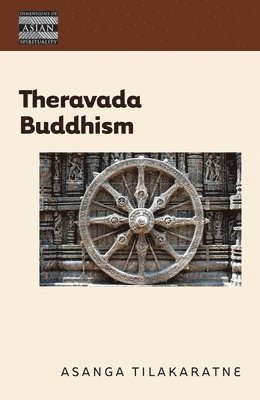
This book brings to life the age-old religious tradition of Theravada (literally, “view of the elders”) Buddhism as it is found in ancient texts and understood and practiced today in South and Southeast Asia. Following a brief introduction to the life of the historical Buddha and the beginning of his mission, the book examines the Triple Gem (the Buddha, his teachings, and the community of monastic followers) and the basic teachings of the Buddha in the earliest available Pali sources. Basic Buddhist concepts such as dependent co-origination, the four noble truths, the three trainings, and karma and its result are discussed in non-technical language, along with the Buddha’s message on social wellbeing.The author goes on to chronicle his own involvement as an observer-participant in “the Theravada world,” where he was born and raised. His is a rare first-hand account of living Theravada Buddhism not only in its traditional habitats, but also in the world at large at the dawn of the twenty-first century. He concludes with a discussion on what is happening to Theravada today across the globe, covering issues such as diaspora Buddhism, women’s Buddhism, and engaged Buddhism. The book’s accessible language and clear explication of Theravada doctrine and texts make this an ideal introduction for the student and general reader.
171 kr
Skickas inom 11-20 vardagar
This book brings to life the age-old religious tradition of Theravada (literally, “view of the elders”) Buddhism as it is found in ancient texts and understood and practiced today in South and Southeast Asia. Following a brief introduction to the life of the historical Buddha and the beginning of his mission, the book examines the Triple Gem (the Buddha, his teachings, and the community of monastic followers) and the basic teachings of the Buddha in the earliest available Pali sources. Basic Buddhist concepts such as dependent co-origination, the four noble truths, the three trainings, and karma and its result are discussed in non-technical language, along with the Buddha’s message on social wellbeing.The author goes on to chronicle his own involvement as an observer-participant in “the Theravada world,” where he was born and raised. His is a rare first-hand account of living Theravada Buddhism not only in its traditional habitats, but also in the world at large at the dawn of the twenty-first century. He concludes with a discussion on what is happening to Theravada today across the globe, covering issues such as diaspora Buddhism, women’s Buddhism, and engaged Buddhism. The book’s accessible language and clear explication of Theravada doctrine and texts make this an ideal introduction for the student and general reader.
2 167 kr
Skickas inom 10-15 vardagar
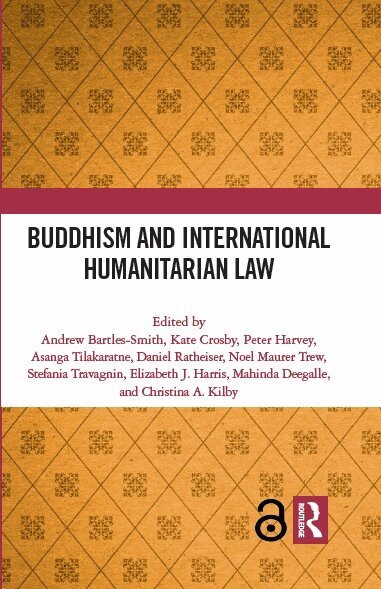
What guidance can Buddhism provide to those involved in armed conflict and to belligerents who must perhaps kill or be killed or defend their families, communities or countries from attack? How, moreover, does Buddhism compare with international humanitarian law (IHL) – otherwise known as the law of armed conflict – which protects non-combatants and restricts the means and methods of warfare to limit the suffering it causes?Despite the prevalence of armed conflict in parts of the Buddhist world, few contemporary studies have addressed these questions. While there is a wealth of material on Buddhist conflict prevention and resolution, remarkably little attention has been paid to what Buddhism says about the actual conduct of war. IHL is also still relatively little known in the Buddhist world and might not therefore influence the behaviour of belligerents who self-identify as Buddhists and are perhaps more likely to be guided by Buddhist principles. This ground-breaking volume is part of an International Committee of the Red Cross project which seeks to fill this gap by exploring correspondences between Buddhist and IHL principles, and by identifying Buddhist resources to improve compliance with IHL and equivalent Buddhist or humanitarian norms.This book will be of much interest to students and researchers of International Law, Buddhism, Ethics as well as War and Conflict studies. The chapters in this book were originally published as a special issue of Contemporary Buddhism.The Open Access version of this book, available at https://www.taylorfrancis.com/books/oa-edit/10.4324/9781003439820/buddhism-international-humanitarian-law-andrew-bartles-smith-kate-crosby-peter-harvey-asanga-tilakaratne-daniel-ratheiser-noel-maurer-trew-stefania-travagnin-elizabeth-harris-mahinda-deegalle-christina-kilby, has been made available under a Creative Commons Attribution-Non Commercial-No Derivatives (CC-BY-NC-ND) 4.0 license. A version of the open access title is also available on the OAPEN platform, https://library.oapen.org/handle/20.500.12657/75921
574 kr
Skickas inom 10-15 vardagar
What guidance can Buddhism provide to those involved in armed conflict and to belligerents who must perhaps kill or be killed or defend their families, communities or countries from attack? How, moreover, does Buddhism compare with international humanitarian law (IHL) – otherwise known as the law of armed conflict – which protects non-combatants and restricts the means and methods of warfare to limit the suffering it causes?Despite the prevalence of armed conflict in parts of the Buddhist world, few contemporary studies have addressed these questions. While there is a wealth of material on Buddhist conflict prevention and resolution, remarkably little attention has been paid to what Buddhism says about the actual conduct of war. IHL is also still relatively little known in the Buddhist world and might not therefore influence the behaviour of belligerents who self-identify as Buddhists and are perhaps more likely to be guided by Buddhist principles. This ground-breaking volume is part of an International Committee of the Red Cross project which seeks to fill this gap by exploring correspondences between Buddhist and IHL principles, and by identifying Buddhist resources to improve compliance with IHL and equivalent Buddhist or humanitarian norms.This book will be of much interest to students and researchers of International Law, Buddhism, Ethics as well as War and Conflict studies. The chapters in this book were originally published as a special issue of Contemporary Buddhism.The Open Access version of this book, available at https://www.taylorfrancis.com/books/oa-edit/10.4324/9781003439820/buddhism-international-humanitarian-law-andrew-bartles-smith-kate-crosby-peter-harvey-asanga-tilakaratne-daniel-ratheiser-noel-maurer-trew-stefania-travagnin-elizabeth-harris-mahinda-deegalle-christina-kilby, has been made available under a Creative Commons Attribution-Non Commercial-No Derivatives (CC-BY-NC-ND) 4.0 license. A version of the open access title is also available on the OAPEN platform, https://library.oapen.org/handle/20.500.12657/75921