Asghar Seyed-Gohrab – författare
Visar alla böcker från författaren Asghar Seyed-Gohrab. Handla med fri frakt och snabb leverans.
6 produkter
6 produkter
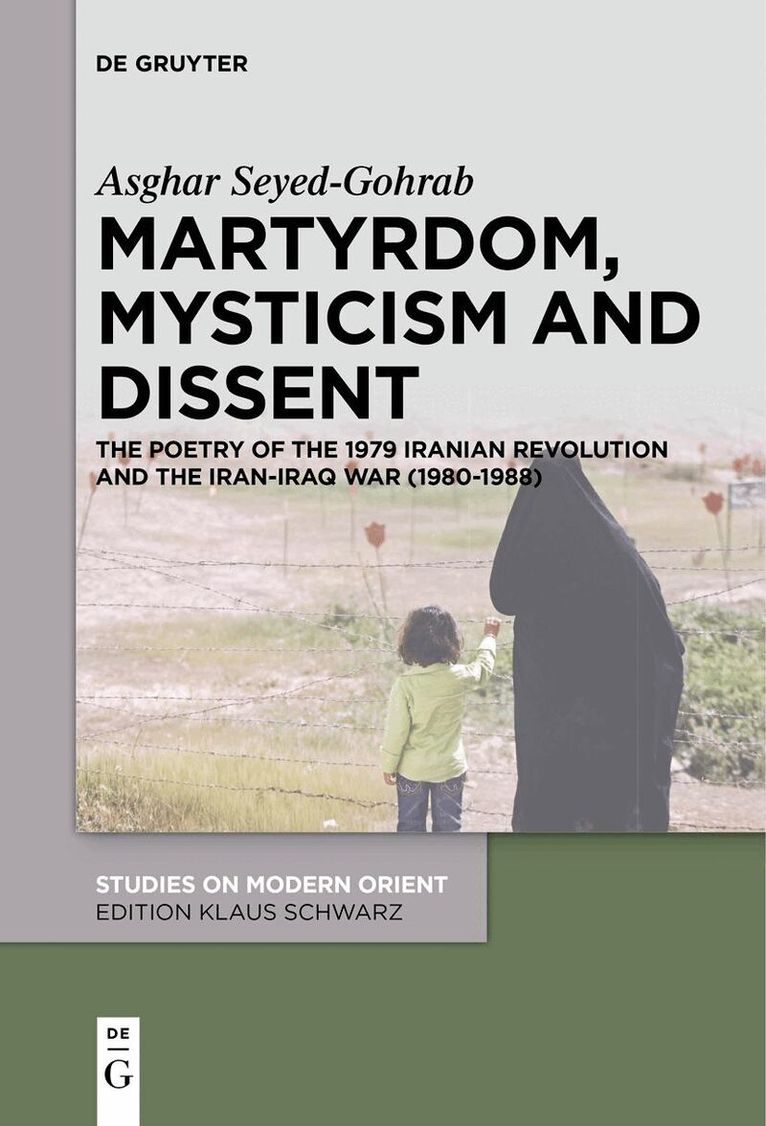
Martyrdom, Mysticism and Dissent
The Poetry of the 1979 Iranian Revolution and the Iran-Iraq War (1980-1988)
Inbunden, Engelska, 2021
1 416 kr
Skickas inom 5-8 vardagar
This book is the first extensive research on the role of poetry during the Iranian Revolution (1979) and the Iran-Iraq War (1980-1988). How can poetry, especially peaceful medieval Sufi poems, be applied to exalt violence, to present death as martyrdom, and to process war traumas? Examining poetry by both Islamic revolutionary and established dissident poets, it demonstrates how poetry spurs people to action, even leading them to sacrifice their lives. The book's originality lies in fresh analyses of how themes such as martyrdom and violence, and mystical themes such as love and wine, are integrated in a vehemently political context, while showing how Shiite ritual such as the pilgrimage to Mecca clash with Saudi Wahhabi appreciations. A distinguishing quality of the book is its examination of how martyrdom was instilled in the minds of Iranians through poetry, employing Sufi themes, motifs and doctrines to justify death. Such inculcation proved effective in mobilising people to the front, ready to sacrifice their lives. As such, the book is a must for readers interested in Iranian culture and history, in Sufi poetry, in martyrdom and war poetry. Those involved with Middle Eastern Studies, Iranian Studies, Literary Studies, Political Philosophy and Religious Studies will benefit from this book. "From his own memories and expert research, the author gives us a ravishing account of 'a poetry stained with blood, violence and death'. His brilliantly layered analysis of modern Persian poetry shows how it integrates political and religious ideology and motivational propaganda with age-old mystical themes for the most traumatic of times for Iran." (Alan Williams, Research Professor of Iranian Studies, University of Manchester) "When Asghar Seyed Gohrab, a highly prolific academician, publishes a new book, you can be certain he has paid attention to an exciting and largely unexplored subject. Martyrdom, Mysticism and Dissent: The Poetry of the 1979 Iranian Revolution and the Iran-Iraq War (1980-1988) is no exception in the sense that he combines a few different cultural, religious, mystic, and political aspects of Iranian life to present a vivid picture and thorough analysis of the development and effect of what became known as the revolutionary poetry of the late 1970s and early 1980s. This time, he has even enriched his narrative by inserting his voice into his analysis. It is a thoughtful book and a fantastic read." (Professor Kamran Talattof, University of Arizona)
Del 34 - Studies on Modern Orient
Martyrdom, Mysticism and Dissent
The Poetry of the 1979 Iranian Revolution and the Iran-Iraq War (1980-1988)
Häftad, Engelska, 2023
289 kr
Skickas inom 5-8 vardagar
This book is the first extensive research on the role of poetry during the Iranian Revolution (1979) and the Iran-Iraq War (1980-1988). How can poetry, especially peaceful medieval Sufi poems, be applied to exalt violence, to present death as martyrdom, and to process war traumas? Examining poetry by both Islamic revolutionary and established dissident poets, it demonstrates how poetry spurs people to action, even leading them to sacrifice their lives. The book's originality lies in fresh analyses of how themes such as martyrdom and violence, and mystical themes such as love and wine, are integrated in a vehemently political context, while showing how Shiite ritual such as the pilgrimage to Mecca clash with Saudi Wahhabi appreciations. A distinguishing quality of the book is its examination of how martyrdom was instilled in the minds of Iranians through poetry, employing Sufi themes, motifs and doctrines to justify death. Such inculcation proved effective in mobilising people to the front, ready to sacrifice their lives. As such, the book is a must for readers interested in Iranian culture and history, in Sufi poetry, in martyrdom and war poetry. Those involved with Middle Eastern Studies, Iranian Studies, Literary Studies, Political Philosophy and Religious Studies will benefit from this book. "From his own memories and expert research, the author gives us a ravishing account of 'a poetry stained with blood, violence and death'. His brilliantly layered analysis of modern Persian poetry shows how it integrates political and religious ideology and motivational propaganda with age-old mystical themes for the most traumatic of times for Iran." (Alan Williams, Research Professor of Iranian Studies, University of Manchester) "When Asghar Seyed Gohrab, a highly prolific academician, publishes a new book, you can be certain he has paid attention to an exciting and largely unexplored subject. Martyrdom, Mysticism and Dissent: The Poetry of the 1979 Iranian Revolution and the Iran-Iraq War (1980-1988) is no exception in the sense that he combines a few different cultural, religious, mystic, and political aspects of Iranian life to present a vivid picture and thorough analysis of the development and effect of what became known as the revolutionary poetry of the late 1970s and early 1980s. This time, he has even enriched his narrative by inserting his voice into his analysis. It is a thoughtful book and a fantastic read." (Professor Kamran Talattof, University of Arizona)
2 104 kr
Skickas inom 3-6 vardagar
501 kr
Tillfälligt slut
This book fills a gap by providing a new selection and description of almost 900 editions of the world-famous Persian quatrains: The Rubáiyát of Omar Khayyám. This is the first bibliography since the first Rubáiyát bibliography by A.G. Potter, published in 1929.Omar Khayyám lived in the 11th Century. A Persian homo universalis, he was a mathematician, scientist, philosopher, astronomer and poet. He is believed to have written 200 to 600 Rubáiyát (quatrains) in Persian. His Rubáiyát has been translated into Arabic, Chinese, Dutch, English, French, German, Hebrew, Hindi, Russian, Urdu and many other languages. It has been published in numerous editions: precious volumes with jeweled bindings, artist's books, scholarly and critical editions, forgeries and fake editions, making The Rubáiyát of Omar Khayyám a perfect object for book collectors and lovers of poetry.Edward FitzGerald's translation of the Rubáiyát of Omar Khayyám has been one of the world's most popular books. Since the first version in 1859, new editions, reprints and translations have appeared in an almost endless flow, varying from plain text to highly decorated, illustrated editions and from almost microscopic miniatures to monumental, oversized volumes. FitzGerald's translation stands out, but there are hundreds of other translations, from many countries, and you will find them all in this book.
632 kr
Tillfälligt slut
The chapters in this volume explore the philosophical underpinnings and cinematic techniques characteristic of Iranian film. Collectively, they show how the pervasive themes of Iranian cinema, such as martyrdom and war, gender roles, and social policy issues have been addressed, and how directors have approached them using a variety of techniques. Some chapters outline the poetic and mystical dimensions of Abbas Kiarostami's movies. Other chapters describe the effects of the Islamic Revolution on codes of morality and their expression in film as well as on directors' tactics in response to the new theocratic system.
Del 32 - Iranian Studies Series
Sufi Non-Conformism
Antinomian Trends in the Persianate Cultural Traditions
Inbunden, Engelska, 2024
1 415 kr
Skickas inom 5-8 vardagar
This book deals with nonconformist aspects of Sufism, and other antinomian movements in the Persianate cultural areas. The chapters cover a variety of subjects, ranging from gender and the role of women in Islamic mysticism, to genuine versus sham piety, belief versus unbelief, the notion of metempsychosis (tan.sukh) in the mystical philosophy of Shih.b al-D.n Suhravard., and the influential role of the Persian sage .Umar Khayy.m in religious discussions on piety in Persia, and his reception history in Europe.