Astradur Eysteinsson - Böcker
Visar alla böcker från författaren Astradur Eysteinsson. Handla med fri frakt och snabb leverans.
4 produkter
4 produkter
1 344 kr
Skickas inom 7-10 vardagar
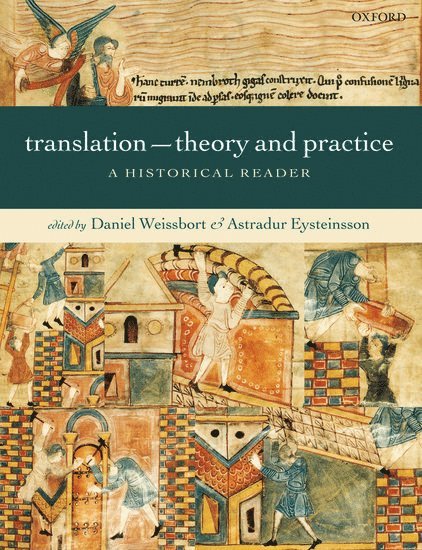
Translation - Theory and Practice: A Historical Reader responds to the need for a collection of primary texts on translation, in the English tradition, from the earliest times to the present day. Based on an exhaustive survey of the wealth of available materials, the Reader demonstrates throughout the link between theory and practice, with excerpts not only of significant theoretical writings but of actual translations, as well as excerpts on translation from letters, interviews, autobiographies, and fiction.The collection is intended as a teaching tool, but also as an encyclopaedia for the use of translators and writers on translation. It presents the full panoply of approaches to translation, without necessarily judging between them, but showing clearly what is to be gained or lost in each case. Translations of key texts, such as the Bible and the Homeric epic, are traced through the ages, with the same passages excerpted, making it possible for readers to construct their own map of the evolution of translation and to evaluate, in their historical contexts, the variety of approaches. The passages in question are also accompanied by ad verbum versions, to facilitate comparison.The bibliographies are likewise comprehensive. The editors have drawn on the expertise of leading scholars in the field, including the late James S. Holmes, Louis Kelly, Jonathan Wilcox, Jane Stevenson, David Hopkins, and many others. In addition, significant non-English texts, such as Martin Luther's 'Circular Letter on Translation', which may be said to have inaugurated the Reformation, are included, helping to set the English tradition in a wider context. Related items, such as the introductions to their work by Tudor and Jacobean translators or the work of women translators from the sixteenth to eighteenth centuries have been brought together in 'collages', marking particularly important moments or developments in the history of translation.This comprehensive reader provides an invaluable and illuminating resources for scholars and students of translation and English literature, as well as poets, cultural historians, and professional translators.
888 kr
Skickas inom 5-8 vardagar
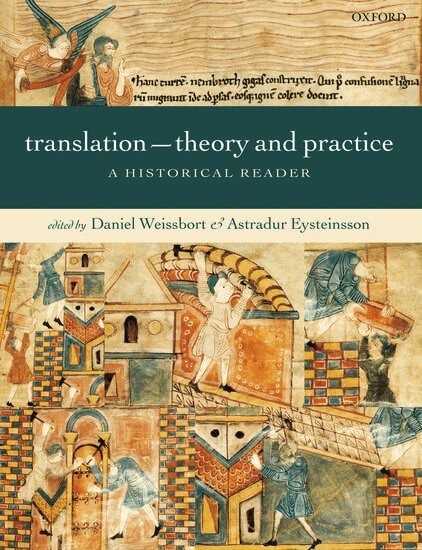
Translation: Theory and Practice: A Historical Reader responds to the need for a collection of primary texts on translation, in the English tradition, from the earliest times to the present day. Based on an exhaustive survey of the wealth of available materials, the Reader demonstrates throughout the link between theory and practice, with excerpts not only of significant theoretical writings but of actual translations, as well as excerpts on translation from letters, interviews, autobiographies, and fiction. The collection is intended as a teaching tool, but also as an encyclopaedia for the use of translators and writers on translation. It presents the full panoply of approaches to translation, without necessarily judging between them, but showing clearly what is to be gained or lost in each case. Translations of key texts, such as the Bible and the Homeric epic, are traced through the ages, with the same passages excerpted, making it possible for readers to construct their own map of the evolution of translation and to evaluate, in their historical contexts, the variety of approaches. The passages in question are also accompanied by ad verbum versions, to facilitate comparison. The bibliographies are likewise comprehensive. The editors have drawn on the expertise of leading scholars in the field, including the late James S. Holmes, Louis Kelly, Jonathan Wilcox, Jane Stevenson, David Hopkins, and many others. In addition, significant non-English texts, such as Martin Luther's "Circular Letter on Translation," which may be said to have inaugurated the Reformation, are included, helping to set the English tradition in a wider context. Related items, such as the introductions to their work by Tudor and Jacobean translators or the work of women translators from the sixteenth to eighteenth centuries have been brought together in "collages," marking particularly important moments or developments in the history of translation. This comprehensive reader provides an invaluable and illuminating resource for scholars and students of translation and English literature, as well as poets, cultural historians, and professional translators.
674 kr
Skickas inom 10-15 vardagar
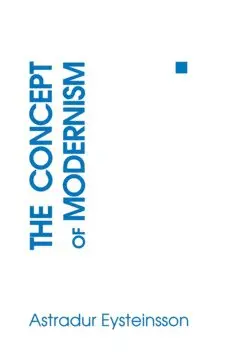
The term "modernism" is central to any discussion of twentieth-century literature and critical theory. Astradur Eysteinsson here maintains that the concept of modernism does not emerge directly from the literature it subsumes, but is in fact a product of critical practices relating to nontraditional literature. Intervening in these practices, and correlating them with modernist works and with modern literary theory, Eysteinsson undertakes a comprehensive reexamination of the idea of modernism.Eysteinsson critically explores various manifestations of modernism in a rich array of American, British, and European literature, criticism, and theory. He first examines many modernist paradigms, detecting in them a conflict between modernism's culturally subversive potential and its relatively conservative status as a formalist project. He then considers these paradigms as interpretations-and fabrications-of literary history. Seen in this light, modernism both signals a historical change on the literary scene and implies the context of that change. Laden with the implications of tradition and modernity, modernism fills its major function: that of highlighting and defining the complex relations between history and postrealist literature. Eysteinsson focuses on the ways in which the concept of modernism directs our understanding of literature and literary history and influences our judgment of experimental and postrealist works in literature and art. He discusses in detail the relation of modernism to the key concepts postmodernism, the avant-garde, and realism. Enacting a crisis of subject and reference, modernism is not so much a form of discourse, he asserts, as its interruption-a possible "other" modernity that reveals critical aspects of our social and linguistic experience in Western culture. Comparatists, literary theorists, cultural historians, and others interested in twentieth-century literature and art will profit from this provocative book.
315 kr
Skickas inom 10-15 vardagar
The term "modernism" is central to any discussion of twentieth-century literature and critical theory. Astradur Eysteinsson here maintains that the concept of modernism does not emerge directly from the literature it subsumes, but is in fact a product of critical practices relating to nontraditional literature. Intervening in these practices, and correlating them with modernist works and with modern literary theory, Eysteinsson undertakes a comprehensive reexamination of the idea of modernism.Eysteinsson critically explores various manifestations of modernism in a rich array of American, British, and European literature, criticism, and theory. He first examines many modernist paradigms, detecting in them a conflict between modernism's culturally subversive potential and its relatively conservative status as a formalist project. He then considers these paradigms as interpretations-and fabrications-of literary history. Seen in this light, modernism both signals a historical change on the literary scene and implies the context of that change. Laden with the implications of tradition and modernity, modernism fills its major function: that of highlighting and defining the complex relations between history and postrealist literature. Eysteinsson focuses on the ways in which the concept of modernism directs our understanding of literature and literary history and influences our judgment of experimental and postrealist works in literature and art. He discusses in detail the relation of modernism to the key concepts postmodernism, the avant-garde, and realism. Enacting a crisis of subject and reference, modernism is not so much a form of discourse, he asserts, as its interruption-a possible "other" modernity that reveals critical aspects of our social and linguistic experience in Western culture. Comparatists, literary theorists, cultural historians, and others interested in twentieth-century literature and art will profit from this provocative book.