Astrid Nilsson - Böcker
Visar alla böcker från författaren Astrid Nilsson. Handla med fri frakt och snabb leverans.
2 produkter
2 produkter
Del 21 - Studia Graeca et Latina Lundensia
Johannes Magnus and the Composition of Truth
Häftad, Engelska, 2016
434 kr
Skickas inom 5-8 vardagar
Johannes Magnus (1488–1544), the last Catholic archbishop of Uppsala to hold residence in Sweden, was the author of a monumental work about Swedish history, in the form of biographies of over 200 kings, from the grandsons of Noah to Gustavus Vasa. The work is entitled Historia de omnibus Gothorum Sueonumque regibus, the ‘History of all the Kings of the Goths and the Swedes’, and was published posthumously in Rome in 1554. Johannes’ work gained spectacular importance in the 17th century, when the dominions of Sweden were increased through the bellicose efforts of King Gustavus II Adolphus and his successors: it became the ideological basis for Swedish patriotism and was translated into Swedish by order of the king. But when historians eventually began to ask questions about the factual accuracy of the work, they found it doubtful. Johannes was claimed to have used his imagination to invent his history, instead of having subjected his sources to critical evaluation in order to find out about the past, as was demanded by later historians. In short, the work was seen as full of invented people and events.
303 kr
Skickas inom 5-8 vardagar
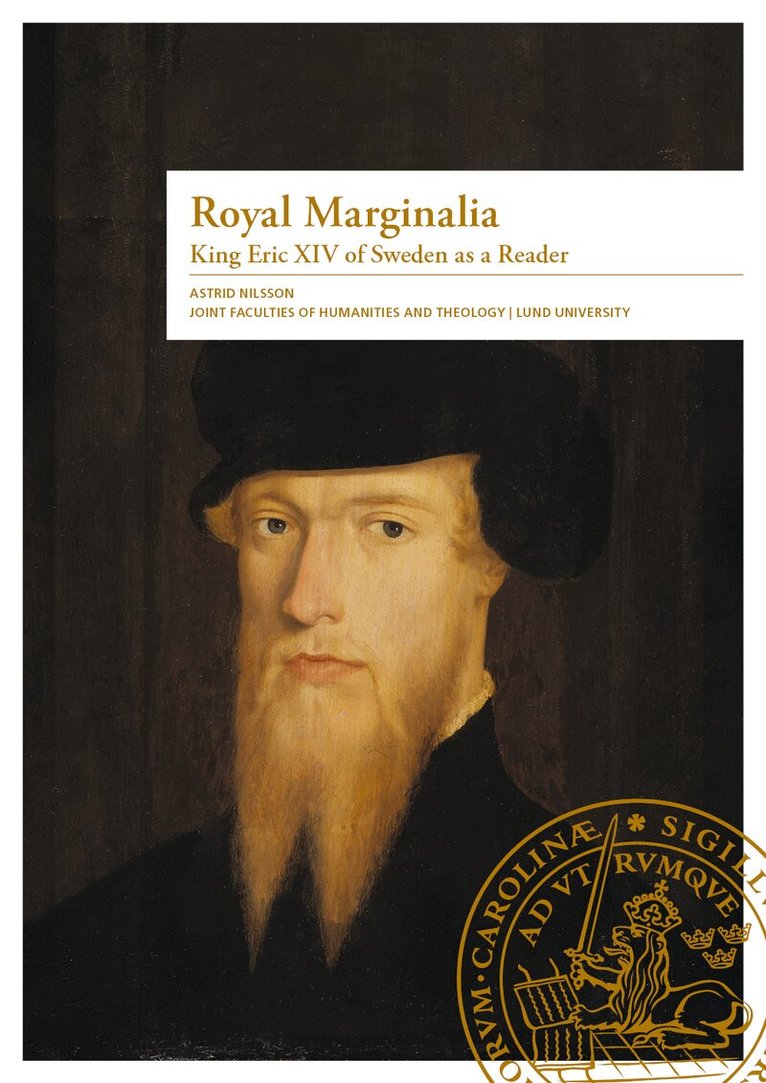
King Eric XIV of Sweden (1533–1577) has gone down in history as bad and mad. He is reputed to have been killed with arsenic in a bowl of pea soup on the orders of his brother and successor John III. John III deposed his older brother, imprisoned him, and painted him in the darkest colours possible to justify his own accession. Eric’s dramatic life tends to overshadow the fact that he was also a very learned Renaissance king. It is his learning that is the focus of the present study. He owned a library of over 200 volumes, and of these, four are still extant. There are two works of history, Johannes Magnus’ Historia de regibus and Sabellico’s Enneades, one of geography, Strabo’s Geographia, and one of astronomy, Stadius’ Ephemerides, known to have been in Eric’s possession. The works contain marginalia, mainly in the form of little images in the king’s hand. Through this study, it has been possible to establish that Eric XIV had devised a system of images, referred to as symbols in this study. Their function was marking material that was of interest to him in his role as king, as military commander, and as a learned man, and to make it easily retrievable. King Eric also left a few comments in writing. Taken together, the symbols and comments form what might be referred to as an intellectual biography of the unfortunate king.