Astrid von Busekist - Böcker
Visar alla böcker från författaren Astrid von Busekist. Handla med fri frakt och snabb leverans.
5 produkter
5 produkter
1 264 kr
Skickas inom 7-10 vardagar
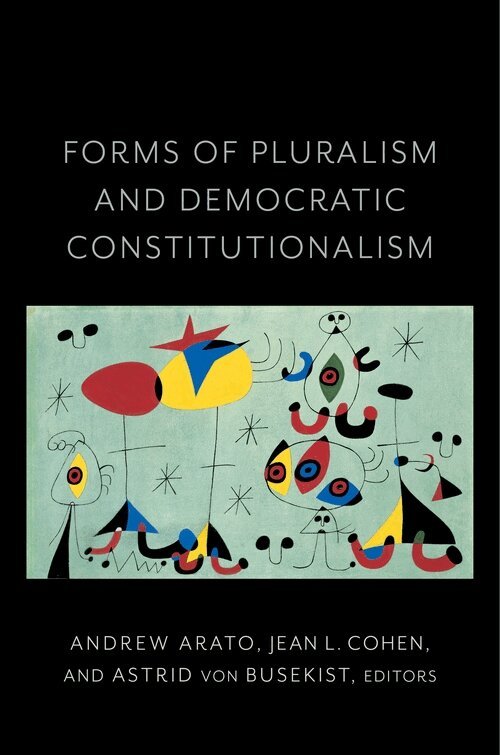
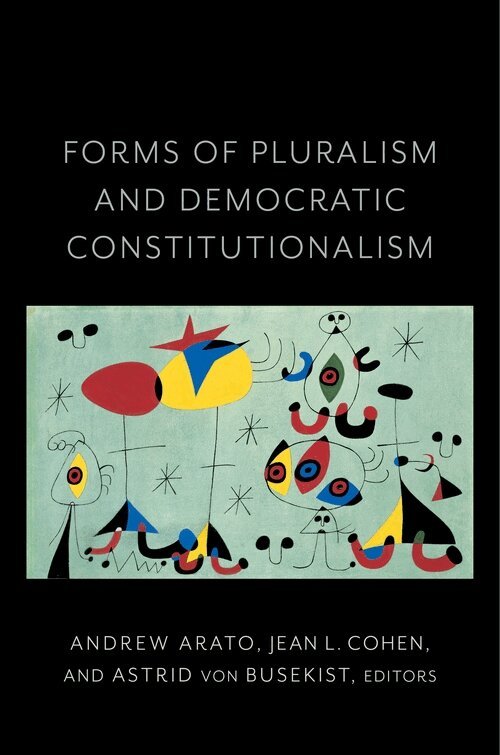
The achievements of the democratic constitutional order have long been associated with the sovereign nation-state. Civic nationalist assumptions hold that social solidarity and social plurality are compatible, offering a path to guarantees of individual rights, social justice, and tolerance for minority voices. Yet today, challenges to the liberal-democratic sovereign nation-state are proliferating on all levels, from multinational corporations and international institutions to populist nationalisms and revanchist ethnic and religious movements. Many critics see the nation-state itself as a tool of racial and economic exclusion and repression. What other options are available for managing pluralism, fostering self-government, furthering social justice, and defending equality?In this interdisciplinary volume, a group of prominent international scholars considers alternative political formations to the nation-state and their ability to preserve and expand the achievements of democratic constitutionalism in the twenty-first century. The book considers four different principles of organization—federation, subsidiarity, status group legal pluralism, and transnational corporate autonomy—contrasts them with the unitary and centralized nation-state, and inquires into their capacity to deal with deep societal differences. In essays that examine empire, indigenous struggles, corporate institutions, forms of federalism, and the complexities of political secularism, anthropologists, historians, legal scholars, political scientists, and sociologists remind us that the sovereign nation-state is not inevitable and that multinational and federal states need not privilege a particular group. Forms of Pluralism and Democratic Constitutionalism helps us answer the crucial question of whether any of the alternatives might be better suited to core democratic principles.
321 kr
Skickas inom 7-10 vardagar
The achievements of the democratic constitutional order have long been associated with the sovereign nation-state. Civic nationalist assumptions hold that social solidarity and social plurality are compatible, offering a path to guarantees of individual rights, social justice, and tolerance for minority voices. Yet today, challenges to the liberal-democratic sovereign nation-state are proliferating on all levels, from multinational corporations and international institutions to populist nationalisms and revanchist ethnic and religious movements. Many critics see the nation-state itself as a tool of racial and economic exclusion and repression. What other options are available for managing pluralism, fostering self-government, furthering social justice, and defending equality?In this interdisciplinary volume, a group of prominent international scholars considers alternative political formations to the nation-state and their ability to preserve and expand the achievements of democratic constitutionalism in the twenty-first century. The book considers four different principles of organization—federation, subsidiarity, status group legal pluralism, and transnational corporate autonomy—contrasts them with the unitary and centralized nation-state, and inquires into their capacity to deal with deep societal differences. In essays that examine empire, indigenous struggles, corporate institutions, forms of federalism, and the complexities of political secularism, anthropologists, historians, legal scholars, political scientists, and sociologists remind us that the sovereign nation-state is not inevitable and that multinational and federal states need not privilege a particular group. Forms of Pluralism and Democratic Constitutionalism helps us answer the crucial question of whether any of the alternatives might be better suited to core democratic principles.
687 kr
Skickas inom 7-10 vardagar
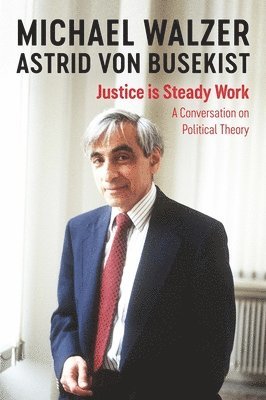
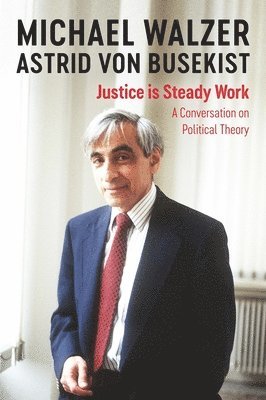
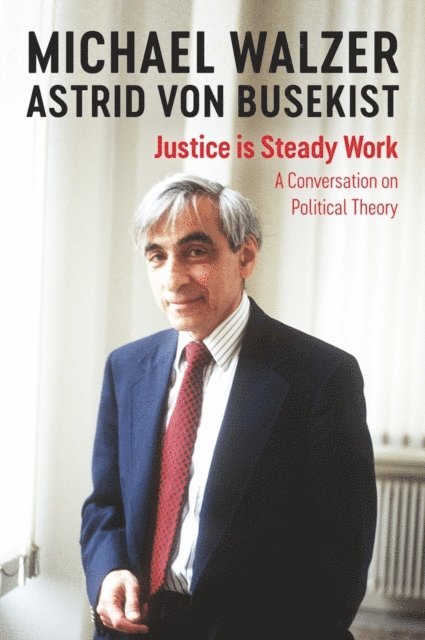
Michael Walzer is one of the pre-eminent political theorists in the world today and also a prominent public intellectual. His conception of social justice and his work on just and unjust wars have been hugely influential in political theory and, at the same time, he has taken a public stand on many of the great issues of our time, from the civil rights movement and the Vietnam War to 9/11, the Israeli-Palestinian conflict and the Iraq War. He stands out among political theorists and philosophers by virtue of his attention to historical reality and his sensitivity to social and political context. Convinced that philosophical debate is only useful if it is rooted in the concrete practices and morality of societies, he develops a form of social critique that is opposed to a disembodied philosophy which does not respond to concerns of ordinary people. For Walzer, it is useless to try to write a theory of justice: the challenge is to think through issues of justice in relation to the particular contexts in which people live out their lives. The core strength of his work is his practical instinct: if individuals are contextualized, critique must be too. This book takes the form of an extended conversation between Walzer and Astrid von Busekist, ranging from Walzer’s biography and political activism to his work on war, justice and Judaism. Weaving together his theoretical work and his political activism, it provides an outstanding introduction to the life and work of one of the most influential political theorists of our time.
244 kr
Skickas inom 7-10 vardagar
Michael Walzer is one of the pre-eminent political theorists in the world today and also a prominent public intellectual. His conception of social justice and his work on just and unjust wars have been hugely influential in political theory and, at the same time, he has taken a public stand on many of the great issues of our time, from the civil rights movement and the Vietnam War to 9/11, the Israeli-Palestinian conflict and the Iraq War. He stands out among political theorists and philosophers by virtue of his attention to historical reality and his sensitivity to social and political context. Convinced that philosophical debate is only useful if it is rooted in the concrete practices and morality of societies, he develops a form of social critique that is opposed to a disembodied philosophy which does not respond to concerns of ordinary people. For Walzer, it is useless to try to write a theory of justice: the challenge is to think through issues of justice in relation to the particular contexts in which people live out their lives. The core strength of his work is his practical instinct: if individuals are contextualized, critique must be too. This book takes the form of an extended conversation between Walzer and Astrid von Busekist, ranging from Walzer’s biography and political activism to his work on war, justice and Judaism. Weaving together his theoretical work and his political activism, it provides an outstanding introduction to the life and work of one of the most influential political theorists of our time.
1 381 kr
Skickas inom 10-15 vardagar
The book deals with three specific encounters between the law and religious commandments: “separationism”, “composition”, and “cooperation” (homeschooling, circumcision, the “Get-laws”), and how legal practitioners handle hard cases on a pragmatic basis.Its distinctiveness might me summarized as follows: The book is based on 3 empirical real-life scenarios (see Introduction) involving confrontations between religious commandments and secular law; conflicts between fundamental principles of different normative orders.Instead of asking how the liberal constitutionalism should normatively handle these cases (as the books and articles of my competitors listed below do), I suggest that the threshold between permissible / compatible religious practices is moving and should be treated contextually and pragmatically.My main claim is that there is not one single version of “secularism” (or “laïcité” in the French context), but a multiplicity of possible dialogues between representatives of faith communities and representatives of the legal / political community.My scenarios show that decisions are guided by a context-specific balance between democratic values, foremost equality and freedom. Sometimes these cardinal values conflict and judges must rank them. The articulation between religion and politics is not stable, not written in advance, not subsumable under a clear rule; legal principles are not hierarchically ordered a priori as all my cases show, even first-order principles (freedom/equality) must sometimes be weighed against each other.I try to theorize each of these pragmatic interactions under the umbrella-concept of “deliberalism” and show that my scenarios display three different types of interaction between orders that range from a strong separation to outright cooperation.The counterintuitive dimension of my book is to say that even in a very well-documented field, (Church and state-relations), secularism is not a thick concept, not a theory, but a practice.