Athena Athanasiou – författare
Visar alla böcker från författaren Athena Athanasiou. Handla med fri frakt och snabb leverans.
10 produkter
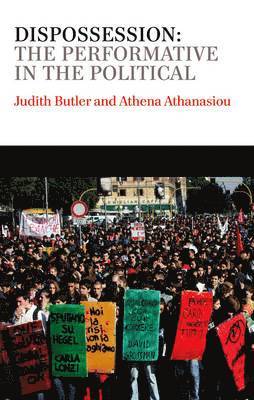
Dispossession
The Performative in the Political
Av Judith Butler, Athena Athanasiou
Inbunden, 2013
707 kr
Lägg i varukorg
Dispossession describes the condition of those who have lost land, citizenship, property, and a broader belonging to the world. This thought-provoking book seeks to elaborate our understanding of dispossession outside of the conventional logic of possession, a hallmark of capitalism, liberalism, …
Dispossession
The Performative in the Political
Av Judith Butler, Athena Athanasiou
Häftad, 2013
292 kr
Lägg i varukorg
Dispossession describes the condition of those who have lost land, citizenship, property, and a broader belonging to the world. This thought-provoking book seeks to elaborate our understanding of dispossession outside of the conventional logic of possession, a hallmark of capitalism, liberalism, …
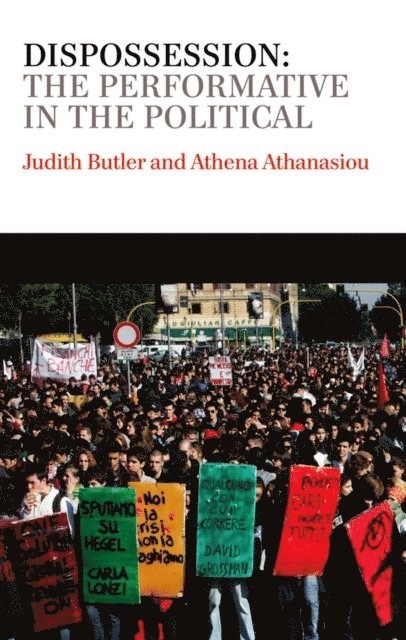
Dispossession
The Performative in the Political
Av Athena Athanasiou, Judith Butler
E-bok, 2013
277 kr
Lägg i varukorg
Dispossession describes the condition of those who have lost land, citizenship, property, and a broader belonging to the world. This thought-provoking book seeks to elaborate our understanding of dispossession outside of the conventional logic of possession, a hallmark of capitalism, liberalism, …
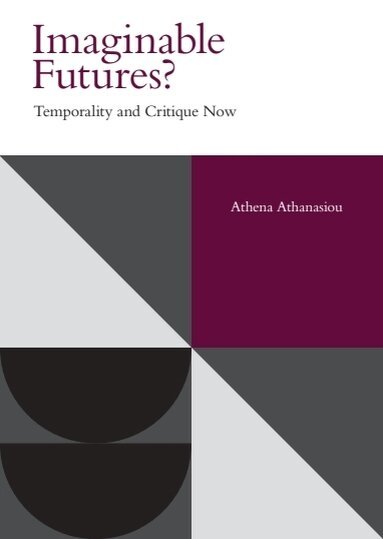
Imaginable Futures?
Temporality and Critique Now
Inbunden, 2026
1083 kr
Lägg i varukorg
Athena Athanasiou attends to the differential conditions of the im-possible as a way to map out discontinuous and fragile trails of critical and agonistic articulations despite the post-critical realism that organises the present.How might we reclaim multiple contingencies, resonances and …
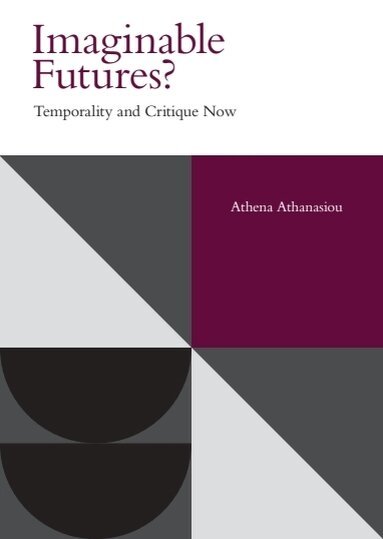
Imaginable Futures?
Temporality and Critique Now
E-bok, 2026
1346 kr
Lägg i varukorg
Athena Athanasiou attends to the differential conditions of the im-possible as a way to map out discontinuous and fragile trails of critical and agonistic articulations despite the post-critical realism that organises the present.How might we reclaim multiple contingencies, resonances and …
Imaginable Futures?
Temporality and Critique Now
E-bok, 2026
1375 kr
Lägg i varukorg
Athena Athanasiou attends to the differential conditions of the im-possible as a way to map out discontinuous and fragile trails of critical and agonistic articulations despite the post-critical realism that organises the present.How might we reclaim multiple contingencies, resonances and …
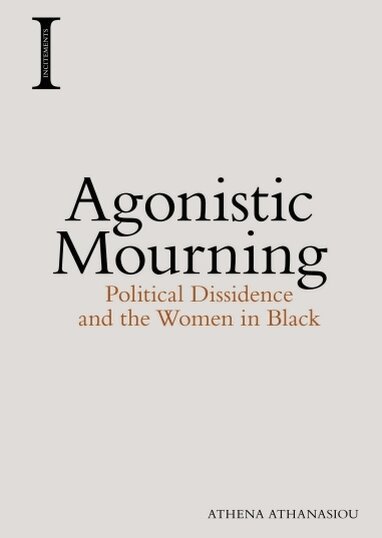
Agonistic Mourning
Political Dissidence and the Women in Black
E-bok, 2017
398 kr
Lägg i varukorg
Drawing on a range of philosophical, anthropological and political theories, Athena Athanasiou offers a new way of thinking about agonistic performativity with its critical connections to national and gender politics and alongside the political intricacies of affectivity, courage and justice. …
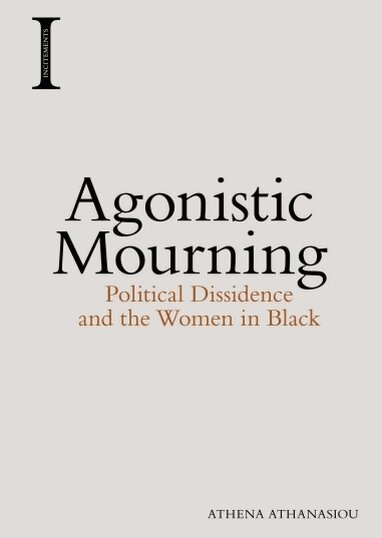
Agonistic Mourning
Political Dissidence and the Women in Black
E-bok, 2017
398 kr
Lägg i varukorg
Drawing on a range of philosophical, anthropological and political theories, Athena Athanasiou offers a new way of thinking about agonistic performativity with its critical connections to national and gender politics and alongside the political intricacies of affectivity, courage and justice. …
Rewriting Difference
Luce Irigaray and 'the Greeks'
Av Elena Tzelepis, Athena Athanasiou
Inbunden, 2010
1278 kr
Tillfälligt slut
A transdisciplinary reader on Luce Irigaray's reading and re-writing of Ancient Greek texts.In this definitive reader, prominent scholars reflect on how Luce Irigaray reads the classic discourse of Western metaphysics and also how she is read within and against this discourse. Her return to "the …
Rewriting Difference
Luce Irigaray and 'the Greeks'
Av Elena Tzelepis, Athena Athanasiou
Häftad, 2010
450 kr
Tillfälligt slut
A transdisciplinary reader on Luce Irigaray's reading and re-writing of Ancient Greek texts.In this definitive reader, prominent scholars reflect on how Luce Irigaray reads the classic discourse of Western metaphysics and also how she is read within and against this discourse. Her return to "the …